
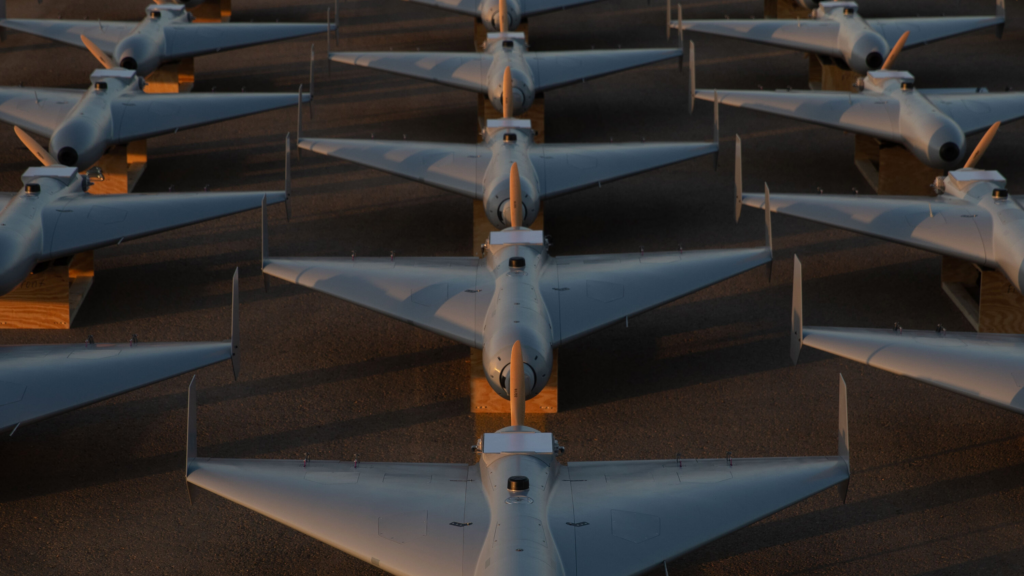
The phrase cost of war used to conjure images of tanks, jets, and aircraft carriers burning through national budgets. In 2026, that equation is being quietly rewritten. The early days of the Iran conflict, particularly during Operation Epic Fury, reveal a stark imbalance: relatively cheap drones and missiles are forcing the United States and its allies to spend vast sums to stay in the fight.
This isn’t just about tactics. It’s about economics. And the math is starting to look uncomfortable for the world’s most advanced militaries.
What is the cost imbalance in modern warfare?
At the center of this shift is a simple but brutal mismatch. Offensive systems are getting cheaper. Defensive systems are not.
Coalition forces have reportedly used more than 11,000 munitions in just over two weeks, with costs nearing $26 billion. Many of these are high-end interceptors designed to neutralize incoming threats. The problem? Those threats are often far less expensive.
Why this matters
- A single advanced interceptor missile can cost hundreds of thousands or even millions of dollars
- Many drones or basic missiles cost a fraction of that
- Defenders are spending more to stop attacks than attackers spend to launch them
This creates what military planners call a negative cost-to-effect ratio. Over time, that’s not sustainable, even for wealthy nations.
How drones are reshaping battlefield economics
Cheap drones are not new. What’s new is how they’re being used at scale and with persistence.
After an initial surge of over 5,000 munitions in the first four days, the Iran conflict has settled into a steady rhythm. Iranian forces are now launching roughly:
- 33 missiles per day
- 90+ drone strikes per day
Even at reduced intensity, this steady pressure forces defenders to respond constantly. It’s less like a knockout punch and more like a dripping faucet that never stops.
The strategic advantage of “good enough”
Drones don’t need to be perfect. They need to:
- Get through occasionally
- Force expensive defensive responses
- Drain enemy stockpiles over time
This flips the traditional military advantage. Precision and sophistication still matter, but endurance is becoming the deciding factor.
Why stockpiles are becoming the real battlefield
The most immediate concern isn’t just how many weapons are used. It’s which ones are running out.
Critical shortages are emerging
Some munitions are easier to replace. Others are not. The most vulnerable categories include:
- Long-range interceptor missiles
- Precision-guided weapons
- Systems dependent on specialized components
These weapons rely on:
- Limited suppliers
- Long production timelines
- Rare materials and advanced electronics
A shortage of even a small component, like a specific microchip or battery input, can halt production entirely.
Industrial bottlenecks are hard to fix
The defense industrial base is not built for rapid scaling. For example:
- The U.S. relies heavily on a single facility for certain high explosives
- Expansion requires long-term funding commitments
- Contractors are hesitant to scale without guaranteed orders
This creates a lag between recognizing a shortage and actually fixing it. In a fast-moving conflict, that delay can be decisive.
What is “command of the reload,” and why does it matter?
For decades, military theory has emphasized dominance across land, sea, air, and space. But recent conflicts suggest a new principle is emerging: command of the reload.
The shift in strategic thinking
Traditional ideas include:
- Military strength translates to political power
- Control of global domains ensures dominance
But modern conflicts are exposing a different reality:
- Wars are becoming prolonged exchanges of munitions
- Victory depends on sustained production capacity
- Logistics and manufacturing are as important as battlefield tactics
What “command of the reload” means in practice
The side that wins is increasingly the one that can:
- Produce weapons consistently over time
- Replace losses faster than the opponent
- Maintain supply chains under pressure
It’s less about having the most advanced weapon and more about having enough of the right ones, for long enough.
How global disruptions are making things worse
The supply challenge isn’t happening in isolation. It’s being amplified by global instability.
Key pressure points
- Geopolitical tensions affecting trade routes
- Potential disruptions in critical chokepoints like the Strait of Hormuz
- Dependence on global supply chains for raw materials
Even minor disruptions can ripple through the system, delaying production and increasing costs.
Policy and planning gaps
Despite high-level discussions, production hasn’t ramped up significantly. One key reason:
- Governments have not consistently placed firm, long-term orders
- Defense companies are wary of expanding capacity without guarantees
This creates a paradox. Everyone sees the problem, but structural inertia slows the response.
What lessons does this hold for future wars?
The Iran conflict is not an isolated case. It’s a preview.
Key takeaways
- Cost efficiency matters more than ever
Expensive systems must justify their use against cheaper threats - Scale beats sophistication over time
A large volume of “good enough” weapons can overwhelm elite defenses - Industrial capacity is a strategic asset
Factories and supply chains are now part of the battlefield - Attrition is back
Wars are increasingly about who can endure longer, not just strike harder
Where this leaves the United States and its allies
The U.S. and its partners still maintain overwhelming technological superiority. But that edge is being tested in a new way.
The challenge is no longer just building the best weapons. It’s building enough of them, quickly enough, and at a sustainable cost.
Possible responses
- Investing in lower-cost defensive systems
- Expanding domestic manufacturing capacity
- Diversifying supply chains
- Rethinking when and how high-end munitions are used
Munition count for US, Israel & Allies (2026 Iran war)
| Country | Purpose | Munition Type | Quantity |
|---|---|---|---|
| Israel | Offensive | Rampage supersonic missile | 244 |
| Israel | Offensive | Blue Sparrow air-launched ballistic missile | 56 |
| Israel | Offensive | Delilah cruise/loitering missile | 160 |
| Israel | Offensive | Popeye Turbo / Crystal Maze II | 120 |
| Israel | Offensive | Python/Derby derivatives (SEAD) | 200 |
| Israel | Offensive | Spice-2000/1000 guided bombs | 900 |
| Israel | Offensive | Israeli JDAM / smart bomb kits | 551 |
| US | Offensive | BGM-109 Tomahawk TLAM (Blk IV/V) | 535 |
| US | Offensive | AGM-158 JASSM / JASSM-ER | 912 |
| US | Offensive | LRASM (AGM-158C) – U.S. Navy | 55 |
| US | Offensive | AGM-88 HARM / AARGM-ER | 202 |
| US | Offensive | ATACMS + PrSM | 320 |
| US | Offensive | GMLRS / GMLRS-ER (HIMARS) | 365 |
| US | Offensive | Low-cost OWA drones (LUCAS/Scorpion) | 520 |
| US | Offensive | AGM-114 Hellfire (MQ-9 Reaper) | 378 |
| US | Offensive | GBU-31/32/38 JDAM (various) | 1080 |
| US | Offensive | GBU-39 Small Diameter Bomb | 320 |
| US | Offensive | GBU-57 Massive Ordnance Penetrator | 8 |
| US | Offensive | Mk48 Torpedo (US Submarine) | 1 |
| US | Offensive | AGM-154 JSOW | 183 |
| Allied | Defensive | Patriot PAC-3 (Gulf partners) | 1285 |
| Allied | Defensive | THAAD (Partner-operated) | 120 |
| Allied | Defensive | A2A — Kuwait (AIM-120/AIM-9) | 63 |
| Allied | Defensive | A2A — Jordan (AIM-120/AIM-9) | 77 |
| Allied | Defensive | A2A — Qatar/Bahrain/UAE (AIM-120/AIM-9) | 57 |
| Allied | Defensive | Aster (Qatar Navy) interceptors | 53 |
| Allied | Defensive | A2A — RAF Typhoon/F-35 (AIM-120/AIM-9X) | 32 |
| Allied | Defensive | A2A — MICA (French Rafale – Gulf intercepts) | 87 |
| Allied | Defensive | Saudi Patriot (PAC-3/PAC-2 mix) | 117 |
| Allied | Defensive | Saudi SHORAD / point-defense (Skyguard etc.) | 95 |
| Israel | Defensive | Arrow 2 / Arrow 3 | 122 |
| Israel | Defensive | David’s Sling Stunner | 135 |
| Israel | Defensive | Iron Dome Tamir | 563 |
| Israel | Defensive | THAAD (Israel operated) | 22 |
| Israel | Defensive | Air-to-Air (Python-5/Derby) | 121 |
| US | Defensive | SM-2/SM-3/SM-6 (Navy Aegis) | 431 |
| US | Defensive | Patriot PAC-2/PAC-3 (U.S.) | 402 |
| US | Defensive | THAAD (U.S.-operated) | 198 |
| US | Defensive | Air-to-Air (AIM-120/AIM-9X) | 204 |
Courtesy: Royal United Services Institute
TL;DR
- Cheap drones are forcing expensive defensive responses
- The cost imbalance is draining Western stockpiles
- Production limits are becoming a critical weakness
- “Command of the reload” is emerging as a defining factor in modern warfare
- Future conflicts will favor endurance, scale, and industrial strength over pure technological edge