

The Iranian Embassy in Zimbabwe has unexpectedly become one of the internet’s most talked-about voices—thanks to a string of sarcastic responses aimed at former U.S. President Donald Trump.
What began as a tense geopolitical moment—centered on threats involving Iran and the Strait of Hormuz—has taken a surreal turn online. The embassy’s biting humor has not only amplified the story but also reshaped how diplomatic messaging can land in the age of social media.
What sparked the Iranian Embassy’s viral responses?
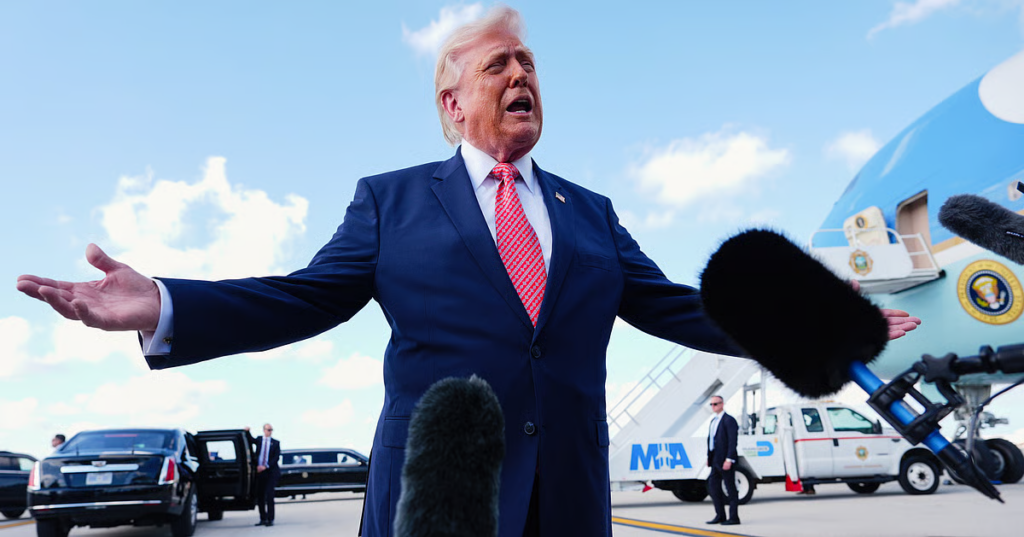
The exchange began after Trump issued a fiery post on his platform, Truth Social, demanding that Iran open the Strait of Hormuz.
In that post, he reportedly warned of severe consequences, including potential strikes on infrastructure like power plants and bridges if Iran did not comply by a specific deadline.
The language—direct, aggressive, and laced with profanity—drew immediate global attention. But instead of responding with a conventional diplomatic statement, the Iranian Embassy in Zimbabwe took a different route: humor.
“We’ve lost the keys”: How sarcasm became a diplomatic tool
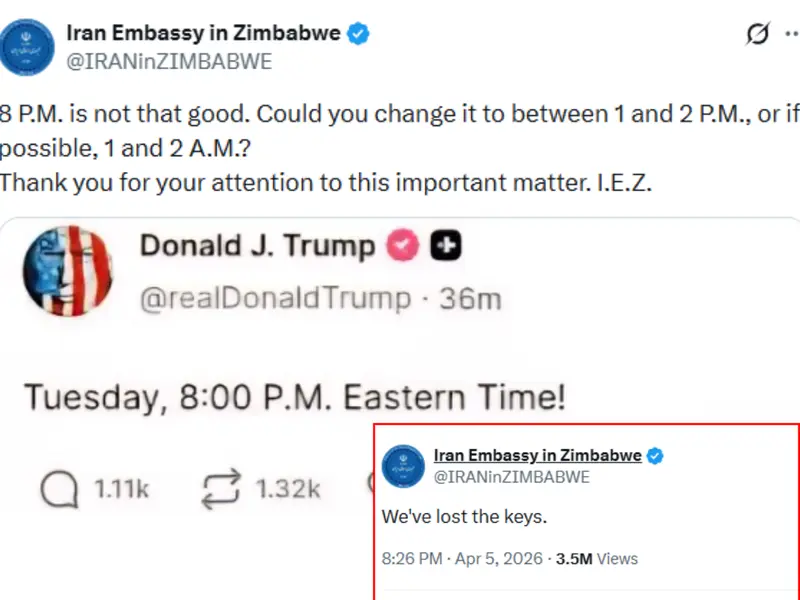
The embassy’s now-viral reply to Trump’s ultimatum read:
“We’ve lost the keys.”
It followed up with another jab at the deadline:
“8 P.M. is not that good. Could you change it to between 1 and 2 P.M., or if possible, 1 and 2 A.M.? Thank you for your attention to this important matter.”
Why this matters
This wasn’t just a clever comeback—it marked a shift in tone rarely seen in official diplomatic communication.
Instead of:
- Formal rebuttals
- Strategic ambiguity
- Carefully worded statements
The embassy opted for:
- Irony
- Mockery
- Internet-native humor
That choice turned a geopolitical flashpoint into a viral moment.
“Not in the Stone Age yet”: Referencing past threats
The embassy didn’t stop there.
Responding to online chatter, it quipped:
“Not in the Stone Age yet.”
This was a direct callback to Trump’s earlier rhetoric about “bombing Iran back to the Stone Age,” a phrase that has lingered in public discourse.
The strategic subtext
While humorous, the remark also served a purpose:
- It reframed past threats in a dismissive tone
- It undercut the seriousness of Trump’s language
- It positioned the embassy as confident rather than defensive
In diplomatic terms, that’s a subtle but meaningful shift.
Why is the Strait of Hormuz so important?
At the center of this exchange is the Strait of Hormuz—one of the world’s most critical oil transit chokepoints.
Key facts:
- Roughly 20% of the global oil supply passes through it
- It connects the Persian Gulf to international waters
- Any disruption can spike global energy prices
Why Trump’s threat matters
Threats involving the Strait aren’t just regional, they’re global.
They can:
- Trigger market volatility
- Escalate military tensions
- Draw in multiple international actors
That’s why even a sarcastic response from a diplomatic mission can carry broader implications.
Social media reactions: Why people are paying attention
The embassy’s posts quickly gained traction, with users praising the tone and wit.
Some reactions included:
- Calling it “the funniest embassy on X”
- Applauding its “savage-level mocking.”
- Requesting clearer references to Trump’s posts for easier context
What’s driving the virality?
Several factors explain the response:
- Unexpected tone: Diplomacy is rarely this humorous
- Relatability: The language mirrors how everyday users communicate online
- Contrast: The sharp difference between Trump’s threats and the embassy’s sarcasm
In short, it feels less like statecraft and more like a viral thread.
Is this a new era of digital diplomacy?
The episode raises a bigger question: Are embassies changing how they communicate?
Traditional diplomacy vs. digital diplomacy
Traditional approach:
- Formal statements
- Carefully vetted language
- Limited public engagement
Emerging approach:
- Real-time responses
- Platform-native tone
- Direct engagement with audiences
The Iranian Embassy’s posts suggest that:
- Diplomacy is becoming more performative
- Messaging is increasingly audience-driven
- Humor can be used as a soft power tool
The 25th Amendment chatter: Political fallout in the U.S.
Trump’s comments also triggered discussions around the Twenty-fifth Amendment, which outlines procedures for removing a sitting president who is unable to perform duties.
While such calls often emerge during moments of controversy, it’s important to note:
- Invoking the amendment is extremely rare
- It requires action by senior government officials
- Public discourse alone does not trigger it
Still, the fact that the conversation surfaced underscores how strongly people reacted to the rhetoric.
What this means for global perception
The incident is more than a viral moment—it’s a case study in perception.
For the U.S.:
- Raises questions about tone and credibility
- Highlights how leadership communication is received globally
For Iran:
- Demonstrates a willingness to engage differently
- Positions itself as composed—even humorous—under pressure
For audiences:
- Blurs the line between politics and entertainment
- Makes geopolitics more accessible—but also more volatile
What happens next?
Despite the online theatrics, the underlying situation remains serious.
Key questions remain:
- Will tensions escalate around the Strait of Hormuz?
- Will official diplomatic channels override public exchanges?
- Is this style of communication sustainable—or risky?
For now, the embassy’s posts continue to circulate, offering a rare moment where global politics intersects with internet culture.
TL;DR
- The Iranian Embassy in Zimbabwe mocked Donald Trump’s threats with viral, sarcastic posts.
- The exchange centers on tensions involving the Strait of Hormuz.
- Social media users have widely praised the embassy’s humour.
- The incident highlights a shift toward more informal, digital-first diplomacy.
- Despite the humour, the geopolitical stakes remain high.