
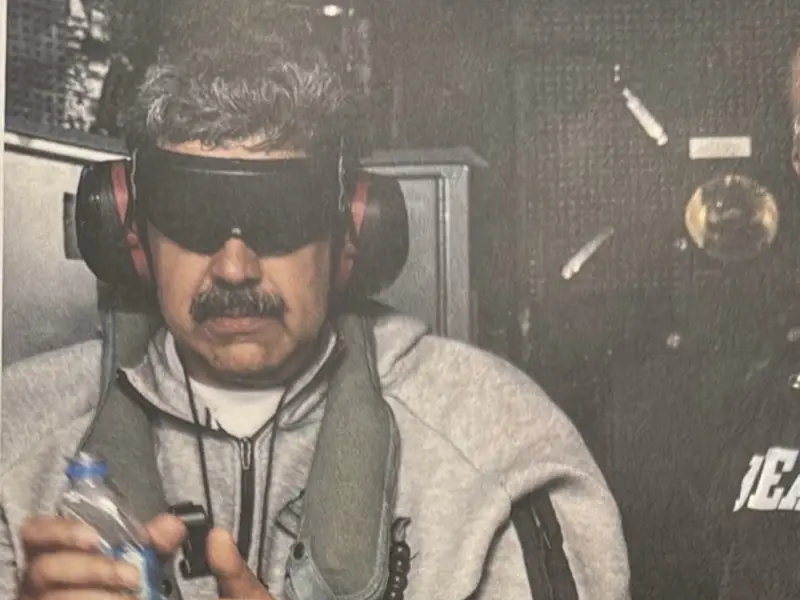
When Venezuela’s long-blocked access to X (formerly Twitter) suddenly returned this week, the timing alone raised eyebrows. Just days earlier, US forces had captured President Nicolás Maduro in a dramatic military operation in Caracas. Then came something stranger still: a post from Maduro’s verified X account, featuring a stylized “missing persons” poster of himself and his wife, Cilia Flores.
The image quickly ricocheted across social media, igniting speculation far beyond Venezuela’s borders. Was Nicolás Maduro somehow posting from US custody? Or was his digital identity now part of a broader political narrative being shaped without him?
The episode underscores how power, propaganda, and platforms collide in modern geopolitics—and why control of a social media account can matter almost as much as control of a country.
What happened in Venezuela, and why did X suddenly return?
As 2026 began, the United States launched Operation Absolute Resolve, a direct military intervention ordered by Donald Trump. US forces bombed strategic sites in Caracas and captured Nicolás Maduro and Flores from their compound on January 3. Both were flown to New York and charged in federal court with narco-terrorism and drug trafficking, pleading not guilty.
In the days following the operation:
- Venezuela experienced widespread internet disruptions.
- Access to X—long restricted, was restored nationwide.
- The country’s leadership shifted, with Vice President Delcy Rodríguez sworn in as acting president.
The return of X was framed by the interim government as a step toward openness and “national dialogue.” Critics, however, saw it as carefully choreographed—especially given what appeared next.
Why did Nicolás Maduro’s account post a “missing” poster?
Shortly after X became accessible again, Maduro’s account posted a graphic resembling a missing persons notice. It showed Maduro and Flores side by side, marked “11 days missing,” with a hashtag calling for their return.
The post immediately triggered three competing interpretations:
- A message from Maduro himself
Supporters argue the post suggests Nicolás Maduro retains some form of communication access—even in US custody. - An account managed by loyalists
More likely, analysts say, the account is being operated by allies inside Venezuela or abroad, using his voice to maintain political relevance. - Symbolic resistance, not literal communication
The poster functions less as proof of access and more as a rallying symbol—casting Maduro as a disappeared leader rather than a detained defendant.
Notably, neither US officials nor X confirmed that Maduro personally authored the post.
What did Delcy Rodríguez say?
Acting President Delcy Rodríguez also posted on X after access was restored, striking a markedly different tone.
“We resume contact through this channel. Venezuela remains standing, with strength and historical awareness. Let us stay united, moving towards economic stability, social justice, and the welfare state we deserve to aspire to.”
Her message served several purposes at once:
- Legitimacy: Signaling continuity of governance despite Maduro’s absence.
- Stability: Reassuring citizens and international observers that institutions remain intact.
- Diplomacy: Creating space for engagement with Washington without endorsing the capture.
Since taking office, Rodríguez’s interim government has released select political prisoners and opened talks with US diplomats about restoring formal relations and reopening the US embassy in Caracas.
Is Maduro really using social media from prison?
There is no public evidence that Maduro has direct access to social media while in US custody. In fact, standard federal detention protocols make that highly unlikely.
What is clear:
- Political leaders often retain digital presences managed by teams.
- Social media accounts can outlive physical power—and even freedom.
- The symbolism of a post can outweigh questions of authorship.
In this case, the “missing” poster operates as political messaging, not proof of prison tweeting. It reframes Maduro’s arrest as an injustice rather than a legal proceeding, an important distinction for supporters at home and sympathizers abroad.
Why the US move on Venezuela goes beyond Maduro
The capture of Maduro is only one piece of a much larger strategy. Less than a week after the operation, Trump met executives from major global oil companies at the White House, urging up to $100 billion in investments to revive Venezuela’s oil sector.
Trump was blunt about the stakes, reportedly calling Venezuela “a new country with total security.”
Key elements of the US approach include:
- Political control: Overseeing Venezuela’s transition government.
- Economic leverage: Reopening oil production under US-aligned frameworks.
- Diplomatic reset: Negotiating new terms for engagement after years of sanctions.
For Washington, stabilizing Venezuela isn’t just about regime change—it’s about energy security and influence in the Western Hemisphere.
Why social media now shapes geopolitics
The Nicolás Maduro post highlights a broader truth: platforms like X have become arenas of statecraft.
They are used to:
- Signal legitimacy
- Mobilize supporters
- Frame narratives faster than traditional diplomacy
In Venezuela’s case, restoring X access while the former president remains detained allows multiple, competing stories to coexist—each fighting for public belief.
And belief, as history shows, can be as powerful as force.
TL;DR
- Venezuela regained access to X days after the US captured Nicolás Maduro.
- A “missing persons” post appeared on Maduro’s account, sparking speculation.
- There’s no evidence Maduro is posting from custody; the account is likely managed.
- Acting President Delcy Rodríguez is using X to project stability and unity.
- The US intervention is closely tied to oil interests and regional strategy.
- Social media remains a critical battleground in modern political conflicts.