
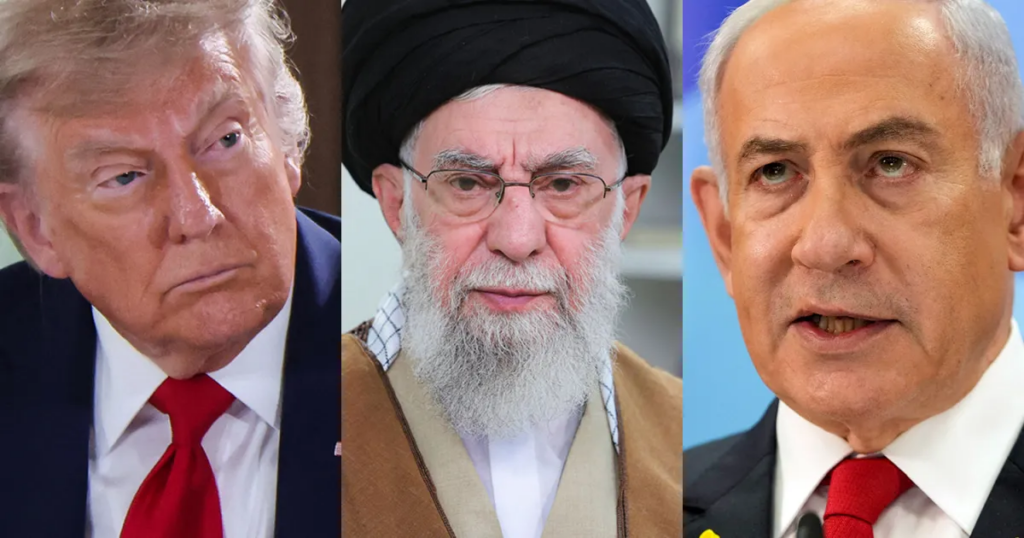
A new report claims President Donald Trump may be closer to launching military action against Iran than the public realizes. According to Axios, senior officials believe that if diplomacy collapses, a large-scale U.S.–Israel military campaign could begin soon, potentially within days or weeks.
The report suggests that any strike would not resemble a short, targeted operation. Instead, officials reportedly anticipate a sustained, weeks-long military campaign that could reshape the Middle East and define the remainder of Trump’s presidency.
Here’s what we know, and what remains uncertain.
What Does the Report Claim About Trump and Iran?
The Axios report argues that the Trump administration has been preparing for the possibility of conflict while continuing nuclear negotiations.
Sources cited in the report say:
- A U.S. strike would likely extend beyond a limited operation
- Coordination with Israel would be central
- The scale could surpass previous short-term actions
- Military action could follow quickly if talks fail
The report also notes limited public debate in Washington, with Congress and voters focused elsewhere.
At this stage, these claims remain based on unnamed sources. There has been no formal declaration of imminent military action from the White House.
What Military Buildup Has Been Reported?
According to the report, the United States has significantly increased its military presence in the region.
Reported deployments include:
- Two aircraft carriers
- Roughly a dozen warships
- Hundreds of fighter aircraft
- Advanced air defense systems
- Over 150 cargo flights transporting weapons and ammunition
- Approximately 50 additional fighter jets, including F-35s, F-22s, and F-16s
Such deployments can serve multiple purposes:
- Deterrence
- Signaling leverage in negotiations
- Preparation for potential operations
Military buildups do not automatically mean war. However, analysts often view sustained asset concentration as raising the probability of action if diplomatic efforts collapse.
What Is Happening With Nuclear Talks?
Diplomatic engagement appears ongoing, though fragile.
The report states that Trump advisers met in Geneva with Iranian Foreign Minister Abbas Araghchi for several hours. Both sides described discussions as productive, but U.S. officials reportedly remain skeptical about resolving core disagreements.
Vice President JD Vance, according to the report, suggested that while some progress was made, Iran has not accepted key U.S. conditions.
Iran’s nuclear program has been a flashpoint for years. Washington’s primary concerns center on:
- Uranium enrichment levels
- Stockpiles of enriched material
- Missile development
- Regional proxy activity
Tehran has historically argued that its nuclear program is for peaceful purposes.
For balance and accuracy, coverage should cite:
- Statements from Iran’s Foreign Ministry
- International Atomic Energy Agency (IAEA) assessments
- Official U.S. State Department briefings
Why Is Israel a Central Factor?
The report suggests close coordination between Washington and Israel.
Israel has consistently viewed Iran’s nuclear program as an existential threat. In past confrontations, Israeli forces have targeted Iranian-linked infrastructure in Syria and elsewhere.
If military action occurs, it would likely involve:
- Joint planning
- Shared intelligence
- Coordinated air operations
- Regional missile defense activation
Israeli officials, according to the report, are preparing for possible escalation and favor a broader campaign that could target not only nuclear facilities but also missile capabilities.
However, there has been no official Israeli confirmation of imminent strikes.
How Soon Could Conflict Begin?
The timeline remains unclear.
The report mentions:
- A two-week window given to Iran to present a detailed proposal
- Israeli officials preparing for conflict “within days”
- Some U.S. sources believing action could still be weeks away
Deadlines in diplomacy are often fluid. Past negotiations have included similar “two-week” markers that resulted in either extensions or limited actions.
It’s important not to conflate preparation with inevitability.
At present:
- No formal authorization for war has been publicly announced
- Congress has not voted on new war powers
- The White House has not confirmed a strike decision
What Would a War With Iran Look Like?
A large-scale U.S.–Iran conflict would likely differ from short-duration air campaigns elsewhere.
Potential features could include:
- Targeted strikes on nuclear and missile sites
- Cyber operations
- Regional proxy escalation (Hezbollah, militia groups)
- Disruption to Gulf shipping routes
- Energy market volatility
The Strait of Hormuz, a vital oil transit route, would become a focal point.
Energy analysts warn that conflict in the region could trigger sharp oil price increases, affecting global markets.
How Would This Affect Trump’s Presidency?
A sustained Middle East campaign would likely define the remainder of President Donald Trump’s term.
Historically, military engagements:
- Reshape domestic political debate
- Shift congressional priorities
- Influence election cycles
- Affect global alliances
Public opinion would become a critical factor, particularly if operations extend beyond initial strikes.
What’s Still Unknown?
Despite the report’s detailed sourcing, major questions remain:
- Has Trump made a final decision?
- Are diplomatic channels still viable?
- Would Congress seek authorization?
- How would Iran respond militarily?
Until official confirmation emerges, the situation remains in a high-stakes holding pattern.
TL;DR
- A report claims the Trump administration may be closer to military action against Iran.
- A significant U.S. military buildup in the region has been reported.
- Nuclear negotiations are ongoing but appear strained.
- Israel is reportedly preparing for a possible escalation.
- No official declaration of war or confirmed strike order has been announced.
The Bottom Line
The rhetoric is sharper. The military footprint is larger. The diplomatic clock appears to be ticking.
But preparation does not equal inevitability.
Whether this moment becomes another chapter in prolonged tension or the beginning of open conflict, depends on decisions still unfolding behind closed doors.