
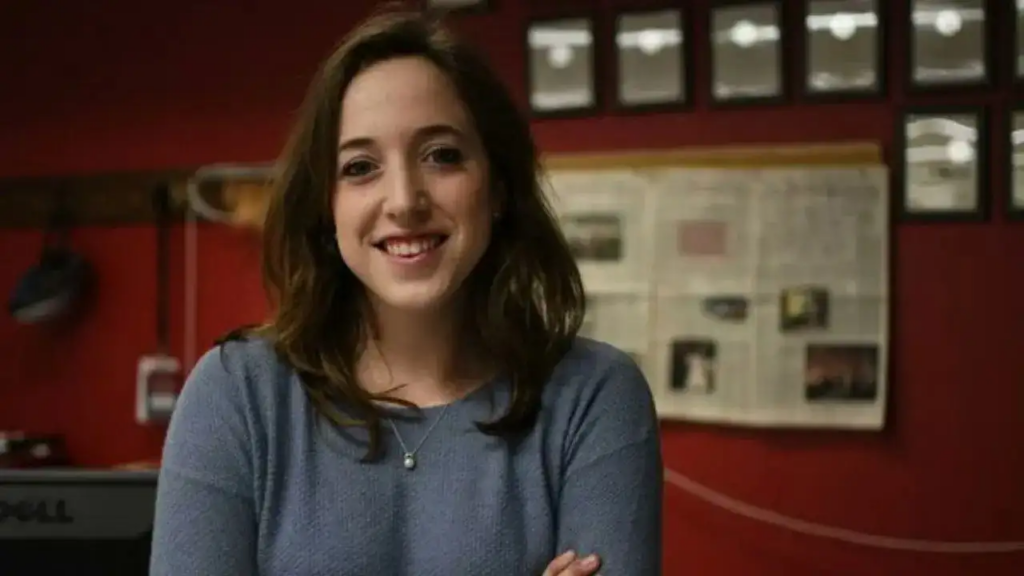
President Donald Trump’s claim that a Washington Post reporter was arrested for leaking classified information tied to Venezuela has ignited a political and press freedom firestorm. At the center of it is Hannah Natanson, a journalist known for her reporting on the federal government and the Justice Department.
But is Natanson actually the so-called “Venezuela leaker”? And what do we really know about the FBI search of her home, the Pentagon’s role, and the legal guardrails meant to protect journalists?
Here’s a clear, fact-driven breakdown of what happened, what Trump said, and why the case matters far beyond one reporter.
Who is Hannah Natanson, and why is she in the spotlight?
Hannah Natanson is a Washington Post reporter who covers the federal government, with a focus on the Justice Department and federal workforce issues. Her reporting often relies on deep sourcing within government agencies, particularly during periods of political transition and internal upheaval.
That reporting style is now at the heart of a national controversy after Trump publicly alleged that Natanson had been arrested for leaking classified information related to US operations involving Venezuela.
The claim came the same day FBI agents searched Natanson’s home in Virginia, dramatically escalating attention around her work and her role in an ongoing federal investigation
What exactly did Trump say about Hannah Natanson?
Did Trump claim she was arrested?
Speaking publicly on Wednesday, Trump said that a Washington Post journalist, whom he identified as Hannah Natanson, had been arrested over an alleged leak of classified US information tied to Venezuela.
The statement quickly spread across social media and conservative news outlets, framing Natanson as a central figure in a national security breach. However, Trump did not provide evidence, court documents, or official charging details to support the claim.
This gap between the president’s assertion and confirmed facts is a key reason the story has drawn intense scrutiny.
What happened during the FBI search of Natanson’s home?
What agents seized and why it raised alarms
According to reporting by The Washington Post and other US outlets, FBI agents executed a search warrant at Natanson’s Virginia home on Wednesday. She was present during the search.
Agents seized:
- Work and personal laptops
- Her mobile phone
- A Garmin watch
The search was conducted as part of a broader investigation requested by the Pentagon, according to Attorney General Pam Bondi, who said the effort was aimed at stopping illegal leaks that could harm national security.
Bondi added on X that the person accused of leaking the classified material was already in custody. She did not name that person in her post.
Is Hannah Natanson the target of the investigation?
What prosecutors reportedly told her
Here is where Trump’s claim and reported facts sharply diverge.
Multiple news reports state that Natanson was told she is not the target of the investigation. Instead, prosecutors are focusing on a government contractor named Aurelio Perez-Lugones.
Perez-Lugones reportedly held top-secret clearance and is accused of unlawfully removing classified intelligence reports from secure facilities and taking them home.
Natanson’s involvement, according to these accounts, is linked to her communications with sources during the course of her reporting, not to allegations that she herself leaked classified material.
This distinction is critical when assessing whether the “Venezuela leaker” label is accurate.
Why does the Venezuela angle matter?
How national security and geopolitics raise the stakes
Any leak involving Venezuela carries heightened sensitivity due to the long-running US policy toward the country, including sanctions, intelligence operations, and diplomatic pressure.
If classified intelligence related to Venezuela were improperly disclosed, it could:
- Expose US intelligence methods
- Endanger sources or allies
- Complicate already fragile diplomatic and regional security dynamics
That context helps explain why the Pentagon requested the investigation and why the Justice Department has framed the case as a national security issue rather than a routine leak inquiry.
Why are press freedom groups alarmed?
Why the FBI search is considered “highly unusual”
Journalism organizations and press freedom advocates have strongly criticized the FBI’s actions.
Colleagues at The Washington Post described the search and seizure of Natanson’s devices as “highly unusual and aggressive,” noting that law enforcement rarely takes such steps against reporters unless they are suspected of committing a crime themselves.
The Committee to Protect Journalists warned that the move could weaken long-standing protections that shield journalists from having their work materials seized, a safeguard meant to prevent the government from indirectly identifying confidential sources.
What are the legal protections for journalists in the US?
How policy shifted under different attorneys general
The US has no absolute federal shield law for journalists, but Justice Department policies have historically offered strong protections.
Key moments include:
- After earlier leak investigations, then–Attorney General Eric Holder barred prosecutors from treating journalists as criminal suspects unless charges were genuinely contemplated.
- In 2021, Attorney General Merrick Garland strengthened those rules, banning search warrants and subpoenas aimed at seizing reporters’ materials or forcing them to reveal sources.
Those protections were designed to balance national security concerns with the public’s right to know.
What changed in 2025 under Attorney General Pam Bondi?
Why the reversal matters now
In 2025, Attorney General Pam Bondi partially reversed Garland-era protections, reopening the door for investigators to seek reporters’ materials under certain circumstances.
Bondi has argued that the change is necessary to deter leaks that could harm national security, especially in an era of digital communication and rapid dissemination of classified information.
Critics say the reversal has created uncertainty for journalists and emboldened aggressive investigative tactics, as seen in the Natanson case.
What did Natanson’s own reporting reveal?
Why sources felt compelled to speak
In a first-person account published by The Washington Post, Natanson described receiving messages from government workers who were fearful, frustrated, and concerned about internal policies.
One Defense Department employee told her, “I understand the risks. But getting the truth and facts out is so much more important.”
She also quoted a person identified as a Justice Department staff member who said, “I’d never thought I’d be leaking info like this.”
These quotes underscore the ethical tension at the heart of leak cases: when officials believe internal channels have failed, some turn to journalists to expose issues they see as harmful or unjust.
Is Hannah Natanson really the ‘Venezuela leaker’?
What is known and what remains unproven
Based on publicly available information:
- Trump has claimed Natanson was arrested for leaking classified information.
- Reporting from multiple outlets indicates she has not been charged and was told she is not the investigation’s target.
- The alleged leaker in custody is a government contractor, not a journalist.
At this stage, labeling Natanson as the “Venezuela leaker” is not supported by confirmed facts.
That does not mean the investigation is over or that no legal risks remain, but it does mean caution is warranted when interpreting political statements.
Why this case matters beyond one reporter
The broader implications for democracy
This case sits at the intersection of three powerful forces:
- National security
- Political rhetoric
- Press freedom
How it is handled could set a precedent for how aggressively the government can pursue journalists’ materials in leak investigations, especially when political leaders publicly accuse reporters before charges are filed.
For readers, the stakes are simple but profound: if journalists fear becoming targets for doing their jobs, fewer insiders may come forward, and the public may learn less about how power is exercised behind closed doors.
TL;DR
- Trump claimed Washington Post reporter Hannah Natanson was arrested for leaking classified Venezuela-related information.
- The FBI did search her home and seized devices, but reports say she is not the investigation’s target.
- Prosecutors are focusing on a government contractor accused of mishandling classified intelligence.
- Press freedom groups warn the case could weaken protections for journalists.
- The label “Venezuela leaker” remains unproven based on current facts.