
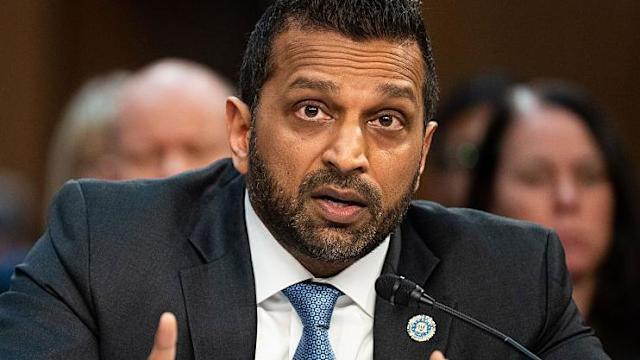
A high-stakes legal battle between Kash Patel and The Atlantic is drawing attention for an unexpected reason. While the $250 million defamation lawsuit centers on allegations of false reporting and “actual malice,” early reviews of the filing have spotlighted multiple spelling errors embedded within the complaint itself.
The case, filed in federal court in Washington, DC, underscores a familiar tension in media law: the demand for precision. Yet here, that demand is complicated by imperfections in the very document making the claim.
What is Kash Patel alleging in the lawsuit against The Atlantic?
At its core, the lawsuit is a traditional defamation claim, albeit one with significant financial and reputational stakes.
Claims of false reporting and “actual malice”
Kash Patel’s complaint argues that The Atlantic and one of its reporters knowingly published false and damaging claims about him. These reportedly include allegations related to:
- His professional conduct
- His performance in office
- Personal behavior, including alcohol use
The lawsuit asserts that these claims were denied before publication by multiple institutions, including: - The FBI
- The Department of Justice
- The White House
Under U.S. defamation law, proving “actual malice” requires showing that a publisher either knew the information was false or acted with reckless disregard for the truth. This is a high legal bar, particularly for public officials.
Why are typos in the lawsuit drawing attention?
The legal arguments may be complex, but the errors attracting headlines are surprisingly simple.
Notable spelling mistakes in the filing
A review of the 19-page complaint reveals several basic errors:
- “feable” instead of “feeble”
- “politices” instead of “policies”
- “dicussed” instead of “discussed”
These are not ambiguous phrasing issues or technical legal ambiguities. They are straightforward spelling mistakes that would typically be caught during proofreading.
Why this matters in a defamation case
On paper, typographical errors do not weaken the legal foundation of a lawsuit. Courts evaluate claims based on evidence, legal standards, and argumentation, not spelling. However, context matters. This lawsuit specifically accuses a media outlet of failing to meet editorial standards. That makes the presence of errors in the complaint more than a trivial detail.
It raises questions about the following:
- The rigor of the drafting process
- The level of review before filing
- The optics of criticizing journalistic standards while displaying lapses in one’s own document
Does this affect the strength of Kash Patel’s case?
Legally, the answer is straightforward. Practically, it is more nuanced.
The legal perspective
From a court’s standpoint:
- Spelling errors do not invalidate claims
- Judges focus on factual accuracy and legal sufficiency
- The burden of proof remains unchanged
If Patel’s legal team can demonstrate actual malice, the presence of typos will not determine the outcome.
The perception problem
Outside the courtroom, perception plays a powerful role. High-profile cases are scrutinized not just by legal experts but by the public and media.
In this context, the errors:
- Undercut the narrative of precision and credibility
- Provide critics with an easy point of attack
- Shift part of the conversation away from the substance of the allegations
For a case built on claims of reputational harm, that shift is strategically unhelpful.
How does this connect to Patel’s previous legal actions?
The lawsuit does not exist in isolation. It references earlier disputes involving similar allegations.
Prior litigation and media coverage
According to the complaint, Kash Patel previously filed a defamation case related to claims aired on MSNBC’s Morning Joe. Those claims were later described as unverified.
The current lawsuit argues that The Atlantic should have been aware of this history and exercised greater caution before publishing similar allegations.
Why this matters for “actual malice”
If a publisher repeats claims that have already been publicly disputed, it can strengthen an argument for reckless disregard. However, the legal threshold remains high and fact-specific.
What happens next in the case?
The lawsuit is still in its early stages, and key developments are yet to unfold.
Expected procedural steps
- Formal response from The Atlantic and the named reporter
- Possible motions to dismiss
- Discovery phase, where evidence is exchanged
- Potential pre-trial hearings or settlement discussions
Each stage will shape whether the case proceeds to trial or is resolved earlier.
What to watch closely
- Whether the defendants challenge the sufficiency of the complaint
- Any amendments to the filing, including corrections to errors
- Judicial commentary on the claims, particularly regarding actual malice
Why this story matters beyond one lawsuit
This case sits at the intersection of media accountability, legal standards, and public trust.
A broader debate on accuracy
The lawsuit highlights ongoing tensions between public officials and media organizations over:
- Anonymous sourcing
- Verification standards
- Responsibility for reputational harm
At the same time, the attention on typographical errors underscores how expectations of accuracy apply universally, whether in journalism or legal practice.
The optics of credibility
In an era where credibility is constantly contested, even minor lapses can carry outsized significance. The errors in Patel’s filing do not decide the case, but they shape how it is perceived.
TL;DR
- Kash Patel has filed a $250 million defamation lawsuit against The Atlantic
- The complaint alleges false reporting and “actual malice”
- Multiple spelling errors in the filing have drawn public attention
- The typos do not weaken the legal case but affect perception
- The lawsuit is in early stages, with key legal developments ahead