
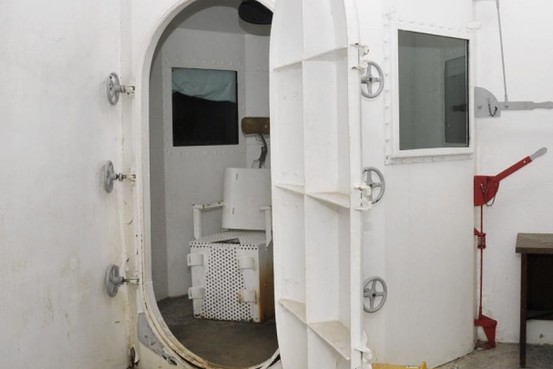

On Wednesday, UN specialists urged US authorities not to proceed with the planned nitrogen hypoxia execution of an inmate, claiming that the practice could subject him to “cruel, inhuman, or degrading treatment, or even torture.” Kenneth Smith, convicted of murder-for-hire in 1988, is slated to be executed in the US state of Alabama on January 25 utilizing the procedure, which is designed to deprive him of oxygen by employing a face mask connected to a nitrogen cylinder.
This will be the first attempt at nitrogen hypoxia execution
Smith, 58, is one of only two persons still alive in the United States who have escaped an execution attempt, after Alabama botched his previously scheduled execution by lethal injection in November 2022 when numerous attempts to place an intravenous line into a vein failed. “This will be the first attempt at nitrogen hypoxia execution,” four United Nations Special Rapporteurs stated in a statement, adding that the approach might cause “grave suffering” and would likely violate the prohibition on torture and other cruel, inhuman, or degrading punishment. “We are concerned that nitrogen hypoxia would result in a painful and humiliating death.”
Smith’s lawyers have contended that the unproven gassing process may violate the US Constitution’s prohibition on “cruel and unusual punishments,” and that any second effort to execute him is unlawful. Most US executions employ fatal doses of a barbiturate, although certain states have had difficulty obtaining the medications due to European Union legislation prohibiting pharmaceutical companies from supplying drugs that can be used in executions to prisons.