


Quick Summary
A 23-year-old gunman killed two children and injured 17 in a Minneapolis Catholic school before dying by suicide. In scheduled YouTube videos, he unveiled a farewell letter expressing years of depression, resentment toward society, and advice to family to “move on.” His weapons bore extremist messages like “Nuke India” and “Kill Trump now.” The case underscores the dangerous convergence of untreated mental illness, online radicalization, and easy access to firearms in the U.S.
On Wednesday morning, Minneapolis faced one of the deadliest school shootings in its recent history. Twenty-three-year-old Robin Westman stormed a Catholic school, killing two children and injuring at least 17 others before dying from an apparent self-inflicted gunshot wound in the school parking lot.
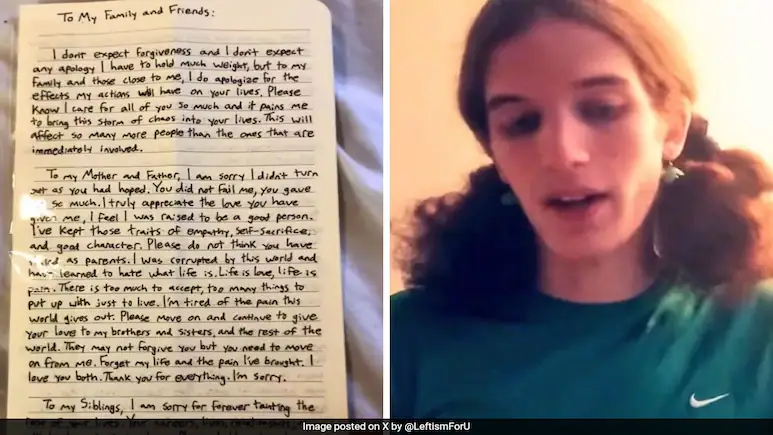
In the aftermath, investigators discovered scheduled YouTube videos that Westman had uploaded under the channel name “Robin W.” Those videos—quickly removed by the platform—revealed a handwritten four-page farewell letter and a disturbing arsenal of weapons inscribed with violent messages targeting global leaders, nations, and faith communities.
This tragedy has reignited national debates about gun access, the role of online platforms in preventing violent broadcasts, and the complex intersection of mental health and mass violence.
What Did the Shooter’s Final Letter Reveal?
Westman’s letter, read aloud in one of the uploaded videos, conveys a troubling mixture of apologies, despair, and venom toward the wider world. Key excerpts highlight his state of mind:
- Apology to family and friends: Westman urged loved ones to “move on,” even suggesting they change their last names to sever the association.
- Admission of chronic mental health struggles: He claimed to be “severely depressed” and “suicidal for years,” haunted by thoughts of ending his life.
- A rejection of medical treatment: Believing he might be “dying of lung cancer” due to heavy vaping, he wrote he did not want to “rot in a hospital bed.”
- Resentment toward society: He cited “shitty jobs, bills, and injustice in America” as reasons for wanting to escape life.
- A disturbing rationale for violence: He admitted that despite knowing his actions were wrong, anger and depression had fueled what he described as a “final act.”
The final lines carried contradictions—Westman both urged others to “pray for the victims” while simultaneously asking to be remembered on his own terms.
The Symbols and Messages on the Weapons
Just hours before the shooting, Westman posted another video showcasing his collection of firearms, ammunition, and loaded magazines. Investigators noted handwritten slogans, including
- “Kill Trump now,” “Israel must fall,” and “Burn Israel.”
- “Nuke India” scrawled across one weapon.
- Messages in Cyrillic script, suggesting ties to online extremist content circulating in Slavic forums.
- References to previous U.S. school shooters.
- Phrases such as “Where is your God?” and “For the children.”
Perhaps most hauntingly, Westman singled out one small handgun, telling the camera: “This one is for me. In case I need it.” That handgun was later recovered next to his body in the parking lot.
Why Mental Health Narratives in Mass Shootings Matter
The farewell letter and the self-recorded confessions fit into an emerging pattern: that many mass shooters leave digital or written manifestos blending personal despair, political anger, and a craving for posthumous attention.
- Intersection of personal and ideological motives: Criminologists note that while some shooters act purely out of personal distress, others fuse private pain with broad political grievances, turning despair into extremism.
- The contagion effect: Studies show that citing names of past shooters or glorifying violence online can inspire copycat attempts—something Westman himself echoed by scribbling other attackers’ names on ammunition.
- Mental health vs. accountability: While Westman described himself as “severely depressed,” experts caution against conflating mental illness with mass shootings broadly. Most individuals with depression or suicidal thoughts do not engage in violence against others.
The Role of Online Platforms
This case also highlights platforms like YouTube’s struggle to prevent pre-scheduled extremist content.
- Westman preloaded two videos that went live shortly before and shortly after the massacre.
- Algorithms and content moderation tools often flag violent imagery, but “just in time” uploads designed to evade takedowns create dangerous blind spots.
- The episode underscores calls for tighter real-time monitoring in cases where weapons, mass casualty threats, or hate speech are explicitly displayed.
The Family’s Burden After Violence
Westman’s repeated pleas for his family to change their names reflect an awareness of the stigma that families of shooters often endure.
Previous incidents, from Columbine to Sandy Hook, revealed how families of perpetrators face:
- Intense media exposure.
- Online harassment and death threats.
- A struggle to reconcile parental love with condemnation of horrific acts.
The emotional toll extends beyond grieving victims’ families to those left to shoulder the shame of the attacker’s choices. Westman’s request for anonymity may foreshadow the kind of life his relatives now face—one lived partially in hiding.
What This Tragedy Signals for America
The Minneapolis school shooting arrives amid another rising wave of gun-related violence in the U.S. According to aggregated educational safety databases, 2023 and 2024 already marked record highs for school shootings. With this latest case, several urgent implications emerge:
- Gun Access: Westman, just 23, amassed a weapons cache large enough for mass casualties—a reminder of how easily firearms circulate among young adults.
- Mental Health Infrastructure: His years-long battle with depression and suicidal thoughts raises questions: why wasn’t he connected to sustained care?
- Digital Radicalization: The inscriptions on his weapons mirror hybridized extremist rhetoric—anti-government, anti-Israel, anti-India, anti-Trump—all stitched together from online hate communities.
Finding A Way Forward
As investigators piece together the timeline, Minneapolis joins a growing list of cities scarred by tragedy. Westman’s final letter underscores the critical crossroads America faces:
- How do we address untreated mental health crises before they metastasize into violence?
- How can platforms disrupt online ecosystems that provide validation for killers?
- And most importantly, how do communities find the resilience to heal after violence aimed at children, the most vulnerable of all?
Westman ended his letter urging loved ones to “pray for the victims.” In the wake of this massacre, those prayers are certainly with grieving families in Minneapolis. But policy experts argue that only action on guns, mental health, and digital accountability can prevent future tragedies.