
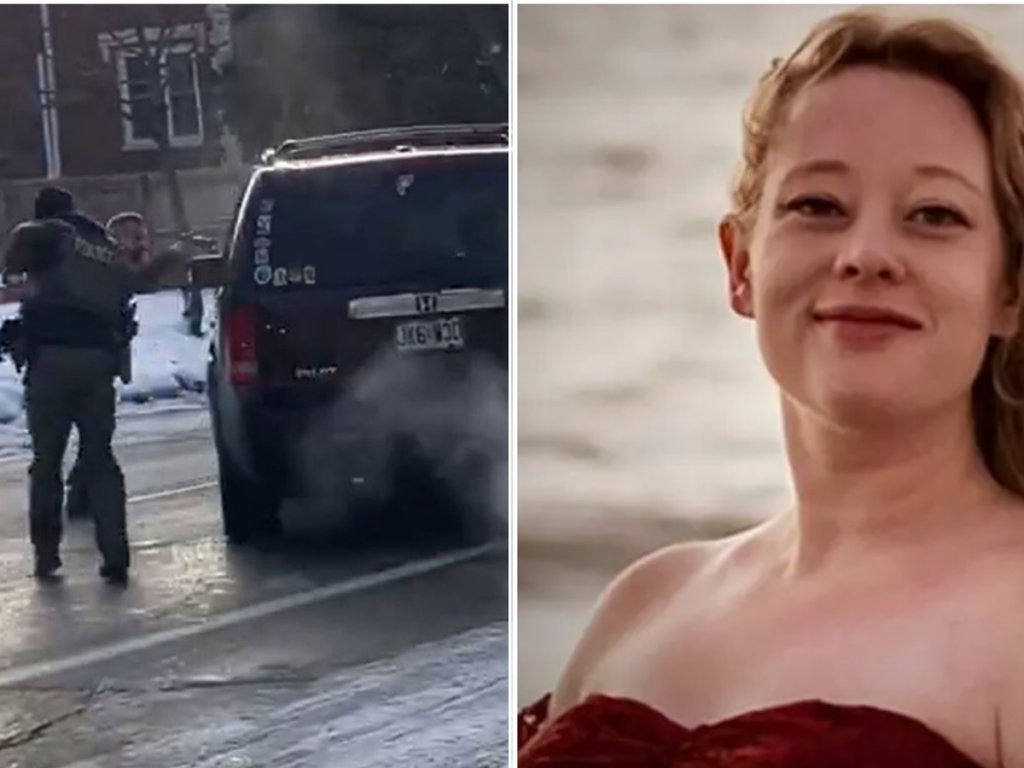
A graphic bystander video showing an ICE officer blocking medical aid after Renee Nicole Good was shot has ignited outrage far beyond Minneapolis. The footage, recorded just moments after the shooting, captures a physician pleading to help, only to be shut down with a blunt response: “I don’t care.”
As the video spreads, it has reopened painful questions about immigration enforcement, use of force, and whether basic humanitarian standards are being sidelined during federal operations.
This is what the video shows, what officials say happened, and why the incident is resonating so deeply across the US.
What happened in the Renee Nicole Good ICE shooting?
On the morning of January 7, 2026, 37-year-old Renee Nicole Good, a resident of Minneapolis, was shot during an encounter with officers from U.S. Immigration and Customs Enforcement.
According to the Department of Homeland Security, the officer fired his weapon during what officials described as a “life-threatening confrontation.” Authorities have not yet released detailed information about what prompted the use of lethal force.
What transformed the incident from a local shooting into a national flashpoint, however, was what happened next.
What does the viral video actually show?
The video, captured by an eyewitness and widely shared on social media—focuses on the aftermath, not the shooting itself.
Key moments in the footage
- A bystander identifies himself as a physician and repeatedly offers to help the wounded woman.
- An ICE officer blocks access and tells him to step back.
- When the medic persists, the officer responds, “I don’t care,” saying they have their own medics.
- Nearby residents grow visibly distressed, with one woman yelling, “You killed my fuing neighbour. You shot her in the fuing face.”
No ICE medic is visible in the video during the exchange.
The denial of immediate aid—not just the shooting—has become the central focus of public anger.
Why denying medical aid matters legally and ethically
Even when law enforcement believes force is justified, what happens after a shooting carries enormous legal and moral weight.
Ethical standards
- Basic emergency-response ethics prioritize preserving life, regardless of custody status or alleged wrongdoing.
- Preventing qualified civilians from providing aid raises serious questions when no alternative care is immediately rendered.
Legal implications
Experts say this could trigger scrutiny under:
- Civil rights law, particularly if deliberate indifference to medical needs is shown.
- Use-of-force policies, which often require officers to secure medical care as soon as a scene is safe.
Why Minneapolis is especially sensitive to this incident
The shooting occurred just blocks from where George Floyd was killed in 2020—a name that remains synonymous with police accountability and systemic reform.
That proximity matters.
Minneapolis has spent years attempting to rebuild public trust after federal investigations and consent decrees. Any perceived abuse of power—especially involving a woman killed during a federal operation—lands in a city already primed for protest.
How ICE operations have intensified tensions nationwide
This incident also comes amid renewed scrutiny of ICE activity following expanded enforcement under the Trump administration.
What’s changed
- Increased immigration raids in urban neighborhoods
- More inter-agency cooperation, sometimes blurring lines of accountability
- Limited transparency during active operations
Critics argue that aggressive tactics increase the risk of civilian harm, while ICE maintains that officers face unpredictable, dangerous situations.
Internet reaction: “When ‘I don’t care’ becomes policy.”
Public response has been swift and brutal.
Across social platforms, users condemned not just the shooting but the refusal to allow aid:
- “Not allowing a doctor in should be a prosecutable offense.”
- “Preventing aid while refusing to render aid—there’s no defense for that.”
- “No one should have to fight for medical help after being shot.”
The phrase “I don’t care” has become a grim shorthand—shared in posts, memes, and commentary—as a symbol of perceived institutional indifference.
What questions must investigators now answer
Several key issues will determine how this case unfolds:
1. Was the use of force justified?
- What specific threat did officers face?
- Was body-cam footage active and preserved?
2. Why was civilian medical aid blocked?
- Were ICE medics actually en route?
- How long did it take for professional medical care to arrive?
3. Did officers follow protocol?
- ICE and DHS guidelines typically address post-shooting care.
- Any deviation could expose the agency to civil liability.
An independent review, potentially involving the DOJ or a state-level probe, will be critical for credibility.
Why does this case go beyond one shooting
At its core, the Renee Nicole Good ICE shooting forces a broader reckoning:
- Can federal law enforcement carry out immigration policy without eroding basic humanitarian norms?
- What safeguards exist when agencies operate in high-tension civilian spaces?
- Who is accountable when compassion appears to break down?
For many Americans, the video doesn’t just show a single tragic moment; it reflects a system under strain, where enforcement, fear, and human life collide.
TL;DR
- Renee Nicole Good was fatally shot by an ICE officer in Minneapolis.
- A viral video shows an officer refusing a medic’s offer to help, saying, “I don’t care.”
- The denial of aid has sparked nationwide outrage.
- The incident raises serious ethical, legal, and policy questions.
- Investigations will focus on both the shooting and what happened afterward.