

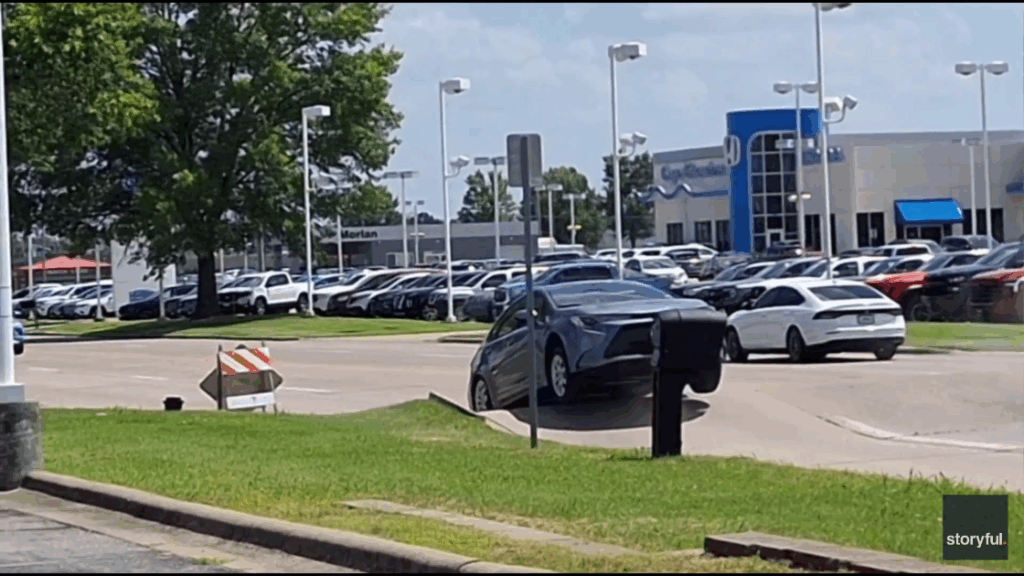
A viral video from Missouri captures the dramatic moment a car goes airborne after a road buckles under scorching temperatures, a stark reminder of the dangers posed by relentless heat waves.
What Happened?
A shocking video from Cape Girardeau, Missouri, shows a car being violently thrown into the air after the road beneath it suddenly buckled due to extreme heat. The incident, captured by local resident Albert Blackwell, occurred on Siemers Drive as a heatwave pushed temperatures to record highs across the U.S.
In the footage, the pavement abruptly bulges upward, launching the car momentarily off the ground before it lands back on the damaged road. Miraculously, the driver walked away unharmed, according to the Cape Girardeau Police Department.
“When I went back to get a front angle of cars going over the smaller buckle, the road exploded and rose over 18 inches, sending a car airborne,” Blackwell told USA Today.
Why Do Roads Buckle in Extreme Heat?
Road buckling, also known as “thermal expansion,” occurs when prolonged high temperatures cause pavement materials to expand beyond their limits. Concrete and asphalt roads are designed with expansion joints to accommodate minor shifts, but extreme heat can overwhelm these safety measures.
Key factors contributing to road failures:
- Material Expansion: Concrete slabs push against each other with nowhere to go, causing sudden fractures.
- Poor Maintenance: Aging infrastructure is more vulnerable to temperature extremes.
- Rapid Temperature Swings: A sudden spike after cooler weather can worsen stress on roads.
Cape Girardeau officials confirmed that multiple roads, including Broadway and Siemers Drive, had buckled during the heatwave. Temporary repairs were made, but full reconstruction will be needed later.
Heatwave Grips the U.S.: A Growing Threat
Missouri isn’t alone—cities like New York, Washington D.C., and Philadelphia have issued heat advisories as a “heat dome” traps scorching air over much of the country. Meteorologists warn that these conditions are becoming more frequent and intense due to climate change.
Why this matters:
- Extreme heat is the deadliest weather-related hazard in the U.S., surpassing hurricanes and tornadoes in fatalities.
- Infrastructure, from roads to power grids, is increasingly strained by rising temperatures.
- Vulnerable populations (elderly, homeless, outdoor workers) face the highest risks.
Social Media Reacts: Shock and Dark Humor
The viral clip sparked a mix of alarm and grim humor online:
- “How hot was it that a huge bump like that appeared?”
- “Right in front of a car dealership, eh? What are the odds?”
- “I would’ve just gone home and taken a nap.”
While the incident had a lucky outcome, it underscores a serious issue: U.S. infrastructure isn’t prepared for the new reality of climate-driven extremes.
How to Stay Safe During Extreme Heat
Officials urge caution:
- Avoid unnecessary travel during peak heat hours (10 a.m.–4 p.m.).
- Report road damage immediately to local authorities.
- Check on vulnerable neighbors and seek cooling centers if needed.


