A Massachusetts Institute of Technology (MIT) graduate student’s report that they had synthesised dimethyl mercury, an exceptionally toxic mercury compound, prompted the closure of the university’s chemistry building and a major decontamination response this week.
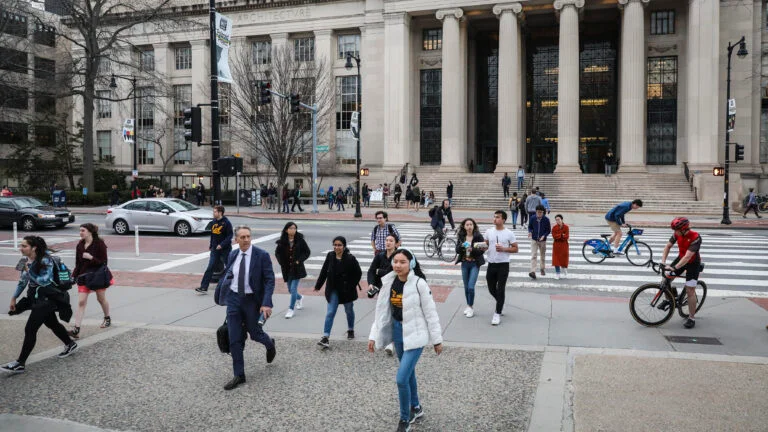
The incident began on August 26, when the student went to a local emergency room and reported that they had attempted to synthesise the substance in an MIT laboratory. The chemical was not authorised as part of the student’s research programme, according to reports. MIT subsequently closed Building 18, which houses the Department of Chemistry, while specialists assessed the potential contamination.
The situation remains unusual because MIT has since said that emerging information has raised questions about whether dimethyl mercury was actually synthesised. The student’s initial blood test also showed no signs of mercury exposure.
MIT completed decontamination and reopened Building 18 at 6 a.m. Monday, August 31, after consulting industrial hygienists, medical experts, and outside specialists.
TL;DR: MIT temporarily closed its chemistry building after a graduate student reported attempting to synthesise dimethyl mercury, one of the most toxic mercury compounds known. The student remains under medical supervision and showed no initial signs of mercury exposure. MIT later questioned whether the compound had actually been produced. After professional decontamination, Building 18 reopened August 31.
What happened at MIT?
The incident was reported on the evening of August 26 after a graduate student self-reported to a local emergency room and said they had synthesised dimethyl mercury.
MIT’s emergency response involved the university’s Environment, Health and Safety team, the Cambridge Fire Department, and emergency medical personnel. The affected laboratory was isolated, and the university later closed the entire Building 18 as a precaution.
Reports indicate that a small amount of material was believed to have spilled inside a laboratory hood. MIT did not initially confirm that the material was dimethyl mercury.
That distinction is important. MIT’s subsequent updates said that information gathered during the response had called into question whether dimethyl mercury had actually been synthesised. The university therefore treated the situation as a potential hazardous-material incident rather than publicly declaring that a confirmed dimethyl mercury release had occurred.
The university also said that the student’s research was not authorized to involve the compound. MIT’s chemistry department has stated that the institute does not permit the purchase or synthesis of dimethyl mercury.
Why was the entire building closed?
The precaution reflected the unusual toxicity of the chemical involved.
When a substance is potentially capable of causing severe poisoning from extremely small quantities, authorities cannot rely solely on the absence of visible contamination. Investigators have to consider whether a chemical could have reached laboratory surfaces, equipment, clothing or other areas.
MIT therefore brought in specialized personnel to assess and decontaminate potentially affected areas. The student’s residence hall was also addressed as a precaution, although the residence building itself was not shut down.
What is dimethyl mercury, and why is it so dangerous?
Dimethyl mercury is an organomercury compound with the chemical formula (CH₃)₂Hg. It is particularly dangerous because the body can absorb it through the skin, while its volatility also makes inhalation an important potential route of exposure.
The U.S. Occupational Safety and Health Administration warns that a severely toxic dose can involve absorption of less than 0.1 millilitres. OSHA also notes that dimethyl mercury can pass through some plastics and rubber materials and has significant vapour exposure risks.
That combination makes the substance especially difficult to handle safely. A tiny quantity can present a serious hazard, and conventional laboratory gloves may not provide adequate protection.
The compound is generally associated with highly specialised research rather than routine laboratory work. Its extreme toxicity is one reason modern laboratory safety practices emphasise avoiding its use wherever safer alternatives are available.
The danger is not always immediately obvious
One of the most troubling characteristics of dimethyl mercury poisoning is that serious symptoms may not appear immediately after exposure.
That delayed progression was demonstrated by the case of Dartmouth College chemistry professor Karen Wetterhahn. In 1996, Wetterhahn accidentally spilled a few drops of dimethyl mercury onto her latex-gloved hand. The compound passed through the gloves without obvious damage, allowing it to reach her skin.
Wetterhahn initially appeared unaffected. Months later, she developed neurological symptoms associated with mercury poisoning. Despite treatment, her condition deteriorated, and she died in June 1997 at the age of 48.
Her death became an important case in laboratory safety because it showed why the absence of immediate symptoms cannot necessarily be taken as evidence that exposure did not occur.
What happened to the MIT student?
MIT said the student remains under medical supervision.
The university disclosed, with the student’s permission, that an initial blood test received August 29 showed no sign of mercury exposure. That result is reassuring, but MIT has continued to treat the incident cautiously while gathering additional information.
People who had been near the student and the affected workspace on August 26 were offered baseline testing. MIT said individuals who were not in the student’s laboratory space that day did not need to be tested.
The university also assessed the student’s residence. Professionals cleaned common areas as a precaution while the student’s individual unit was decontaminated. The broader residence hall remained operational.
MIT said it believed the risk of secondary or tertiary exposure was very low.
Is MIT’s Building 18 safe now?
MIT announced that Building 18 would reopen at 6 a.m. on August 31 after specialised decontamination was completed.
The decision followed consultations involving MIT’s chemistry department, industrial hygienists, MIT Health medical experts, and outside specialists. The university said it considered the building safe to reopen based on the actions taken and the information available.
The reopening marks the end of the immediate campus disruption, but it does not resolve every question surrounding the incident.
Most notably, officials are still assessing whether dimethyl mercury was actually synthesised in the first place. That uncertainty is central to understanding the event: the response was driven by the potential consequences of a highly toxic chemical being present, even though the chemical’s identity and production remain under question.
Why the MIT incident matters beyond the campus
The episode highlights a broader challenge in advanced scientific research: laboratories can work with substances whose risks are difficult to detect and whose consequences can extend beyond the person experimenting.
Dimethyl mercury is an extreme example. OSHA’s historical guidance makes clear that very small amounts can pose severe toxicity risks, while the Wetterhahn case demonstrates how exposure can remain clinically silent for months.
The MIT response also illustrates why hazardous-material protocols often err on the side of caution. Closing an entire building may cause significant disruption, but the potential consequences of allowing an extremely toxic contaminant to remain undetected can be far greater.
For now, MIT says the immediate risk is low, and Building 18 is safe to use. The university’s investigation and assessment of what actually occurred will determine the remaining facts.