
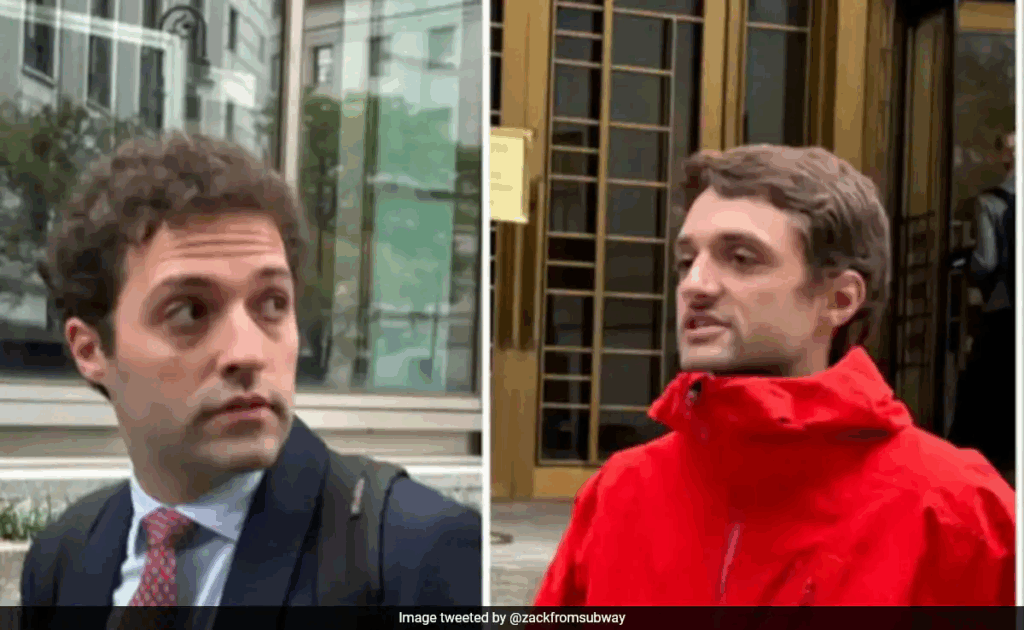
Who are the MIT brothers accused of a record-setting crypto theft?
Two Massachusetts Institute of Technology (MIT) graduates, Anton Peraire-Bueno, 25, and James Peraire-Bueno, 29, are standing trial in Manhattan for what prosecutors describe as one of the most sophisticated crypto thefts ever attempted.
The brothers, who studied mathematics and computer science at one of the world’s most prestigious universities, allegedly used their deep technical knowledge to exploit vulnerabilities in the Ethereum blockchain, siphoning off $25 million in cryptocurrency from unsuspecting traders, all in just 12 seconds.
The U.S. Department of Justice has called the heist “a first-of-its-kind manipulation” of Ethereum, underscoring the growing risks posed by technologically skilled insiders operating in decentralized financial systems.
How did the alleged 12-second Ethereum heist unfold?
According to prosecutors, the brothers carried out a multi-step operation that took months of planning. Their alleged scheme involved:
- Intercepting pending Ethereum transactions — by exploiting a weakness in the network’s “mempool,” where unconfirmed transactions are temporarily visible before being added to the blockchain.
- Reordering and manipulating transactions — to divert funds meant for legitimate traders.
- Executing their own transaction — to seize approximately $25 million worth of cryptocurrency before anyone could react.
The entire theft, authorities say, happened in less time than it takes to send an email, just 12 seconds.
“These brothers allegedly committed a first-of-its-kind manipulation of the Ethereum blockchain by fraudulently gaining access to pending transactions,” said Thomas Fattorusso, Special Agent in Charge of the IRS Criminal Investigation (IRS-CI) New York Field Office.
‘How to wash crypto’: what the brothers allegedly Googled before the heist
Court filings reveal a digital trail that prosecutors argue shows a clear intent to launder the stolen assets. The brothers’ search history reportedly included:
- “How to wash crypto”
- “Money laundering statute of limitations” (misspelled “statue”)
- “Top crypto lawyers”
- “Fraudulent Ethereum addresses database”
Prosecutors claim these searches indicate that Anton and James were preparing to conceal their gains and anticipating potential legal trouble long before the heist took place.
The defense: ‘They didn’t steal, they outsmarted bots’
Despite the federal charges of wire fraud and money laundering, the Peraire-Bueno brothers have strongly contested the accusations.
Their attorney argues that the pair did not defraud human victims but instead “outsmarted automated trading bots,” programs that execute rapid trades on decentralized exchanges. The defense suggests that the brothers’ actions amounted to exploiting a technical flaw, not committing a crime.
Legal analysts note that this argument could set a significant precedent. If the jury accepts that no human was directly defrauded, it could challenge how existing fraud laws apply to decentralized finance (DeFi) and algorithmic trading systems.
What makes this case so significant in the crypto world?
The trial is being closely watched across the financial and tech sectors for several reasons:
- Blockchain integrity: This is one of the first major U.S. cases where defendants are accused of manipulating blockchain data, not hacking centralized systems.
- Legal gray zones: The outcome could help define the boundaries between ethical “white-hat” exploitation and criminal fraud in blockchain-based markets.
- Tech accountability: It highlights how the very skills taught at elite institutions like MIT can be used to undermine the systems their graduates often help build.
Experts also point out that as blockchain technology evolves, the line between innovation and illegality is becoming increasingly blurred, especially when decentralized systems lack centralized oversight.
A jury of peers: college-educated New Yorkers to decide their fate
The trial, held in federal court in Manhattan, will feature a jury composed of college-educated individuals, many of whom are expected to have at least a passing familiarity with cryptocurrency and blockchain technology.
That demographic, legal experts say, could play a role in how the jurors interpret the brothers’ actions, whether they see it as cybercrime or clever coding.
Opening statements began on October 15, 2025, with the case expected to last several weeks. If convicted, the Peraire-Bueno brothers face decades in prison under federal wire fraud and money laundering statutes.
What’s next for crypto regulation and blockchain ethics?
The case underscores the growing urgency for clearer regulations in the crypto and DeFi sectors. Governments and blockchain developers alike are being urged to address vulnerabilities in:
- Mempool transparency (which can be exploited for transaction manipulation)
- Algorithmic trading safeguards
- On-chain detection systems for suspicious transaction patterns
It also raises ethical questions within the crypto education ecosystem, how universities, research institutions, and blockchain communities should balance open-source innovation with the risk of misuse.
TL;DR (Summary)
Two MIT-educated brothers, Anton and James Peraire-Bueno, are on trial in Manhattan for allegedly stealing $25 million in cryptocurrency in a lightning-fast 12-second heist on the Ethereum blockchain. Prosecutors say they manipulated pending transactions and later searched online for ways to launder the money. The brothers claim they merely outsmarted trading bots, not people. The case could reshape how the U.S. defines fraud and manipulation in decentralized finance.