
At the World Economic Forum in Davos, remarks by US President Donald Trump on Greenland were among the most closely watched moments. This time, Trump stopped short of openly threatening the use of force to acquire the world’s largest island. But that retreat should not be mistaken for closure. The underlying issue has never really gone away, and it carries consequences far beyond Washington or Copenhagen.
Greenland remains one of the most fragile and striking regions on Earth. It is also a place where strategic ambition, environmental collapse, and historical injustice collide. The renewed interest from Washington is not about sentiment or security alone. It is about resources, leverage, and who gets to shape the Arctic’s future as the ice disappears.
Why Greenland matters to the rest of the world
Greenland’s ice sheet is melting at its fastest rate in roughly 12,000 years. That is not an abstract climate statistic. What happens in Greenland directly affects sea levels across the globe. For low-lying nations such as the Maldives, or densely populated regions like coastal Bangladesh, accelerated ice loss translates into an existential threat.
This is what makes great power politics around Greenland especially troubling. Decisions taken in distant capitals can worsen a crisis whose costs will be borne by people who have no seat at the table. While Greenland melts, much of the global debate remains focused on military positioning rather than planetary survival.
A history that never really ended
Greenland’s modern predicament cannot be understood without its past. The island was originally inhabited by Inuit communities, with later Viking settlements that eventually disappeared. Danish colonisation followed, driven less by concern for people than by missionary zeal and access to resources.
The legacy of this period is deeply uncomfortable. Inuit communities were displaced, and for decades Inuit women were subjected to coercive birth control policies that lasted into the early 1990s. Greenland was formally incorporated into Denmark in 1953 without local consultation, only gaining self-rule in 2009. Even today, Copenhagen retains control over defence, foreign policy, and the judiciary, meaning Greenlandic laws must still pass through Danish oversight.
Cold War geopolitics made matters worse. In 1968, a US B-52 bomber carrying nuclear weapons crashed near Thule Air Base, scattering radioactive material across Arctic ice. Declassified records later showed Denmark was aware of US nuclear activity over Greenland, despite publicly opposing nuclear weapons on its own soil. Sovereignty, it seems, was always flexible when Greenland was concerned.
Why the US never really left Greenland
The United States has long enjoyed extraordinary access to Greenland. A 1951 treaty confirmed Danish sovereignty while granting Washington broad rights to establish and operate military facilities. This arrangement allowed the US to move supplies freely, control airspace, and effectively run its bases without interference.
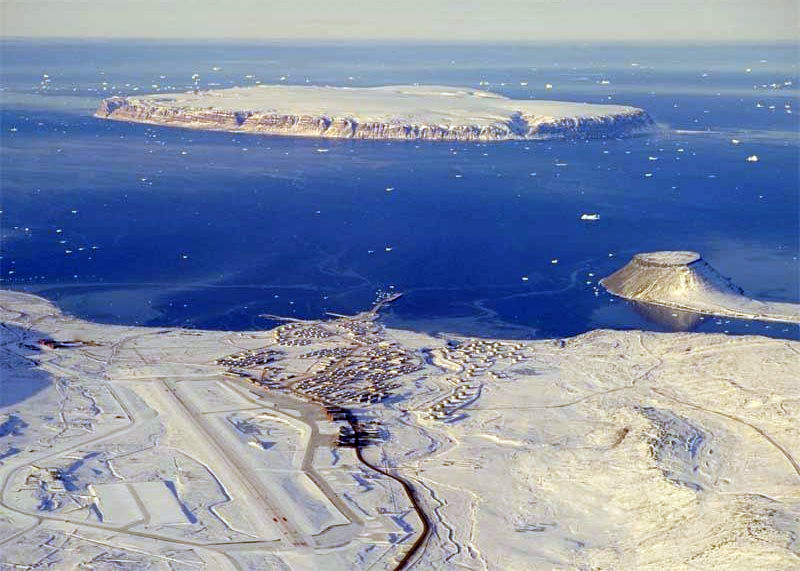
That legacy continues today at Pituffik Space Base, formerly Thule, a cornerstone of US missile warning and space surveillance systems. According to base officials, its sensors can track objects as small as a softball from thousands of miles away. Importantly, all of this capability already exists. Washington does not need to own Greenland to maintain it, and Denmark has never seriously objected.
The Russia and China argument, examined closely
So why does Trump continue to frame Greenland as a strategic necessity? The most common justification points to Russia and China. As Arctic ice retreats, new shipping routes are opening, raising fears of increased Russian and Chinese activity near North America.
There have been incidents, including the entry of Chinese research vessels into the extended continental shelf of the United States via Arctic routes. China has also deployed icebreakers in the region, signalling long-term interest. Russia, meanwhile, has maintained a strong Arctic presence for decades, including nuclear-powered icebreakers and military infrastructure.
Yet none of this is new, nor does it clearly justify a land grab. Greenland, as part of Denmark, falls under NATO’s Article 5 protections. Any hostile move by an external power would trigger a collective response. Even within US strategic documents, Russia has not featured as a central Arctic threat in recent years. On security grounds alone, the argument looks thin.
The real prize: rare earths and big money
A more convincing explanation lies underground. Greenland holds an estimated 1.5 million metric tones of rare earth element reserves, comparable to those of the United States and larger than Canada or South Africa. These minerals are essential for everything from electric vehicles to advanced weapons systems and artificial intelligence.
Major US billionaires are already invested. Jeff Bezos, Bill Gates, Michael Bloomberg, and Ronald Lauder all have stakes in Greenlandic resource projects. Lauder, according to former national security adviser John Bolton, pushed for acquiring Greenland as early as 2018. In 2025, the US-backed Critical Minerals Corporation signed onto the Tanbreez project in southern Greenland, one of the world’s largest deposits of heavy rare earths.
China, however, is not standing still. It is heavily invested in the Kvanefjeld project, the world’s largest rare earth site, through Shenghe Resources, a major shareholder in Greenland Minerals. The European Union has also designated Greenland’s Amitsoq graphite project as strategically vital under its Critical Raw Materials Act. Washington, in many ways, arrived late to an already crowded field.
What Greenlanders actually want
Greenlanders are not passive observers in this contest. A 2025 opinion poll showed that 56 percent support independence from Denmark, while only 28 percent oppose it. At the same time, an overwhelming 85 percent rejected the idea of joining the United States.
Independence, however, comes with a dilemma. Greenland has little agriculture and limited revenue streams beyond natural resource extraction. To fund statehood, mining and oil exploration become almost unavoidable. Already, more than a dozen offshore oil projects are in the pipeline, raising serious environmental concerns in one of the world’s most sensitive ecosystems.
Allegations from Denmark of covert US influence operations in Greenland only add to local unease. Caught between powerful suitors, Greenlanders face a choice that often feels like deciding between exploitation by old rulers or new ones.
What this means for India
For New Delhi, Greenland offers a blunt lesson in realpolitik. As competition over critical minerals intensifies, diplomacy is increasingly backed by economic and strategic muscle. The global race for resources tied to artificial intelligence, clean energy, and defence will not be gentle.
India must identify its own mineral priorities, both domestically and abroad, and pursue them with clarity and speed. Multi-alignment is no longer a slogan but a necessity in a world where partners and rivals frequently overlap. Staying agile, pragmatic, and unsentimental may be the only way forward.