
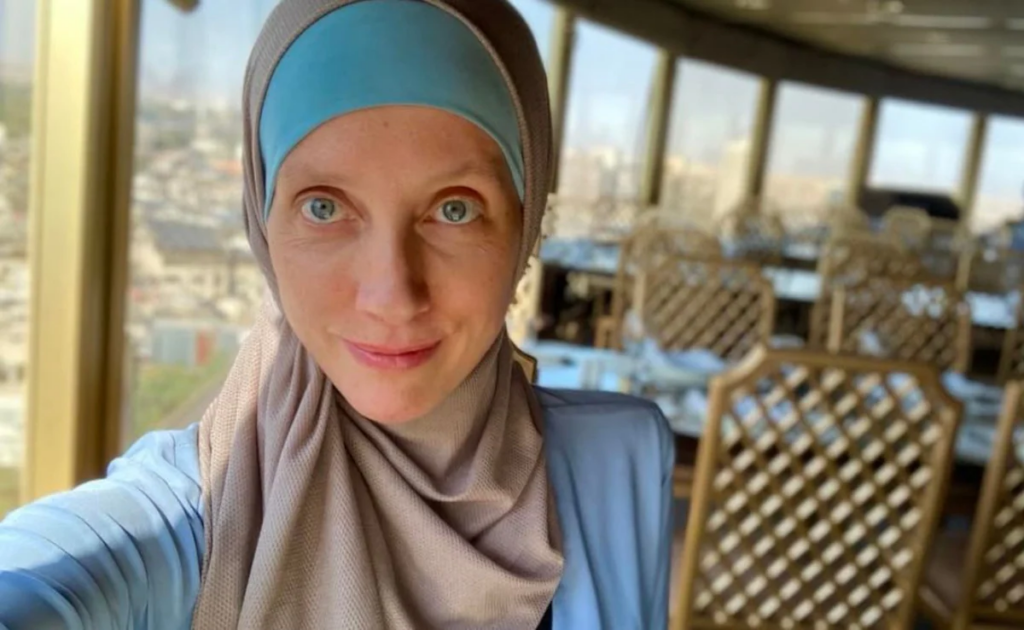
The disappearance of U.S. journalist Shelly Kittleson in Baghdad has raised urgent questions about her safety, the motives behind her abduction, and the broader risks facing reporters in conflict zones. As of now, Iraqi security officials believe she is alive—but her fate remains uncertain.
Here’s a clear, fact-based look at what we know so far, what’s at stake, and why this case matters beyond one individual.
What happened to Shelly Kittleson?
Shelly Kittleson, a freelance journalist contributing to Al-Monitor, was kidnapped in Baghdad on March 31.
According to reports:
- She was abducted on al-Saadoun Street, near a hotel.
- CCTV footage shows men forcing her into a vehicle before fleeing.
- The incident occurred amid heightened regional tensions tied to the ongoing Iran–U.S. conflict.
The video of the abduction—now widely circulated—underscores how quickly such incidents unfold, even in urban areas under government control.
Why it matters:
Baghdad is not new to security threats, but a targeted kidnapping of a foreign journalist signals a potentially strategic move, not random violence.
Is Shelly Kittleson alive?
Iraqi security officials told The Washington Post that they believe Kittleson is alive.
Their assessment is based on:
- Intelligence gathered after the kidnapping
- Intercepts and local sources
- Patterns consistent with previous militia detentions
Officials suspect she is being held in Jurf al-Sakhar, a known stronghold of the militia group believed to be responsible.
What we don’t know:
- Her current condition
- Whether proof-of-life has been established
- The timeline for potential negotiations
This lack of verified information is typical in early-stage hostage situations, where intelligence is often incomplete or deliberately obscured.
Who is behind the kidnapping?
The suspected group: Kataib Hezbollah
Iraqi officials believe the Iran-linked militia Kataib Hezbollah is responsible.
This group:
- Is aligned with Iran’s Islamic Revolutionary Guard Corps
- Has a history of anti-American operations
- Controls territory south of Baghdad
- Has previously detained foreign nationals
A pattern of hostage diplomacy
Kataib Hezbollah is reportedly seeking leverage.
According to emerging reports, the group has:
- Approached Iraqi officials
- Proposed a prisoner exchange
- Requested the release of four detained members accused of rocket attacks in Syria
This suggests the kidnapping may be less about the individual journalist and more about geopolitical bargaining.
Context:
Militias in Iraq and the broader region have used similar tactics before—detaining foreign nationals to extract concessions from governments.
How has the U.S. responded?
The U.S. government has acknowledged the situation and is actively working to secure Kittleson’s release.
Key responses include:
- Coordination between the State Department and the FBI
- Diplomatic pressure on Iraqi authorities
- Public warnings urging Americans to follow travel advisories
Officials also noted that Kittleson had been warned about the risks of operating in Iraq, especially after recent U.S. and Israeli strikes on Iran heightened tensions.
Why this matters:
The U.S. response signals that the case is being treated as a high-priority diplomatic issue, not just a criminal matter.
What is Iraq doing to find her?
The Iraqi government has confirmed the kidnapping and launched an investigation.
Immediate actions taken:
- Security forces pursued the kidnappers shortly after the abduction
- A suspect was captured after a vehicle crash during the chase
- A vehicle linked to the crime was seized
Authorities say their focus is now on:
- Locating Kittleson
- Identifying all individuals involved
- Preventing escalation with militia groups
Challenges on the ground
Iraq faces a complex security landscape where:
- Militias operate with varying degrees of autonomy
- State control is uneven in certain regions
- Political sensitivities complicate direct confrontations
This makes recovery operations far more complicated than standard law enforcement cases.
Why are journalists at risk in Iraq?
Kittleson’s kidnapping highlights a broader issue: reporting in conflict zones carries increasing risks.
Key threats journalists face:
- Targeted kidnappings for leverage
- Surveillance and intimidation
- Limited protection from local authorities
- Being caught in geopolitical crossfire
Freelancers, in particular, are vulnerable because they often:
- Operate without institutional security backing
- Take on higher-risk assignments
- Work independently in volatile areas
What does this mean for U.S.–Iraq relations?
This incident comes at a delicate time.
Tensions are already elevated due to:
- U.S. military actions in the region
- Iran’s influence in Iraqi politics
- Ongoing militia activity
If Kataib Hezbollah is confirmed to be responsible, the situation could:
- Strain diplomatic ties
- Trigger pressure for military or economic responses
- Complicated cooperation between Washington and Baghdad
At the same time, Iraq must balance:
- Responding to U.S. demands
- Avoiding internal conflict with powerful militias
Could a prisoner swap happen?
A negotiated exchange is one of the most likely outcomes—but it’s far from simple.
Factors influencing a deal:
- The value of detained militia members
- U.S. willingness to engage indirectly
- Iraq’s political constraints
- International pressure
Historically, such negotiations:
- Take weeks or months
- Involve intermediaries
- Require careful coordination to avoid escalation
What happens next?
The coming days will be critical.
Watch for:
- Confirmation of Kittleson’s location
- Proof-of-life signals
- Formal negotiation channels opening
- Increased diplomatic activity
Until then, much of the information will remain:
- Fragmented
- Unverified
- Strategically controlled
TL;DR
- U.S. journalist Shelly Kittleson was kidnapped in Baghdad on March 31.
- Iraqi officials believe she is alive and held by Kataib Hezbollah.
- The militia is reportedly seeking a prisoner swap.
- The U.S. and Iraq are working to secure her release.
- The case highlights growing risks for journalists in conflict zones.