
Quick Summary
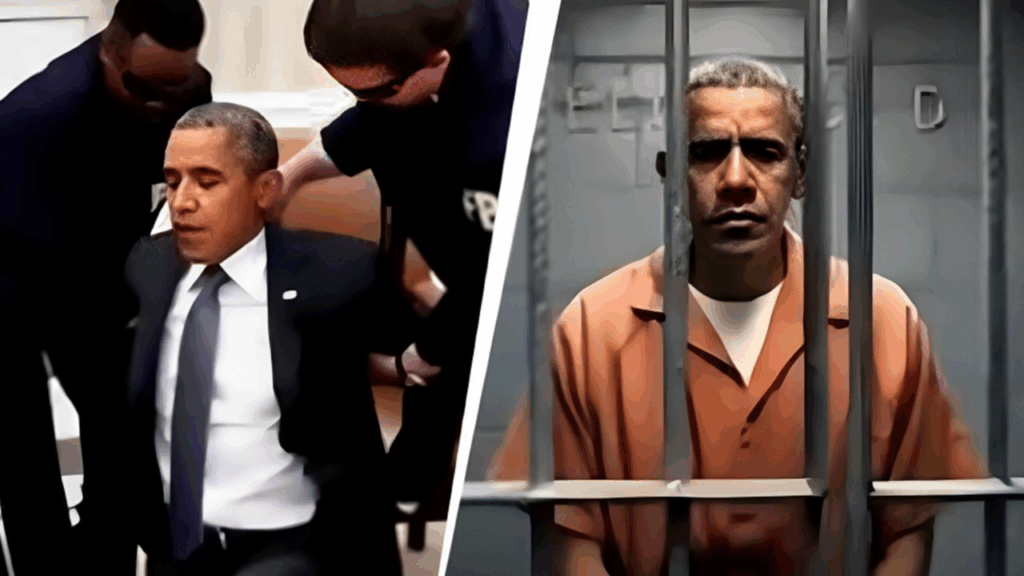
- Donald Trump posted an AI-generated “deepfake” video on Truth Social showing former President Barack Obama’s arrest by FBI agents in the Oval Office.
- The video went viral and sparked widespread criticism for its potential to spread misinformation.
- The post came shortly after former Hawaii Congresswoman Tulsi Gabbard accused the Obama administration of election fraud in 2016.
- No disclaimer was provided to clarify the video’s fictional nature, raising concerns about the dangers of political deepfakes.
- The incident highlights real risks for public trust, political stability, and the ethical use of AI in political discourse.
What Happened in Barack Obama’s Arrest Viral AI Video?
On Monday, former President Donald Trump shared an AI-generated video on his platform, Truth Social, that appeared to show the Federal Bureau of Investigation arresting Barack Obama in the White House. The video, digitally crafted to look convincing, quickly spread across social media and news outlets.
The clip begins with Obama stating, “especially the president is above the law.” Then, it cuts to Joe Biden, also an AI-generated likeness, asserting, “no one is above the law.” The scene shifts to agents handcuffing Obama in the Oval Office, the same room he once occupied as president. Meanwhile, Trump is depicted sitting nearby, smiling. The video concludes with Obama wearing an orange jumpsuit in a prison cell – a visual cue closely associated with American criminal mugshots.
Barack Obama’s Arrest: Why Is the Video Provoking Outrage?
The biggest concern, according to critics, isn’t just the video’s existence but Trump’s decision to post it without any label or disclaimer clarifying that it is artificial and not real footage. This omission led to accusations that Trump was deliberately spreading misinformation.
- Misinformation Risk: The video’s realistic appearance, combined with a misleading narrative, can confuse viewers who don’t immediately recognize it as fake. Especially for those with limited digital literacy, the line between reality and AI fiction blurs.
- Public Reaction: Many politicians, journalists, and internet users condemned the post as “deeply irresponsible.” Some suggested the move was meant to distract from recent news cycles, such as the ongoing discussion around the Epstein files, where Trump’s name has appeared.
- Expert Warnings: Media ethics experts say unlabeled AI videos in politics set a dangerous precedent, making it easier for falsehoods to spread and for public trust in institutions to erode.
What Prompted Trump to Post This Video Now?
The timing is noteworthy. Trump posted the video just days after Tulsi Gabbard, the former U.S. Representative from Hawaii and Democrat-turned-independent, accused the Obama administration of orchestrating a “treasonous conspiracy” to undermine Trump’s 2016 election victory. Gabbard claimed that national security officials under Obama “manufactured” intelligence assessments about Russian interference for political purposes.
- Gabbard’s Allegations: In a public statement, she demanded an investigation, saying, “No matter how powerful, every person involved in this conspiracy must be investigated and prosecuted to the fullest extent of the law.”
- Trump’s Endorsement: Trump responded on social media with apparent approval, writing, “Congratulations to Tulsi Gabbard. Keep it coming!!!”
- Broader Context: The back-and-forth fits into a larger narrative of election fraud claims that have shaped U.S. politics since 2016. Both Trump and some of his allies continue to press the idea that the 2016 election was tainted by misconduct, despite multiple investigations finding no evidence to support this.
What Are AI-Generated Deepfakes, and Why Should You Care?
AI-generated deepfakes are videos or images created using artificial intelligence to make it appear that someone said or did something they never actually did. The technology has advanced rapidly, making it increasingly difficult to distinguish real from fake content.
- How They Work: Tools like DeepFaceLab and others use machine learning to swap faces, alter voices, and generate realistic but entirely fictional scenes.
- Potential Uses: While some deepfakes are used for satire or entertainment, their misuse in politics can manipulate public opinion, spread false information, and distort historical record.
- Current Examples: Beyond this incident, deepfakes have been used to impersonate world leaders, create fake endorsements, and even fabricate evidence in court cases.
Why Is This Different from Satire or Parody?
Satire and parody have long been part of political discourse in the U.S., protected under free speech laws. However, the key difference is intent and labeling:
- Satire/Parody: Clearly presented as humor or commentary, not intended to deceive.
- Deepfakes: Often lack clear labels, making it easy for viewers to mistake fiction for fact.
- Legal and Ethical Lines: The Federal Election Commission and social media platforms are still grappling with how to regulate or label such content to prevent harm.
What Are the Risks for Democracy and Public Trust?
The spread of unlabeled AI videos in politics poses several dangers:
- Erosion of Trust: When people can’t tell what’s real, trust in media, government, and each other declines.
- Manipulation of Voters: False narratives can influence elections and policy debates in ways that damage the democratic process.
- Political Polarization: Misinformation deepens divides, making compromise and factual debate harder.
- Accountability: It becomes easier for public figures to deny their own words or actions by claiming they are deepfakes.
What Can Be Done to Combat Political Deepfakes?
Combating the harmful effects of AI-generated misinformation requires a multi-layered approach:
- Platform Policies: Social media companies must enforce clear labeling for synthetic media and remove harmful deepfakes promptly.
- Media Literacy: Educational programs can teach the public how to spot and critically evaluate AI-generated content.
- Legal Frameworks: Legislators may need to update laws to address the unique challenges posed by deepfakes, balancing free speech with protections against fraud and defamation.
- Tech Solutions: Developing tools to detect and watermark AI-generated content could help distinguish real from fake.
What Are the Experts Saying?
- Cybersecurity Experts: Warn that deepfake technology is outpacing detection methods, making proactive measures essential.
- Political Scientists: Note that deepfakes are a new tool in the arsenal of information warfare, with potential to destabilize democracies.
- First Amendment Advocates: Caution that any regulation must be carefully crafted to avoid chilling legitimate speech.
Donald Trump’s decision to share an unlabeled AI-generated video depicting Barack Obama’s arrest is more than a political stunt—it’s a case study in the growing risks of deepfake technology. As tools to create realistic fake videos become more accessible, the potential for misinformation in politics rises sharply. The incident underscores the urgent need for public awareness, platform accountability, and thoughtful regulation to protect the integrity of public discourse. For now, the best defense is a skeptical, well-informed public—and a commitment to calling out fiction dressed as fact.