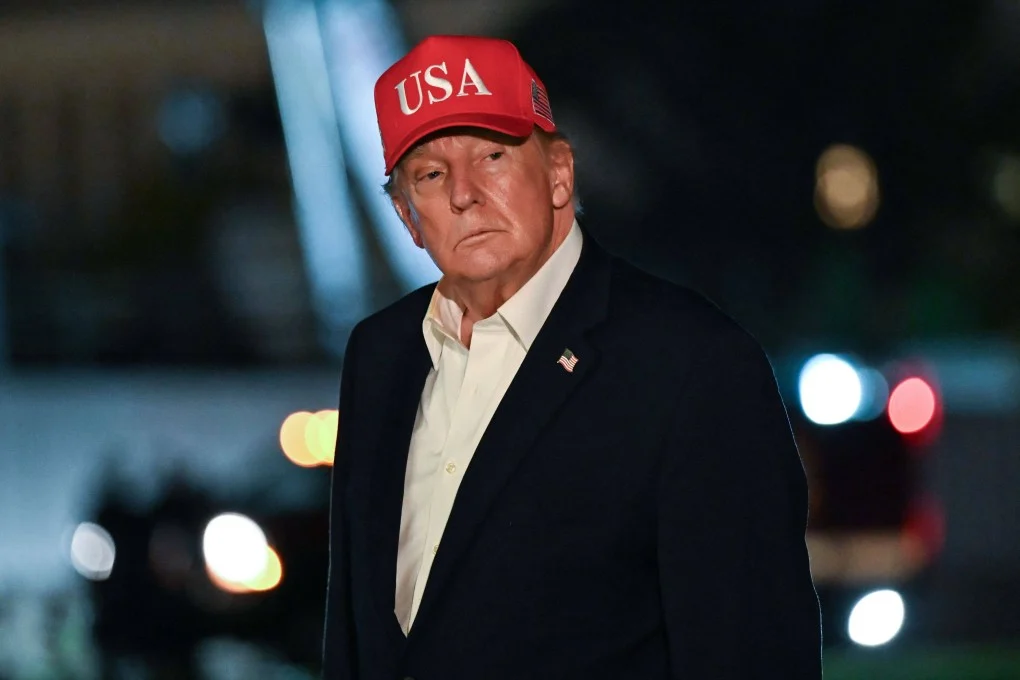
President Donald Trump on Monday escalated trade tensions with Canada, threatening to prevent the opening of a major cross-border bridge linking Michigan and Ontario unless Ottawa agrees to renegotiate tariffs and address what he called the exclusion of American products from Canadian markets.
In a lengthy post on his Truth Social platform, Trump accused Canada of unfair trade practices, sidelining US-made goods, and “cozying up” to China—claims that immediately injected political volatility into a long-planned infrastructure project critical to North American trade.
What bridge is Trump threatening to block?
The Gordie Howe International Bridge
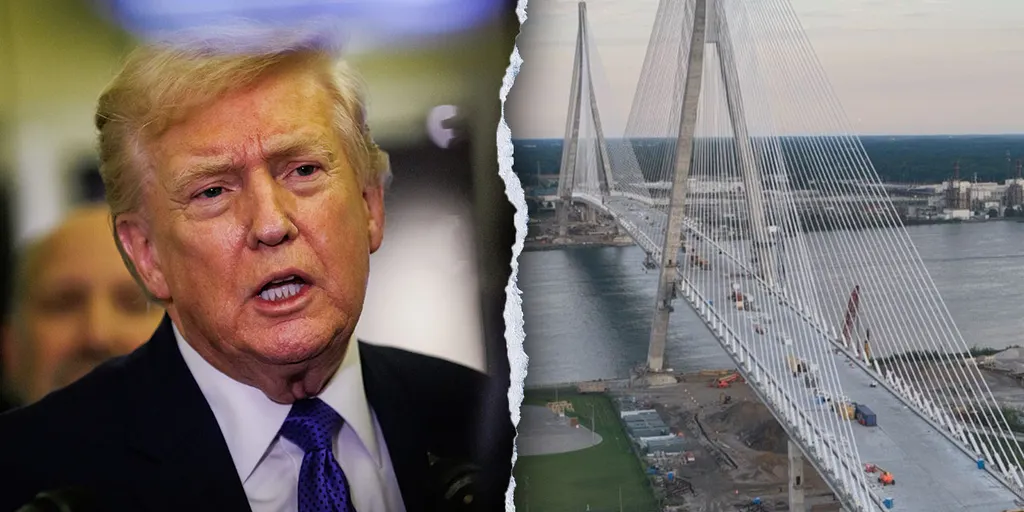
At the center of the dispute is the Gordie Howe International Bridge, a multibillion-dollar project currently under construction that will connect Detroit, Michigan, with Windsor, Ontario. Once completed, the bridge is expected to become one of the busiest trade corridors between the two countries, easing congestion and supporting billions of dollars in cross-border commerce each year.
Named after legendary Canadian hockey player Gordie Howe, who spent much of his career with the Detroit Red Wings, the bridge has long been promoted as a symbol of US–Canada cooperation.
Trump, however, framed it as an example of Washington being taken advantage of.
Why is Trump objecting to the bridge?
Claims of unfair trade and lack of US content
In his post, Trump argued that Canada moved forward with building the bridge using “virtually no US content,” accusing Ottawa of excluding American steel and other US-made materials from the project.
He also blamed former President Barack Obama for granting Canada a waiver from the Buy American Act, which requires federal agencies to prioritize US-manufactured materials and components.
According to Trump, that waiver allowed Canada to bypass US suppliers entirely.
“What does the United States of America get — absolutely NOTHING!” Trump wrote, adding that he would not allow Canada to “take advantage of America.”
Where sources are needed: Official documentation on Buy American Act waivers and procurement rules related to the bridge would be necessary to verify these claims.
How does this tie into tariffs and alcohol restrictions?
Broader trade grievances
Trump’s objections extended well beyond the bridge itself. He accused Ontario of blocking American alcohol products from store shelves, claiming US spirits and beverages are “absolutely prohibited” in the province.
He framed this as further evidence of one-sided trade policies that disadvantage American producers—an argument he has repeatedly made throughout his political career.
Trump also suggested that these issues could only be resolved if Canada came back to the negotiating table on tariffs and broader trade terms.
Why did Trump bring China into the dispute?
Warning against closer Canada–China ties
In one of the more striking parts of his post, Trump accused Canadian leadership—specifically Prime Minister Mark Carney, as referenced in his statement—of wanting to strike deals with China.
Trump warned that such a move would harm Canada more than the US, arguing that China would dominate the relationship and leave America with “the leftovers.”
He took the rhetoric a step further by invoking Canada’s national sport.
“The first thing China will do is terminate ALL Ice Hockey being played in Canada, and permanently eliminate The Stanley Cup,” Trump wrote.
The comment, while hyperbolic, underscored Trump’s broader message: that closer ties with China pose cultural as well as economic risks.
Can a US president actually block the bridge?
Legal and political uncertainty
While Trump has threatened to prevent the bridge’s opening, it remains unclear how such a move would play out legally. The project involves multiple layers of approval and coordination between US federal authorities, the State of Michigan, and the Canadian government.
Blocking or delaying the opening could:
- Trigger legal challenges
- Disrupt regional supply chains
- Strain diplomatic relations with Canada, a key US ally
Even so, Trump’s comments signal a willingness to use infrastructure projects as leverage in trade negotiations—a strategy consistent with his previous approach to tariffs and bilateral deals.
How has Canada responded?
No official comment yet
As of Monday, there was no public response from Ottawa. Fox News Digital reported that it had reached out to the Canadian Embassy in Washington, D.C. for comment.
Any formal response, or lack thereof, could shape how seriously the threat is taken in diplomatic and business circles.
Why does this matter beyond one bridge
Trade, politics, and leverage
The Gordie Howe International Bridge is not just a construction project. It represents:
- A critical artery for US–Canada trade
- Thousands of jobs are tied to cross-border logistics
- A test case for how trade disputes can spill into infrastructure and diplomacy
Trump’s threat highlights how economic nationalism and trade policy can intersect with long-term projects—potentially turning shared infrastructure into bargaining chips.
For businesses, commuters, and policymakers on both sides of the border, the stakes go well beyond rhetoric.
TL;DR
- Trump threatened to block the opening of the Gordie Howe International Bridge unless Canada negotiates on tariffs and trade.
- He accused Canada of excluding US-made materials and bypassing Buy American rules.
- Trump also criticized Ontario’s alcohol policies and warned against closer Canada–China ties.
- The comments raise uncertainty around a key US–Canada infrastructure project.