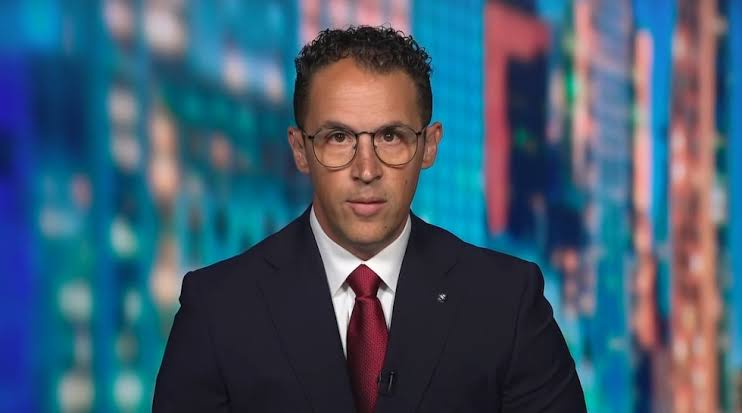
US Air Force Maj. Jason Watson is facing criminal charges under military law after repeatedly criticizing President Donald Trump and publicly calling for his impeachment.
Watson, 40, was initially placed in pretrial confinement on August 18, days after appearing on CNN and again calling for Trump’s removal. The case has since advanced: according to a charging document shared with CNN, the Air Force formally charged Watson on August 24 with three alleged violations of Article 88 of the Uniform Code of Military Justice, five under Article 92 and two under Article 133.
The charges have drawn attention because Article 88, which concerns “contemptuous” words against certain senior officials including the president, is rarely used. The case also raises a difficult question: how far can an active-duty military officer go in publicly criticizing the commander in chief?
Who is Jason Watson?
Watson is a 40-year-old active-duty Air Force major and a graduate of the US Air Force Academy. He has served in the Air Force for roughly 17 years, according to recent reporting.
He has become publicly known not for his military work but for his outspoken opposition to Trump.
His current case follows an earlier protest in which he publicly called for Trump’s impeachment and removal while wearing his Air Force uniform.
What happened at the US Capitol?
On July 1, Watson walked onto the steps of the US House of Representatives wearing his Air Force uniform and held a sign reading “Impeach Convict Remove,” referring to Trump and Vice President JD Vance.
He remained there for roughly three minutes before Capitol Police arrested him under a Washington, DC provision concerning crowding, obstructing or incommoding. Rep. Al Green initially accompanied Watson down the steps, but police arrested him after the congressman left.
That particular criminal case was dropped the following day, according to the Washington Post’s reporting.
The Capitol arrest, however, triggered a separate military investigation.
Why was Watson detained again?
Watson was ordered into pretrial confinement on August 18, according to the Air Force.
At the time, the service said there was probable cause supporting allegations of “continued misconduct.” Watson was being held at a county facility in Maryland under a military hold while the investigation continued.
His attorney, Chris Mutimer, said Watson had informed his chain of command through counsel that he would no longer wear his uniform. According to the attorney’s account, Watson was ordered to put the uniform back on and was arrested roughly 20 minutes later.
The Air Force did not initially specify what misconduct allegations had triggered the confinement.
That changed on August 24, when formal charges were filed.
What charges does Jason Watson face?
According to the charging document shared with CNN, Watson faces 10 specifications under the UCMJ:
- Three alleged violations of Article 88
- Five alleged violations of Article 92
- Two alleged violations of Article 133
The Article 88 allegations concern statements the Air Force says were contemptuous toward Trump.
Article 92 allegations concern alleged failures to obey lawful orders or regulations.
The Article 133 allegations concern alleged conduct unbecoming an officer.
These are charges, not convictions. Watson remains entitled to the presumption of innocence and to contest them through the military justice system.
What is Article 88 of the UCMJ?
Article 88 is one of the most unusual provisions involved in the case.
Federal law states that a commissioned officer who uses contemptuous words against the president, vice president, Congress and certain other specified officials may be punished by court-martial.
The provision applies specifically to commissioned officers, which is why Watson’s status as a major matters.
It creates a legal distinction between an active-duty officer publicly criticizing the president and an ordinary civilian doing so.
A civilian can ordinarily call for a president’s impeachment without facing a criminal charge simply because of the political opinion expressed.
A commissioned military officer operates under a separate legal regime.
Why is Article 88 controversial?
The provision dates back to the UCMJ’s creation in 1951 and has long raised questions about the balance between military discipline and constitutional free speech.
The Supreme Court discussed Article 88 in the 1974 case Parker v. Levy, which examined the military’s ability to regulate speech and conduct by service members. The Court’s decision recognized the special legal environment governing the armed forces, while the case also included a strong dissent emphasizing First Amendment concerns.
That history makes Watson’s case unusual.
The issue is not simply whether he criticized Trump.
It is whether a commissioned officer’s public statements crossed the threshold established by military law and whether the government’s enforcement of that law complies with constitutional protections.
What does Article 92 mean?
Article 92 covers failure to obey an order or regulation.
Federal law states that a service member can be punished for violating a lawful general order or regulation, failing to obey a lawful order from an armed-forces member when required to do so, or being derelict in performing assigned duties.
The five Article 92 allegations in Watson’s case appear to concern orders or rules connected to his conduct as an active-duty officer.
The exact specifications will matter.
A generic accusation of “disobeying orders” is not enough to understand the case; each charge will ultimately depend on the precise order involved and what prosecutors allege Watson did or failed to do.
What does Article 133 mean?
Article 133 addresses conduct unbecoming an officer.
Federal law provides that a commissioned officer, cadet or midshipman convicted under the article can be punished as a court-martial directs.
In Watson’s case, the Article 133 allegations add another dimension beyond the specific question of what he said.
They concern whether his conduct, taken in the context of his responsibilities as an officer, was incompatible with the standards expected of commissioned personnel.
When were the Article 88 allegations made?
According to the charging document, the Article 88 allegations are tied to three separate episodes:
A June interview with the Defenders of our Republic Substack newsletter, his July 1 protest at the US Capitol and an August 17 CNN interview.
That is significant because the case is not based on one isolated comment.
The charges appear to allege a continuing pattern of public conduct.
What did Watson say about Trump?
Watson has repeatedly argued that Trump has failed in office and should be removed.
In his CNN interview, he accused Trump of violating the Constitution, breaking the law and engaging in corruption.
Those statements represent Watson’s political views. They are not findings by the Air Force or a court.
His willingness to repeat those views publicly, despite knowing that military rules could apply to him, has become central to the controversy.
Did Watson know he could face consequences?
Yes.
Before his July protest, Watson reportedly acknowledged that publicly challenging the president while serving in the military could carry serious personal consequences.
He nevertheless chose to protest in uniform.
His earlier history also includes a 22-day hunger strike in 2025 during which he anonymously protested Trump and called for impeachment.
The progression from an anonymous protest to an openly identified protest in uniform is part of what has made the case so unusual.
Is protesting Trump illegal for military personnel?
Not every form of political expression by a service member is automatically criminal.
The military has rules governing political activity, the wearing of uniforms during political events and conduct that could undermine military discipline or create the appearance of official institutional endorsement.
Those restrictions are separate from Article 88.
In Watson’s case, prosecutors are now alleging a combination of contemptuous statements, disobedience of orders or regulations and conduct unbecoming an officer.
The precise legal theory will become clearer as the case proceeds.
Why does wearing the uniform matter?
The uniform is one of the most important facts surrounding Watson’s protest.
A civilian standing outside Congress and calling for Trump’s impeachment would normally be engaged in protected political expression.
An active-duty officer doing the same thing while wearing a military uniform can create a different legal and institutional issue.
The military has a strong interest in preventing political activity from being mistaken for an official military position.
That is part of the reason military rules place restrictions on partisan political activity by service members.
What happens next?
Now that formal charges have been filed, Watson’s case moves beyond the preliminary investigation stage.
The next steps will depend on how the military justice process develops, including decisions on pretrial confinement, the level of court-martial proceedings and Watson’s responses to the charges.
His attorney can challenge the government’s case and seek relief through the military justice system.
The prosecution, meanwhile, will have to establish the elements of each specification beyond the applicable legal standard required for conviction.
A formal charge is therefore not the same as a finding of guilt.
Could Watson be court-martialed?
Yes, that is possible.
The UCMJ provides the framework for criminal proceedings against military personnel subject to the code. It applies to active-duty members of the armed forces and establishes both offenses and military legal procedures.
Whether Watson ultimately faces a court-martial, and what form it takes, will depend on subsequent decisions by military authorities and the defense’s legal challenges.
The case could also develop through negotiated proceedings or other military justice mechanisms rather than necessarily ending in a full trial.
Why is this case attracting so much attention?
The case sits at the intersection of military discipline, presidential power and free speech.
Trump is not merely a political figure in this context.
He is also the commander in chief.
Watson is not simply a private citizen.
He is an active-duty commissioned officer who has publicly called for the removal of the president while wearing the uniform.
That creates an unusually direct conflict between an individual’s political expression and the military’s institutional requirements.
The bigger picture
Jason Watson’s case began with a protest on the steps of the US Capitol and has now developed into a rare military criminal proceeding involving Article 88.
He was first arrested by Capitol Police on July 1 after holding a sign calling for Trump’s impeachment and removal. The civilian case stemming from that arrest was dropped, but the Air Force opened its own investigation.
Watson was then placed in pretrial confinement on August 18 after publicly criticizing Trump again.
On August 24, formal military charges were filed: three under Article 88, five under Article 92 and two under Article 133.
The case is now about more than a protest.
It will test how the military applies some of its oldest restrictions on commissioned officers’ political speech in an era of intensely polarized politics and instantaneous media.
For Watson, the immediate issue is legal.
For the broader public, the case raises a much larger question: how should the United States balance a service member’s constitutional rights with the discipline, political neutrality and civilian control that the military is required to maintain?
That question will ultimately be answered through the military justice process and, potentially, the courts.