
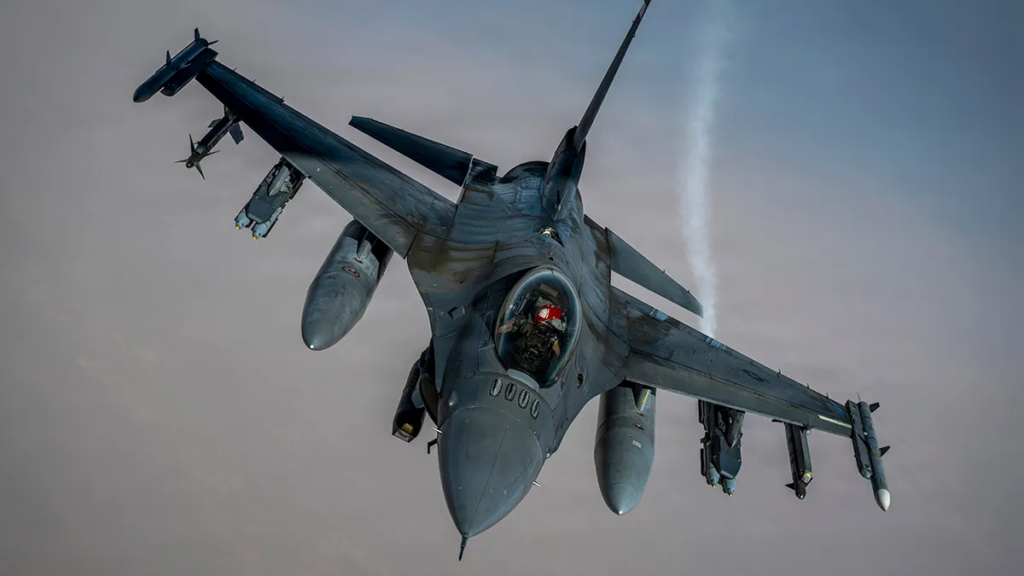
Two general aviation aircraft were intercepted by U.S. fighter jets after entering temporary restricted airspace near President Donald Trump’s golf club in Bedminster, New Jersey, on Sunday, August 9. The incident highlights how tightly protected airspace around a president can become, particularly when a presidential visit overlaps with a major sporting event.
The North American Aerospace Defense Command, or NORAD, said F-16 fighter aircraft responded to the two airspace violations and safely escorted the planes out of the restricted area. Officials did not indicate that either aircraft posed a confirmed threat to Trump or anyone else on the ground.
The interceptions came as Trump was expected to spend the weekend at Trump National Golf Club Bedminster while the LIV Golf New York tournament was being held nearby. The episode also renewed warnings to general aviation pilots about checking airspace restrictions before takeoff.
Why were F-16s flying over Trump’s Bedminster golf club?
The key issue was a Temporary Flight Restriction, or TFR, established around Bedminster.
TFRs are temporary limits placed on aircraft operations in a defined area. They can be used for presidential movements, major sporting events, national security situations, disasters and other circumstances requiring additional airspace protection.
The FAA notes that pilots operating around Trump-related locations can encounter frequent TFRs associated with VIP movements and special events. It specifically warns pilots to check Notices to Air Missions, commonly called NOTAMs, because restrictions can change frequently.
In Sunday’s incident, two general aviation aircraft entered the restricted area over Bedminster and were intercepted by NORAD aircraft. Both were safely escorted away.
The presence of fighter jets does not by itself mean officials believed the aircraft were hostile. An interception can be a security response designed to identify an aircraft, establish communication and direct it away from protected airspace.
What happened when the aircraft entered restricted airspace?
NORAD did not publicly characterize the two aircraft as an attack or deliberate security threat.
Instead, the aircraft were intercepted and escorted out of the protected area. The reason they entered the TFR has not been publicly established in the information available so far.
The response is part of NORAD’s broader homeland-defense mission. Its aircraft can be used to identify and respond to aircraft that violate protected airspace, particularly around sensitive locations.
A similar pattern has occurred elsewhere in the Northeast this summer.
On July 19, NORAD said more than 10 general aviation aircraft entered restricted airspace over Bedminster and East Rutherford, New Jersey. Three required fighter-jet intercepts, and NORAD aircraft released flares during two of those intercepts to attract the pilots’ attention. All of the aircraft were safely escorted away.
That earlier incident demonstrates why the latest Bedminster interception should not automatically be interpreted as evidence of an imminent threat.
What is a Temporary Flight Restriction?
A Temporary Flight Restriction is essentially a temporary rule controlling who can fly through a particular section of airspace.
The restriction can cover a specific geographic area and altitude range and can remain active only for a defined period. Pilots are expected to review the relevant NOTAMs before flying because the restrictions contain operational details that may affect their route.
The FAA’s TFR system lists restrictions by location, purpose, effective time and affected airspace. A Bedminster TFR issued earlier in 2026, for example, covered a defined area around the Solberg VOR/DME and extended from the surface to a specified altitude.
The exact boundaries and operating requirements vary from one TFR to another.
That matters because a pilot who routinely flies through an area may still violate a restriction if a new TFR becomes active for a presidential visit or special event.
Why presidential visits trigger TFRs
The president’s movements require additional layers of security.
Aircraft are only one part of that system. Radar, air-defense assets, fighter aircraft, law enforcement and other agencies can work together to monitor the airspace around a protected location.
The FAA also warns pilots near President Donald J. Trump’s airport in West Palm Beach, Florida, that VIP movements can result in frequent TFRs and advises them to check NOTAMs before every flight.
The same principle applies to other locations where a president or other protected person is present.
What happens when NORAD intercepts a civilian plane?
An interception can look dramatic from the ground, especially when a fast-moving F-16 approaches a much smaller civilian aircraft.
But the objective is generally to establish control of the situation and communicate with the aircraft.
NORAD’s published guidance says pilots intercepted by its aircraft should immediately switch to emergency frequency 121.5 or 243.0 and reverse course while awaiting additional instructions on those frequencies.
This procedure gives military aircraft a way to communicate with a civilian pilot who may not have established contact with the appropriate air-traffic-control facility.
What do fighter jets do during an interception?
The fighter aircraft may maneuver near the civilian aircraft to attract the pilot’s attention and establish visual communication.
In some previous incidents, NORAD has used flares for the same purpose. The command said the flares used during the July 19 Northeast interceptions were intended to draw pilots’ attention and were designed to burn out quickly and completely.
The fact that an F-16 is dispatched therefore does not mean that weapons are about to be used.
The aircraft provides a rapid-response capability that can investigate an unknown or noncompliant aircraft much faster than most conventional law-enforcement aircraft.
Why was the Bedminster airspace especially sensitive?
Bedminster has become a recurring focus of airspace-security operations because Trump frequently uses his New Jersey golf club while president.
The security requirements become more complicated when his presence coincides with a large event such as the LIV Golf tournament.
A major sporting event can increase the amount of aircraft activity in the surrounding region, while a presidential visit can simultaneously introduce additional flight restrictions. That combination creates more opportunities for pilots to encounter restricted airspace.
The July 19 incident illustrated the scale of the challenge, with more than 10 general aviation aircraft entering restricted areas around Bedminster and East Rutherford and three requiring NORAD interception.
Does entering a TFR mean a pilot is trying to threaten the president?
No.
An airspace violation alone does not establish intent.
A pilot may enter restricted airspace because of a navigation error, misunderstanding, outdated information, a failure to review NOTAMs or other circumstances. Authorities must determine the reason for an individual violation before drawing conclusions about intent.
That distinction is particularly important when fighter jets are involved. Images or videos showing an F-16 next to a small civilian plane can make an incident appear more dramatic than the official facts support.
In the latest Bedminster incident, officials said the two aircraft were safely escorted out. There was no publicly reported indication in the material available that the aircraft were hostile.
What should pilots do before flying near Bedminster?
The central lesson from the latest incident is simple: check the airspace before departure and check it again when required.
Pilots flying general aviation aircraft should:
- Review current NOTAMs before every flight.
- Check for active TFRs along the planned route.
- Pay attention to changes in presidential or VIP movements.
- Maintain required communications with air-traffic-control facilities.
- Know the appropriate procedures if intercepted by military aircraft.
- Immediately follow instructions provided during an interception.
NORAD explicitly reminded general aviation pilots to check NOTAMs before every flight following the latest incident.
Has NORAD intercepted aircraft near Trump before?
Yes. The Bedminster episode is part of a broader pattern of airspace interceptions around locations associated with presidential travel.
On July 17, NORAD said an F-16 intercepted a general aviation aircraft that violated an FAA TFR over New York City. The aircraft was safely escorted away.
Two days later, NORAD reported multiple interceptions involving restricted airspace over Bedminster and East Rutherford.
NORAD also reported an F-16 interception over Hagerstown, Maryland, in June after a general aviation aircraft violated a VIP TFR. The aircraft subsequently landed safely at a nearby airport.
These incidents show that military interception of civilian aircraft violating TFRs is an established security procedure rather than an event unique to Sunday’s incident.
What does the latest F-16 interception mean?
The Bedminster interception underscores the complexity of protecting presidential movements in busy civilian airspace.
The most important fact is that two general aviation aircraft entered a temporary restricted area and were safely escorted out by NORAD aircraft. There is currently no basis in the available information to describe the incident as an attempted attack on Trump.
The episode is also a reminder that restricted airspace can be temporary and highly localised. For pilots, missing a new NOTAM can turn an ordinary flight into a military interception within minutes.
For everyone watching the dramatic footage online, the distinction between an airspace violation and a security threat is equally important. An F-16 scrambling is visually striking, but the military response can be precautionary and procedural rather than evidence that a hostile aircraft has entered U.S. airspace.