
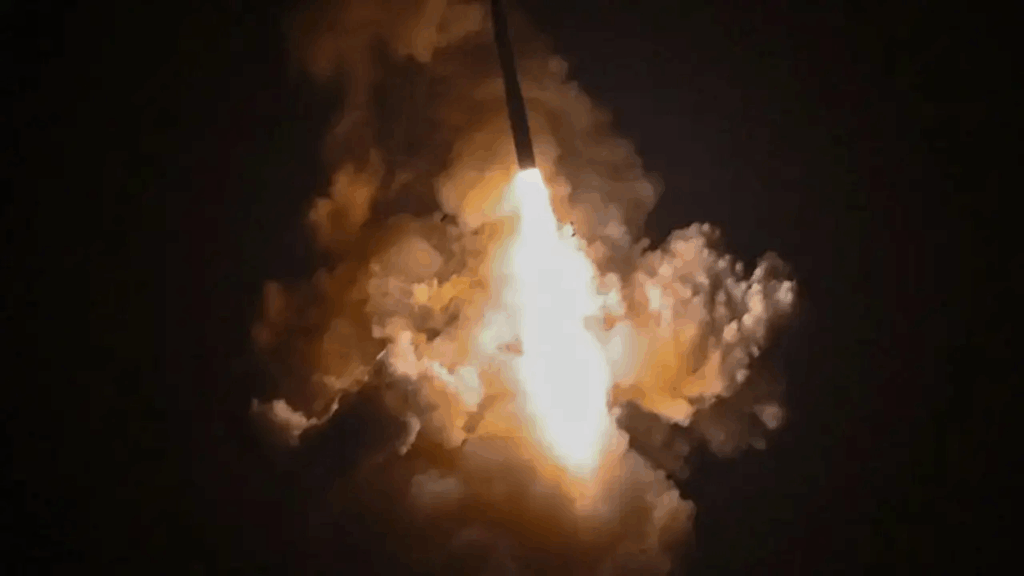
Routine test demonstrates America’s nuclear deterrent readiness
The U.S. Air Force launched an unarmed Minuteman III intercontinental ballistic missile (ICBM) from Vandenberg Space Force Base in California early Wednesday, conducting what officials described as a routine test of the nation’s nuclear deterrent capability.
The nuclear-capable missile traveled approximately 4,200 miles at speeds exceeding 15,000 mph before reaching its target at the Ronald Reagan Ballistic Missile Defense Test Site in the Marshall Islands’ Kwajalein Atoll.
“A powerful safeguard”: Military leaders emphasize test’s significance
General Thomas Bussiere, Commander of U.S. Global Strike Command, stated: “This ICBM test launch underscores the strength of the nation’s nuclear deterrent and the readiness of the ICBM leg of the triad.”
In an official release, the Air Force emphasized that the test was “not a response to current world events,” but rather part of routine maintenance of the nuclear arsenal. The statement credited “dedicated Airmen—missileers, defenders, helicopter operators and their support teams” with maintaining this critical defense capability.
Minuteman III: America’s land-based nuclear deterrent
The test involved a Minuteman III missile equipped with a Mark-21 re-entry vehicle, the same platform used to carry nuclear warheads in operational deployments. This model has been repeatedly tested, including just before President Donald Trump’s 2024 election victory.
The launch comes as the Trump administration pushes forward with its ambitious 175 billion “Golden Dome” missile defense initiative. On tuesday, the President announced 125 billion in initial funding for the system, which aims to protect against ICBMs, hypersonic missiles, cruise missiles, and drones. The administration hopes to complete the project within three years.