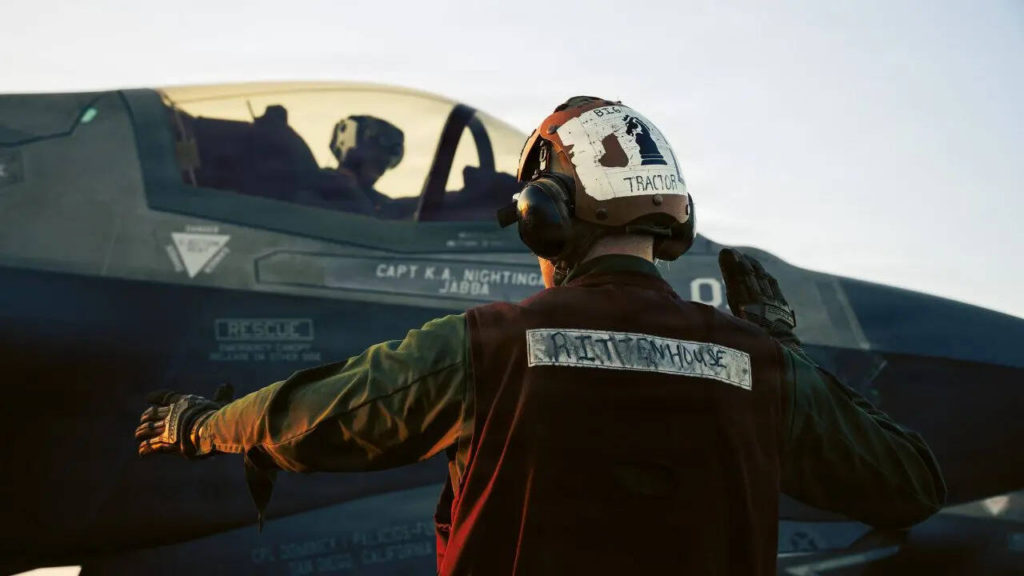
Modern warfare is starting to look less like a battlefield and more like a system crash. In the ongoing conflict involving Iran, the United States military appears to be shifting toward what analysts call a “paralysis strategy” — a method designed not just to destroy forces but to make an entire military stop functioning.
Under the reported campaign dubbed Operation Epic Fury by CENTCOM, six thousand targets have been struck. But the real focus is not quantity. It’s precision aimed at the brain, not just the body.
What is the paralysis strategy in modern warfare?
At its core, the paralysis strategy is about shutting down how a military thinks, communicates, and reacts.
Instead of destroying every tank or troop, the goal is to:
- Break command chains
- Disrupt communication networks
- Disable coordination between units
Think of it as cutting the wiring inside a machine. The parts may still exist, but they can’t work together.
The “system failure” concept
Military planners often describe this as attacking the “central nervous system” of an adversary. That includes:
- Command-and-control centers
- Intelligence hubs
- Radar and surveillance systems
- Digital communication infrastructure
If these are neutralized, even a large and well-equipped force can become fragmented and slow to respond.
How is the paralysis strategy different from traditional warfare?
For decades, wars were largely fought through attrition, a grinding process of wearing down enemy forces over time.
Attrition vs paralysis
Attrition warfare:
- Focuses on destroying troops and equipment
- Relies on sustained, large-scale combat
- Often leads to prolonged conflicts
Paralysis strategy:
- Targets systems instead of just forces
- Seeks rapid disruption
- Aims to end organized resistance early
This shift reflects advances in surveillance, precision weapons, and cyber capabilities.
What is Operation Epic Fury targeting?
Data from the United States Central Command suggests a wide-ranging but highly structured campaign.
Key target categories
- Command-and-control facilities, including those linked to the Islamic Revolutionary Guard Corps
- Integrated air defense systems (IADS)
- Ballistic missile launch infrastructure
- Drone production and deployment sites
- Military communication networks
Each of these plays a role in how Iran coordinates military action. Removing them creates confusion, delays, and gaps in response.
Why these targets matter
Destroying a missile launcher removes one threat. Disabling the network that controls dozens of launchers removes many more.
That’s the multiplier effect that the paralysis strategy aims to achieve.
How the US is executing a multi-domain campaign
This strategy isn’t limited to airstrikes. It’s unfolding across multiple domains simultaneously.
Air power and precision strikes
Aircraft such as the B-2 Spirit, B-52 Stratofortress, and F-35 Lightning II are being used to hit high-value targets with precision.
Electronic warfare and cyber disruption
Platforms like the EA-18G Growler jam communications and radar systems, creating confusion on the battlefield.
Cyber operations, though less visible, are believed to:
- Interrupt data flows
- Corrupt command signals
- Delay decision-making
Persistent surveillance
Drones such as the MQ-9 Reaper provide continuous intelligence, helping identify and track targets in real time.
Why maritime targets are a key focus
One of the most strategic aspects of the campaign is its focus on sea power, especially near the Strait of Hormuz.
What’s at stake
This narrow waterway handles a significant share of global oil shipments. Disruptions here can ripple through global markets.
Targets in the maritime domain
- Naval vessels and submarines
- Mine-laying equipment
- Anti-ship missile systems
By degrading these capabilities, the US aims to:
- Secure shipping lanes
- Limit Iran’s asymmetric naval tactics
- Reduce threats to the global energy supply
How Iran is adapting to the strategy
No military remains static under pressure.
Reports suggest Iran is shifting toward:
- Decentralized operations
- Targeting US air defense systems
- Using drones and missiles to stretch defenses
This reflects a broader doctrine often described as “mosaic defense,” where smaller, dispersed units operate independently to avoid systemic collapse.
Why the paralysis strategy is risky
While the approach is designed for efficiency, it comes with uncertainties.
Potential advantages
- Faster disruption of enemy capabilities
- Reduced need for prolonged ground combat
- Greater reliance on precision over volume
Potential risks
- Systems may be more resilient than expected
- Decentralized forces can still operate effectively
- Escalation into cyber or wider regional conflict
If the system doesn’t fully “crash,” the conflict could shift into a prolonged, fragmented struggle.
Why does this mark a shift in modern warfare
The current campaign highlights a broader transformation in how wars are fought.
From geography to networks
Battlefields are no longer just physical spaces. They include:
- Digital infrastructure
- Communication networks
- Decision-making systems
War as disruption
Victory is increasingly defined not by territory gained, but by systems disabled.
TL;DR
- Paralysis strategy aims to disable an enemy’s command and control systems
- The US campaign under Operation Epic Fury targets networks, not just forces
- Over 6,000 strikes focus on command centers, missiles, and communications
- The strategy combines airpower, cyber operations, and electronic warfare
- Success depends on whether Iran’s system collapses or adapts