
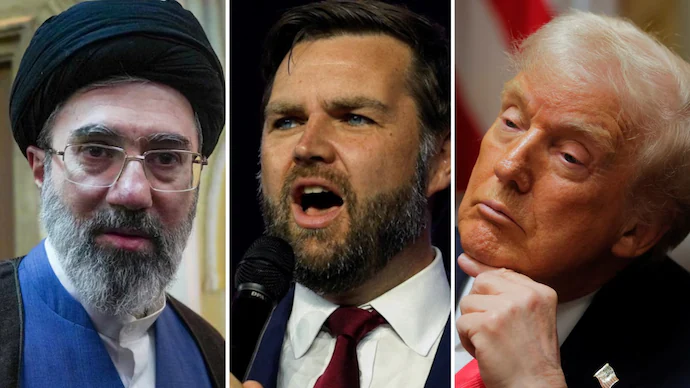
As negotiations around the Iran conflict gather momentum, a new layer of intrigue has emerged: Tehran’s reported preference for U.S. Vice President JD Vance over other key figures in Donald Trump’s inner circle.
The choice is not just about personalities. It reflects strategy, trust deficits, and competing visions of how a potential deal should take shape.
Who is leading the Iran peace talks right now?
President Trump has confirmed that multiple senior officials are involved in ongoing negotiations, suggesting a broad, multi-channel approach rather than a single lead negotiator.
Key members of Trump’s negotiation team
- Donald Trump
- JD Vance
- Marco Rubio
- Steve Witkoff
- Jared Kushner
This lineup blends political leadership, diplomatic experience, and personal envoys trusted by Trump. But not all of them carry equal weight in Tehran’s eyes.
Why does Iran reportedly prefer JD Vance?
Reports suggest Iran has conveyed, through backchannels, a preference for JD Vance to take the lead in negotiations. While the White House has downplayed these claims, the rationale behind this preference reveals a lot about Tehran’s current strategy.
1. Perceived willingness to strike a deal
JD Vance is seen, at least in these reports, as someone more inclined toward ending the conflict rather than prolonging it.
From Iran’s perspective, this matters. After weeks of military pressure, Tehran’s priority appears to be:
- Securing guarantees against further attacks
- Easing economic sanctions
- Stabilizing internal conditions
A negotiator perceived as pragmatic can be more appealing than one seen as rigid or ideologically driven.
2. Distance from past failed negotiations
Both Jared Kushner and Steve Witkoff are reportedly viewed with skepticism by Iranian officials.
Why?
- Previous diplomatic efforts involving them collapsed before the current conflict escalated
- There is a perception of mistrust or misalignment
- Iran may associate them with hardline or inconsistent negotiating positions
JD Vance, by contrast, is relatively less tied to those earlier breakdowns.
3. Political signaling
Preferring JD Vance may also be a strategic signal.
By indicating a preference, Iran could be:
- Trying to shape the composition of the negotiating table
- Driving a wedge within Trump’s advisory circle
- Testing U.S. flexibility in choosing its lead negotiator
In diplomacy, even preferences can be tactical moves.
What are Iran’s key demands in the talks?
Iran’s reported demands suggest it is negotiating from a position of pressure but not surrender.
Core demands from Tehran
- Closure of U.S. military bases in the Gulf
- Guarantees against future military strikes
- An end to Israeli attacks
- Full lifting of economic sanctions
- War reparations
- No limits on its missile program
One of the most significant demands involves the Strait of Hormuz.
The Strait of Hormuz factor
Iran is reportedly seeking a new arrangement for the vital shipping route, potentially including tolls for passage.
Why this matters:
- Around one-fifth of the global oil supply flows through the strait
- Any change could reshape global energy markets
- It gives Iran leverage far beyond the battlefield
What is in Trump’s reported 15-point peace plan?
While full details remain unverified, reports suggest the U.S. proposal includes a mix of concessions and strict conditions.
Key elements of the proposed deal
- A temporary ceasefire
- Restrictions on Iran’s uranium enrichment
- Transfer or reduction of enriched nuclear material
- Decommissioning of major nuclear sites (Natanz, Isfahan, Fordow)
- Limits on missile capabilities
- End to Iran’s proxy network activities
In return, Iran would receive:
- Sanctions relief
- Civil nuclear assistance (including at Bushehr)
- Assurances around maritime security
Why are negotiations still uncertain?
Despite optimistic statements from Washington, Tehran has publicly denied that formal negotiations are taking place.
Following Donald Trump’s claim of “productive” discussions, Iran rejected the assertion, saying no negotiations had taken place with the United States. In a post on social media on Monday, Iranian Parliament Speaker Mohammad Bagher Ghalibaf stated that “no negotiations have been held with the US”.
“Fakenews [sic] is used to manipulate the financial and oil markets and escape the quagmire in which the US and Israel are trapped,” Ghalibaf had written on X.
Possible reasons for the disconnect
- Talks may be happening through unofficial backchannels
- Public denial could be aimed at domestic audiences
- Both sides may be trying to control market reactions, especially oil prices
This kind of ambiguity is common in high-stakes diplomacy, where public messaging often diverges from private reality.
What role do regional players like Pakistan play?
Interestingly, reports indicate that the U.S. may have used Pakistan as an intermediary to deliver its peace proposal.
This reflects a broader pattern in international diplomacy:
- Third-party countries act as neutral channels
- Sensitive messages are passed without direct contact
- It allows both sides to maintain plausible deniability
What happens next?
The trajectory of these talks will depend on several factors:
Key variables to watch
- Whether the U.S. formally designates a lead negotiator
- Iran’s willingness to move from demands to concessions
- The role of ongoing military pressure
- Reactions from allies, especially Israel and Gulf states
If JD Vance does take a more prominent role, it could signal a shift toward a more deal-focused approach. If not, the internal dynamics of Trump’s team may continue to shape the outcome.
TL;DR
- Iran reportedly prefers Vice President JD Vance to lead peace talks with the U.S.
- The preference is tied to perceived pragmatism and distance from past failed negotiations
- Trump’s negotiation team includes JD Vance, Rubio, Kushner, and Witkoff
- Iran’s demands remain sweeping, including sanctions relief and security guarantees
- Talks are complicated by public denials, backchannel diplomacy, and ongoing conflict