Quick Summary
- Smoke from 740+ wildfires in Canada is worsening air quality in New York City and across the northeast U.S.
- Air-quality alerts are in effect from Minnesota to Maine, with Toronto, Detroit, and Chicago also affected.
- Experts warn of increased health risks, particularly for vulnerable populations.
- A weather shift later this week could clear some of the smoke, but conditions will remain poor until then.
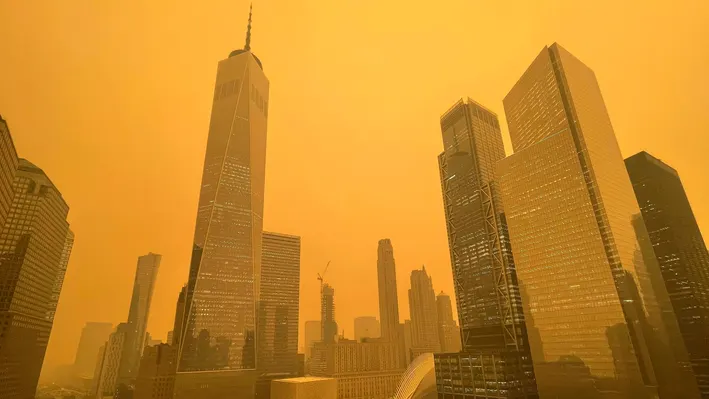
As smoke from hundreds of Canadian wildfires drifts southward, New York City is seeing a sharp drop in air quality—one of many urban centers across North America now blanketed in haze. According to officials, the situation is expected to worsen before it improves.
What’s Causing the Haze in New York?
More than 740 wildfires are burning across Canada, from the Arctic Circle to southern Ontario, pushing massive plumes of smoke into the atmosphere. The prevailing wind patterns are steering the smoke into the northeastern United States, particularly down the Hudson River corridor, bringing haze and unhealthy air to New York City and beyond.
The National Weather Service has issued air quality alerts for the region, noting that current levels are “moderate” but are forecast to become unhealthy for sensitive groups, including children, the elderly, and individuals with respiratory conditions, by the end of the day.
Where Else Is the Air Quality Affected?
The impact of the wildfires is being felt far beyond New York.
- In Canada, alerts have been issued from the Northwest Territories to Quebec.
- In the U.S., poor air quality warnings extend from Minnesota to Maine.
- Cities like Toronto, Detroit, and parts of Chicago are also reporting unhealthy air quality levels, according to AirNow.gov.
Joshua Weiss, a forecaster at the U.S. Weather Prediction Center, noted, “Wisconsin all the way into Maine, there is a big chunk of unhealthy air. At least through the middle of the week we are going to have a pretty stagnant pattern, so the smoke is going to stick around.”
Why This Matters for Public Health
While wildfires are seasonal occurrences, the scale and reach of these fires are exceptional. As the smoke lingers:
- It can trigger respiratory issues, particularly in people with asthma or COPD.
- Particulate matter in the smoke can penetrate deep into lungs, leading to inflammation and exacerbating chronic conditions.
- Vulnerable populations are advised to stay indoors, use HEPA air purifiers, and limit physical exertion.
This is part of a troubling pattern. In recent years, wildfire smoke has turned skies orange in major cities like San Francisco and New York, serving as a visual reminder of the changing climate and rising health risks.
The Broader Climate Impact
Beyond immediate health concerns, the smoke also poses long-term environmental risks:
- Soot particles from the fires land on Arctic ice, absorbing sunlight and accelerating melting.
- The intensity and reach of these fires underscore the growing strain on Canada’s energy infrastructure, especially in Alberta where some blazes have approached oil and gas assets.
- More than 200 fires remain out of control, many in remote areas that are difficult for firefighting crews to access.
When Will Conditions Improve?
According to Weiss, a new weather pattern is expected to shift winds later in the week, likely pushing smoke back north into Canada by Thursday or Friday. Until then, air quality is likely to remain poor across much of the eastern U.S. and southeastern Canada.
Travel and Daily Life Impact
In addition to health warnings, the haze may cause:
- Flight delays due to reduced visibility
- Disruptions to outdoor events and sports
- Increased use of indoor air filtration systems
- Recommendations for N95 masks in affected areas
Residents in impacted zones are encouraged to monitor local air quality indices, stay indoors when possible, and heed health advisories.