
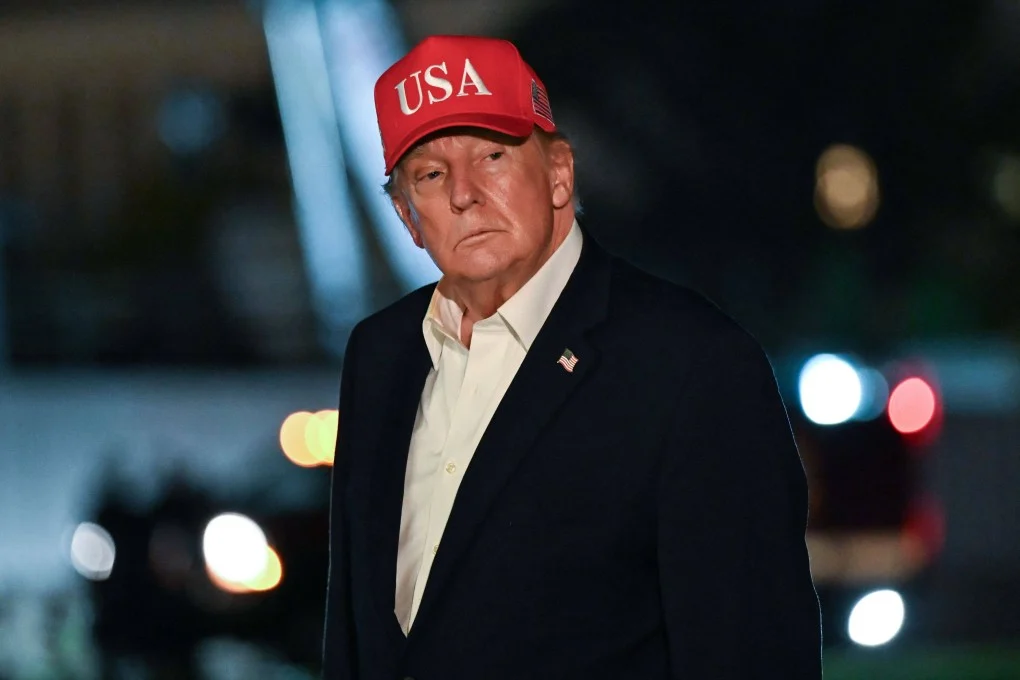
US President Donald Trump has reversed plans to livestream the execution of former Army psychiatrist Nidal Hasan, who was convicted of killing 13 people during the 2009 Fort Hood shooting in Texas. Trump said the execution would proceed as scheduled, but the public would not be allowed to watch it live.
The decision, announced on October 15, follows mounting criticism of the Pentagon’s plan to broadcast the execution. Defence Secretary Pete Hegseth had previously backed the livestream, arguing that showing the punishment would demonstrate the consequences of terrorism.
Trump acknowledged that the broadcast might have served as a deterrent but said many people did not want to watch a person die through a livestream or another visual medium. He confirmed that Nidal Hasan would still face execution by firing squad, with the date set for December 3, 2026, subject to any legal developments.
Trump reverses decision after public backlash
In a post on Truth Social, Trump said he had decided against making the execution available for public viewing after considering objections from people who opposed broadcasting it.
“I think streaming the execution for all to see might have been a strong deterrent for the world to witness how America deals with terrorists and SCUM like Nidal Hasan,” Trump wrote. He added that the execution would not be streamed.
The reversal came after criticism from lawmakers, religious leaders and other observers. Vice President JD Vance had expressed reservations about the plan and said he would not watch the execution.
The debate also raised questions about whether broadcasting an execution would deter future attacks or risk turning a punishment into a public spectacle. Some critics warned that the footage could be exploited for propaganda or used to glorify violence.
Pete Hegseth had proposed a public broadcast
Hegseth announced earlier in October that Nidal Hasan’s execution would take place by firing squad at Fort Hood on December 3, the anniversary date of the 2009 attack. He also said the event would be livestreamed, an unusual step for a US military execution.
The defence secretary argued that the public should understand the consequences of attacks against American service members. The proposal, however, drew objections from across the political and religious spectrum.
The Pentagon’s initial announcement surprised many observers because judicial executions in the United States are not ordinarily broadcast to the general public. Following the controversy, the White House reconsidered the livestream plan, while Trump retained the scheduled execution itself.
What happened in the 2009 Fort Hood shooting?
Nidal Hasan, a former US Army psychiatrist, opened fire at Fort Hood, then a major Army installation in Texas, on November 5, 2009. He killed 13 people and wounded 32 others during the attack, which took place at a military processing facility.
Hasan was shot by law enforcement during the incident and was left paralysed from the waist down. He was later convicted by a military court of premeditated murder and attempted murder and sentenced to death in 2013.
The case remains one of the deadliest attacks on a US military installation. Hasan is held on military death row at Fort Leavenworth, Kansas.
Families of victims may attend in person
Although the public livestream has been cancelled, the immediate families of Nidal Hasan’s victims will be able to witness the execution in person if they choose, according to Trump and reporting by Reuters.
The distinction means the administration has withdrawn the plan for a public broadcast without changing its stated position on carrying out the sentence.
The scheduled execution would be the first military execution in the United States since 1961 and the first by firing squad since 1945. The date could still be affected by legal challenges or other developments before December.
Debate over punishment and public spectacle continues
The livestream proposal triggered a broader debate over whether broadcasting an execution would serve a legitimate public purpose or cross an ethical line.
Supporters of the proposal argued that a visible demonstration of punishment could deter future attacks. Opponents said the broadcast risked turning a solemn legal proceeding into a spectacle, potentially amplifying extremist propaganda while offering little evidence of a deterrent effect.
Trump’s reversal resolves the immediate question of whether the execution will be livestreamed. It does not, however, settle the wider debate surrounding capital punishment, military justice and the public display of state executions.
For now, the administration says Nidal Hasan’s firing squad execution remains scheduled for December 3, 2026, while the decision to livestream it has been withdrawn.