
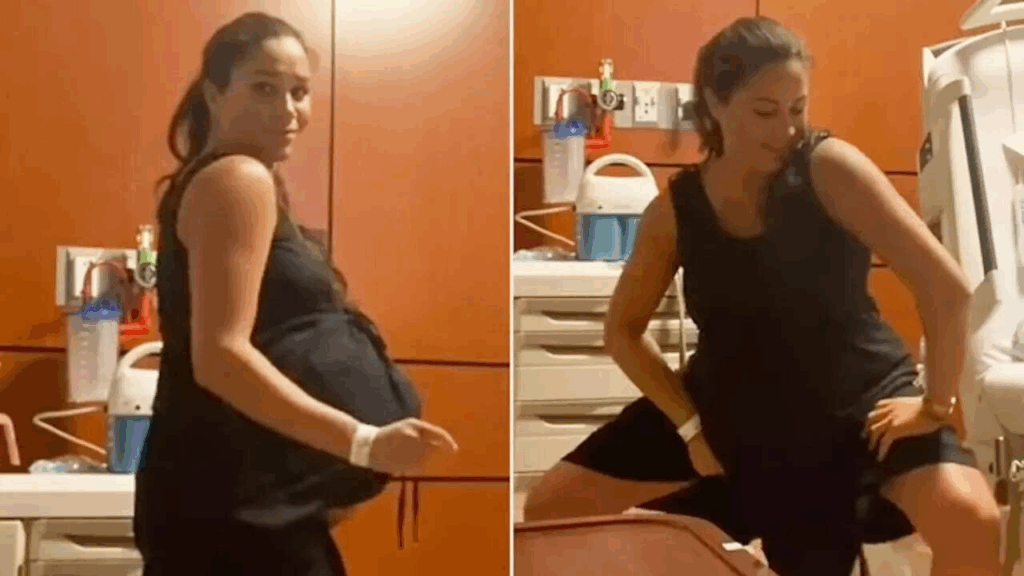
Is there any science behind the Duchess of Sussex’s viral “baby mama” dance?
When Meghan, Duchess of Sussex, recently shared a previously unseen video of herself twerking in a hospital gown just before going into labor with daughter Lilibet, it lit up the internet. The footage, filmed four years ago and only now made public via a podcast discussion, shows Meghan and Prince Harry dancing in an effort to encourage labor—a playful, personal moment that quickly reignited an age-old question:
Can dancing or twerking actually bring on labor?
The video may have gone viral, but the practice isn’t new. Many pregnant women have tried everything from spicy foods to long walks to jumpstart labor. Dancing — especially in its more energetic forms—is a popular addition to that list. But is it medically sound, or just a joyful distraction?
Is dancing safe during pregnancy?
Let’s get this out of the way: for most healthy pregnancies, dancing is not only safe — it’s encouraged.
The American College of Obstetricians and Gynecologists includes dance as a recommended form of moderate physical activity during pregnancy. The benefits go well beyond fun and fitness:
- Lower risk of gestational diabetes
- Reduced need for C-sections
- Better mental health outcomes
- Faster postpartum recovery
Movements like swaying hips or rhythmic stepping can also help strengthen pelvic muscles, improve circulation, and support posture — all useful for labor prep.
Some forms of dance may even have emotional and psychological perks. In a small study involving pregnant women belly dancing, participants reported feeling more connected to their bodies and empowered during their pregnancy journeys.
Things to keep in mind:
- Avoid high-impact or balance-intensive moves late in pregnancy.
- Always listen to your body.
- Consult a healthcare provider if you have a high-risk pregnancy or symptoms like bleeding or contractions.
So yes, Meghan’s dancing wasn’t just safe—it could have actually done her some good.
Can dancing help induce labor?
Here’s where things get murky.
Despite anecdotal claims and TikTok trends, there is no scientific proof that dancing induces labor. Doctors and researchers simply haven’t found hard evidence to say with certainty that shaking your hips or twerking gets labor going.
That said, there are a few theoretical ways dance might contribute to labor onset:
- Movement and gravity: Upright motion can help the baby descend into the pelvis and apply pressure on the cervix, possibly stimulating labor hormones.
- Hip motions and pelvic tilting: Especially in dances like belly dancing or twerking, these movements may encourage fetal positioning, a critical factor in starting and progressing labor.
- Oxytocin release: Fun, bonding activities (like dancing with a partner) may boost oxytocin, the “love hormone” that also triggers uterine contractions.
But the key word is “may.” There’s no reliable study proving a causal link between dancing and the onset of labor. That makes it risky to recommend dancing as an induction strategy, though it’s generally safe to try if you want to.
What about dancing during labor?
While the evidence for pre-labor dancing is thin, there’s stronger support for dancing once labor begins, especially in its early stages.
A study of 60 women who danced during early labor found that they reported lower pain scores and greater satisfaction compared to women who didn’t. The benefits likely come from a combination of factors:
- Being upright helps the baby descend and may shorten labor.
- Pelvic movement helps open the pelvis and encourages good fetal positioning.
- Rhythmic motion may ease pain perception.
- Music has been shown to reduce pain, heart rate, and anxiety levels.
Taken together, dancing during labor (within your comfort limits) could create a more positive and empowering birth experience.
So, did Meghan’s dancing actually induce labor?
We don’t know — and probably never will.
According to her Instagram caption, Meghan and Harry tried spicy food, walking, and acupuncture before turning to dancing. Given both of her children arrived more than a week past their due dates, her team may have also considered—or even initiated—medical induction.
There are several ways labor can be medically induced:
- Synthetic hormones like Pitocin
- Foley catheter to mechanically open the cervix
- Breaking the water (amniotic sac)
It’s unclear which, if any, of these methods were used. But what is clear is that her dancing — whether biologically effective or not — brought joy, connection, and movement to a moment often filled with stress and uncertainty. That in itself can have indirect benefits, particularly through boosting oxytocin and easing tension.
Final verdict: should you dance to induce labor?
Maybe — just don’t expect miracles.
If you’re full-term, low-risk, and feeling restless, there’s no harm in dancing (even twerking) as long as you’re careful and feeling up to it. It likely won’t induce labor on its own, but
- It’s great for mental health.
- It promotes movement and upright posture.
- It may help with early labor comfort and fetal positioning.
In short: dance if you want to—just don’t expect it to be a magic switch. And always check in with your doctor or midwife if you have questions about what’s safe for you.