
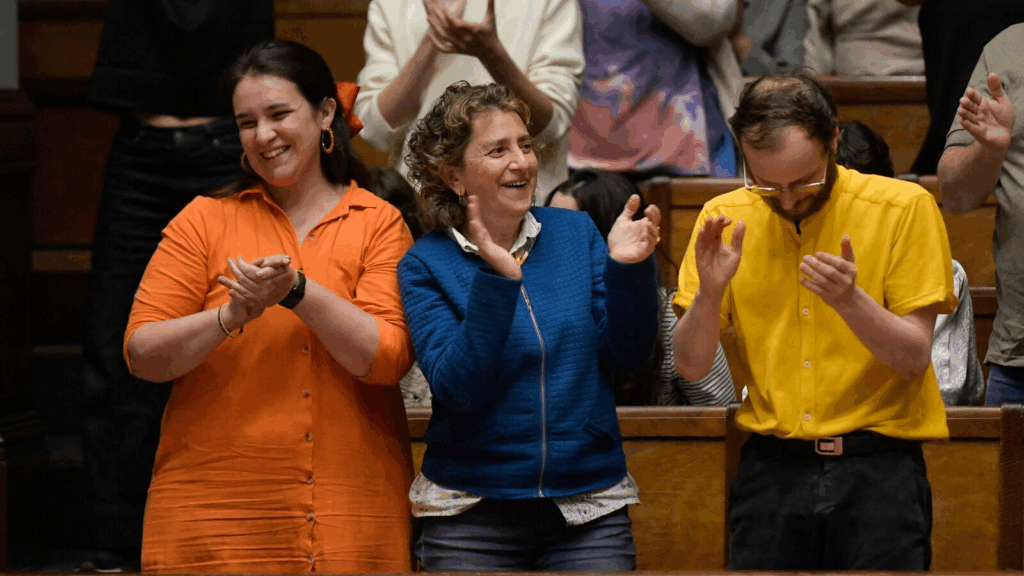
Uruguay has made history by becoming the first country in Latin America to legalize euthanasia and assisted suicide, marking a profound shift in the region’s approach to end-of-life care and individual autonomy.
The passage of the “Dignified Death” bill on Wednesday came after years of political and moral debate, backed by strong public support and opposed mainly by religious groups. With this decision, Uruguay joins a small group of nations worldwide, including the Netherlands, Belgium, Spain, and Canada, that allow medically assisted dying.
What does Uruguay’s new euthanasia law allow?
The new legislation permits assisted suicide for mentally competent adults who are terminally ill and suffering from an incurable disease.
To qualify, individuals must:
- Be Uruguayan citizens or legal residents.
- Be in the terminal stage of an illness that causes severe physical or psychological suffering.
- Provide informed consent demonstrating mental soundness.
The law ensures medical supervision throughout the process and protects doctors who participate from legal prosecution, provided all conditions are met.
This framework reflects an emphasis on “dignified death”, granting patients the choice to end their suffering on their own terms, a concept that has gained increasing global acceptance but remains contentious in Latin America.
How did the vote unfold in Uruguay’s Senate?
The bill was approved in the Senate by 20 votes out of 31 after a 10-hour debate marked by emotional testimonies and moral reflection.
Lawmakers described it as one of the most difficult votes of their careers. The discussion remained largely respectful, though tensions rose as some onlookers in the chamber shouted “murderers” after the final tally.
The legislation had already cleared the lower Chamber of Representatives in August, paving the way for this final vote.
The Frente Amplio (Broad Front), Uruguay’s left-leaning ruling coalition, spearheaded the initiative, arguing that personal choice and compassion must prevail in end-of-life decisions.
Public opinion: broad support, deep divides
Despite opposition from religious conservatives, polls show the majority of Uruguayans back the move.
A recent survey revealed that over 60% of the population supports legal euthanasia, while about 24% oppose it. The result underscores Uruguay’s progressive social fabric, a country that has previously led the region in legalizing abortion (2012), same-sex marriage (2013), and marijuana use (2013).
These milestones reflect a pattern: Uruguay consistently positions itself as a policy innovator in Latin America on issues of personal freedom and social liberalism.
Voices from Uruguay: “This is compassion, not cruelty”
For many patients and families, the new law offers hope and relief.
Beatriz Gelos, a 71-year-old living with amyotrophic lateral sclerosis (ALS) for two decades, told AFP that the decision was “compassionate, very humane.” Speaking from her wheelchair, she added,
“Opponents have no idea what it’s like to live like this.”
Another supporter, Monica Canepa, whose 39-year-old son, Pablo, has been paralyzed by an incurable disease, said,
“Pablo is not living. This is not life.”
Their stories echo the emotional core of the euthanasia debate, one that pits religious doctrine against individual rights and mercy.
Religious and medical responses to the law
The Catholic Church, a significant influence in Uruguay and across Latin America, expressed “sadness” over the decision, reiterating its view that life should be preserved until natural death.
However, Uruguay’s Medical Association has adopted a neutral stance, stating it will allow physicians to follow their personal conscience on whether to assist in euthanasia procedures.
This open approach reflects the law’s broader philosophy: choice, not compulsion. No doctor is obligated to perform euthanasia, and patients must actively request the procedure through documented consent.
Latin America’s evolving stance on euthanasia
While Uruguay is the first in Latin America to fully legalise euthanasia, it is not entirely alone in the region’s conversation.
- Colombia and Ecuador have decriminalised euthanasia through court rulings, though no legislative framework exists.
- Cuba allows terminal patients to refuse life-prolonging treatment but stops short of legalizing assisted dying.
Uruguay’s move could influence neighboring countries where end-of-life rights remain a taboo yet increasingly discussed topic.
Why Uruguay’s decision matters globally
Globally, fewer than 15 countries have legalized euthanasia or assisted suicide, often following decades of debate and ethical scrutiny.
Uruguay’s decision represents a turning point for the Global South, demonstrating that compassion-based healthcare policies are no longer confined to Europe or North America.
It could also inspire broader discussions on medical ethics, autonomy, and the right to die with dignity, especially in societies where religious influence has traditionally shaped lawmaking.
TL;DR
- Uruguay becomes the first Latin American country to legalise euthanasia.
- The “Dignified Death” bill allows assisted suicide for terminally ill, mentally competent adults.
- Passed in the Senate 20–11, after approval by the lower house in August.
- Backed by 60% public support, opposed mainly by religious groups.
- Marks Uruguay’s latest move in a long line of progressive social reforms.