TL;DR
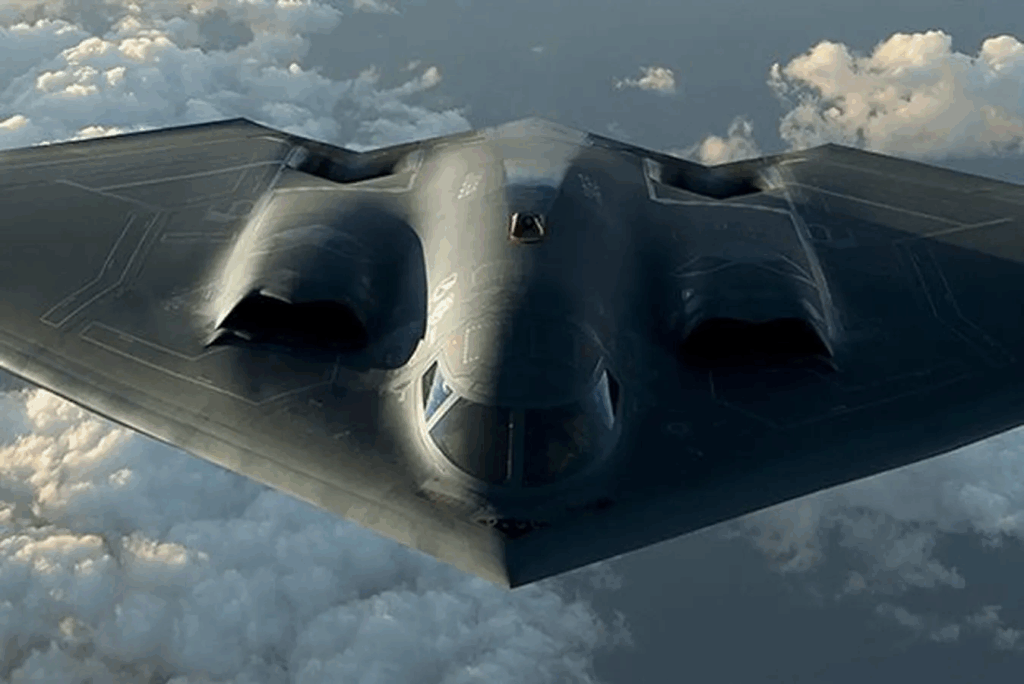
In a rare and secretive military operation, seven U.S. B-2 Spirit stealth bombers flew a 37-hour round-trip mission from Missouri to Iran to strike the Fordow nuclear facility. The mission, dubbed “Operation Midnight Hammer,” relied on precision, stealth, in-flight refueling, and cutting-edge onboard amenities to support pilots during one of the longest bombing runs since 9/11.
What was “Operation Midnight Hammer”?
In an extraordinary demonstration of range, stealth, and coordination, the U.S. Air Force recently executed “Operation Midnight Hammer”, a 37-hour bombing mission targeting Iran’s Fordow nuclear facility. The operation involved seven B-2 Spirit stealth bombers, each flying from Whiteman Air Force Base in Missouri to the Middle East and back—an 18-hour flight one way.
This marked one of the longest operational missions for the B-2 since its post-9/11 deployments. While the military confirmed the strike’s success, it was the logistical and human engineering behind the mission that truly set it apart.
Why Fordow, and why now?
The Fordow Fuel Enrichment Plant, buried deep inside a mountain near Qom, Iran, has long been a focal point of concern for Western intelligence due to its fortified construction and potential use in uranium enrichment.
While exact intelligence prompting this strike hasn’t been publicly disclosed, U.S. military leaders framed the mission as a preemptive strike to ensure non-proliferation, potentially linked to intelligence on escalated activity at the site.
What makes the B-2 bomber ideal for such a mission?
Stealth, range, and versatility
The B-2 Spirit, a stealth bomber with a $2 billion price tag, is uniquely built for deep-penetration strategic missions like this. It combines low observability with the ability to carry large payloads, including GBU-57 Massive Ordnance Penetrators (MOPs)—also known as “bunker busters”—used in this operation.
Advanced crew accommodations
What’s less known is how the B-2 is also engineered for human endurance. With a two-pilot crew, the cockpit includes:
- A toilet for extended flight durations.
- A microwave and mini-fridge for meals.
- A foldable bench or sleeping area so one pilot can rest while the other flies.
These amenities are not luxuries—they’re necessities for maintaining cognitive performance over missions lasting nearly two full days.
How did the mission unfold?
Silent skies and precision coordination
According to General Daniel Caine, Chairman of the Joint Chiefs of Staff, the mission required “tight synchronization across multiple platforms”, with minimal communications to avoid detection. The B-2s flew nearly radio silent, a tactic used to preserve stealth.
The attack began with a lead B-2 releasing two GBU-57s directly over Fordow. These 30,000-pound bombs are built to penetrate 200 feet of reinforced concrete before detonation, capable of damaging underground nuclear infrastructure.
In-flight refueling and rest rotations
Given the duration, the mission necessitated multiple aerial refuelings, likely by KC-135 Stratotankers or KC-46 Pegasus tankers. These refuelings occurred over neutral or allied airspace, coordinated in silence and darkness.
Each B-2 operated with rotating rest shifts, making sure one pilot stayed fully alert while the other rested—emphasizing how both machine and human were critical components of the mission.
What does this mean for military strategy and global politics?
A message of capability and intent
While U.S. officials did not release video or photo confirmation, the strike on Fordow appears aimed at reminding adversaries of American reach and stealth capabilities. Unlike drone strikes or conventional bombing campaigns, this was old-school strategic bombing, modernized.
Future implications
For allies and rivals alike: The success of such a high-risk, low-visibility operation may shift perceptions of U.S. aerial dominance and deterrent credibility.
For Iran: This sends a clear message that no facility—no matter how fortified or remote—is beyond reach.
For U.S. defense strategy: The B-2’s performance may validate continued investment in long-range manned stealth bombers, even as drones and hypersonics gain attention.
Why this mission matters beyond military circles
This wasn’t just about bombs and bunkers. It was about what’s possible when you combine technology, human resilience, and international precision. It’s a case study in:
- Designing for human needs in tech-heavy environments.
- The logistical ballet of global military coordination.
- The psychological impact of deploying stealth assets across continents with minimal visibility.
And yes—toilets and fridges in stealth bombers may sound mundane, but in the high-stakes world of global security, they’re game-changers.
Strategic Takeaways
- Operational range is not a limitation for the U.S. Air Force.
- Stealth remains relevant, especially in scenarios requiring deep penetration with minimal footprint.
- Human-centric design in military hardware isn’t an afterthought—it’s a mission enabler.
- Covert operations can still involve legacy platforms, when paired with modern coordination and intelligence.