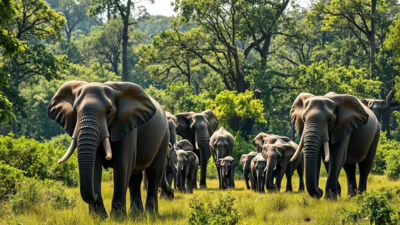
Officials say elephant population control and community benefit are key goals
Zimbabwe has announced that dozens of elephants will be killed as part of a population management effort, with the meat to be distributed to local communities. The move, announced by the Zimbabwe Parks and Wildlife Management Authority (ZimParks), is aimed at addressing overpopulation concerns in one of the country’s largest private game reserves.
Why are elephants being killed in Zimbabwe?
ZimParks issued permits to Save Valley Conservancy in the southeast of the country for what it termed an “elephant management exercise.” The initial phase of the plan will target around 50 elephants.
“According to the 2024 aerial survey, there are 2,550 elephants against an ecological carrying capacity of 800 elephants in Save Valley Conservancy,” the agency said in a statement on Tuesday.
What will happen to the meat and ivory
ZimParks confirmed that meat from the elephants will be distributed to local communities, while the ivory will remain the property of the state. Zimbabwe is currently barred from selling its ivory stockpile due to a global ban on the trade.
Over the past five years, 200 elephants from Save Valley Conservancy have been relocated to other areas of the country to help alleviate pressure on habitats, but authorities say relocation is no longer a viable option due to the lack of suitable areas.
Officials clarify the move is not a mass cull
Speaking to the media, ZimParks spokesman Tinashe Farawo emphasized that this is “not culling,” which he defined as wiping out entire herds. The effort will involve selective removals based on herd size and logistical capacity.
A spokesman for Save Valley Conservancy added that this year’s operation is also meant to assess the practical, ecological, and financial implications of such management exercises.
“Our first choice is to try and find alternative homes for the elephants, but there are no suitable, nearby habitats currently available,” he said. “We are therefore constraining our initial exercise to small numbers (approximately 50)… and will manage the carcasses respectfully and without waste.”
Zimbabwe has the world’s second-largest elephant population after neighboring Botswana.