Quick Summary
- Deer across the U.S. are developing tumor-like warts caused by a papillomavirus spread by ticks and mosquitoes.
- The virus is species-specific; it does not infect humans.
- Outbreaks are most common in late summer and fall, when insect activity peaks.
- Rabbits and squirrels are also affected by related papillomaviruses.
- The main risk to people comes not from the virus itself but from ticks and mosquitoes, which carry other diseases.
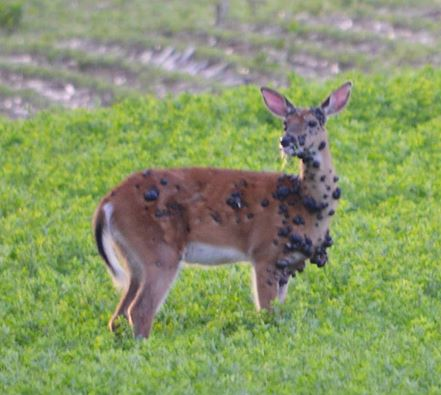
It’s not just rabbits and squirrels anymore. Deer in several parts of the United States are turning up with tumor-like warts covering their bodies, sparking alarm among residents and raising questions about what’s behind the outbreak. Wildlife officials are urging the public to keep their distance, warning that the virus fueling these growths is spreading quickly this summer.
From New York to Pennsylvania to Wisconsin, photos of deer with grotesque, lumpy growths have flooded social media. And while the sight is jarring, experts say there’s a scientific explanation, one that also underscores how changing climates and rising insect populations are driving new disease patterns in wildlife.
What Is Causing Warts on Deer?
The culprit is a papillomavirus, the same virus family that causes warts in humans. In deer, the condition is known as cutaneous fibromas, more commonly called deer warts.
These growths are:
- Triggered by deer papillomavirus.
- Transmitted by ticks and mosquitoes, which inject the virus into the animal’s bloodstream.
- Spread through contact between infected and healthy deer.
Summer weather makes things worse. As the Washington Department of Fish and Wildlife notes, “Papillomas are most frequently seen during the late summer and into the fall, probably due to increased biting insect activity during this time of year.”
How Does the Virus Affect Deer?
The growths can appear on the face, neck, legs, or torso, ranging from small bumps to large, grotesque clusters.
- In most cases, the warts are harmless and temporary, falling off after weeks or months.
- Rarely, if the fibromas grow large enough to block a deer’s vision, movement, or ability to feed, they can become life-threatening.
- The disease is not contagious to humans, though the insects that spread it, especially ticks, can carry other dangerous illnesses, such as Lyme disease.
This makes sightings unsettling but not necessarily a sign of mass die-offs. Officials stress the virus is part of the natural disease cycle in wild deer populations.
Can the Deer Virus Spread to Humans?
Short answer: No.
While both humans and deer get warts from papillomaviruses, the strains are species-specific. Deer papillomavirus cannot attach to human cells. That means the warty deer you see in the woods pose no direct viral risk.
However, the mosquitoes and ticks that carry the virus can spread other illnesses to humans. For example:
- Ticks: Known for transmitting Lyme disease, babesiosis, and Rocky Mountain spotted fever.
- Mosquitoes: Can carry West Nile virus and Eastern equine encephalitis (EEE).
So while you won’t catch “deer warts,” avoiding close contact with sick-looking animals, and taking standard precautions against biting insects remain crucial.
Why Are More Cases Being Reported Now?
Several factors are at play:
- Climate Change: Warmer temperatures extend mosquito and tick activity seasons, creating more opportunities for viruses to spread.
- Habitat Overlap: As deer venture closer to suburban and urban areas, sightings of diseased animals increase.
- Social Media Amplification: Images of disfigured deer are going viral online, making the phenomenon seem more widespread than in the past.
Wildlife experts caution that while the outbreak looks dramatic, papillomaviruses are not new. What’s changing is how often people encounter — and share — these disturbing images.
What About Rabbits and Squirrels?
This isn’t just a deer problem. In recent months, residents of Colorado and parts of the Midwest have reported seeing so-called “Frankenstein rabbits.” These rabbits suffer from Shope papilloma virus, which causes black, horn-like growths around the face and mouth.
Squirrels, too, have been spotted with similar lesions. The viral family is the same, though the strains differ by species.
The pattern is clear: papillomaviruses are circulating widely among North American wildlife, fueled by insect vectors and favorable summer conditions.
Should People Be Worried?
Here’s what wildlife officials recommend:
- Do not approach or try to “help” infected deer, rabbits, or squirrels.
- Keep pets away from affected animals, since they may be more vulnerable to bites from ticks or mosquitoes in the same area.
- Report sightings to local wildlife authorities to help track outbreaks.
- Protect yourself outdoors with insect repellent, long sleeves, and tick checks after hikes.
While the viruses themselves don’t jump to humans, the conditions that allow them to spread, warm, wet summers with booming insect populations, do raise risks for people in other ways.
The Bigger Picture: What Wildlife Diseases Tell Us
Outbreaks like this highlight how ecology, climate, and public health are interconnected. As temperatures rise and insect populations expand, expect to see more reports of “mutant-looking” animals in suburban neighbourhoods and forests alike.
For scientists, these cases provide critical insights into how viruses adapt and spread across species. For the public, they’re a reminder that strange-looking animals in the wild are not curiosities to be handled but warning signs of larger shifts in the environment.