
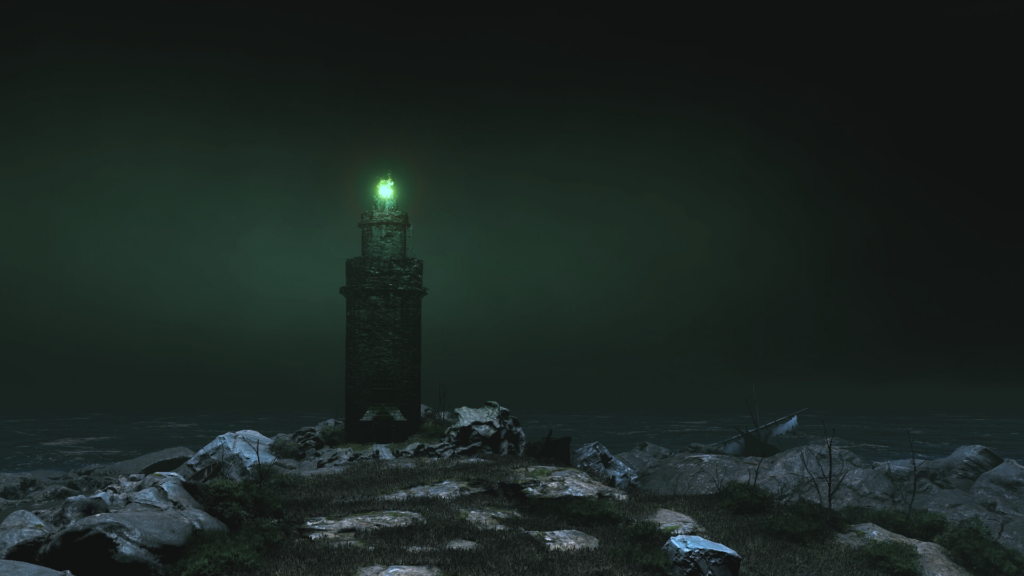
For generations, isolated lighthouses have inspired ghost stories. Caretakers reported strange vibrations, low rumbling noises, and eerie sounds rolling through the walls at night. Some blamed storms. Others blamed the supernatural.
Now, scientists believe they have a far more grounded explanation, humpback whales.
Researchers studying the historic Five Finger Lighthouse in southeast Alaska say mysterious sounds long associated with remote coastal structures may actually come from nearby humpback whale vocalizations, sneezes, and deep breathing noises traveling through the ocean and surrounding environment.
The discovery is drawing attention not just for its creepy implications but for what it reveals about how humans interpret unexplained sounds in nature.
TL;DR
- Scientists studying a lighthouse in Alaska traced strange rumbling sounds to humpback whale breathing and sneezing.
- The noises can reportedly travel up to five miles and vibrate inside buildings.
- Researchers say the sounds resemble thunder, machinery, or distant earthquakes.
- The study could help scientists better track whales and avoid ship collisions.
- SETI researchers also drew parallels between missed whale sounds and humanity potentially overlooking alien signals.
Why Lighthouses Have Long Been Linked to Fear
Remote lighthouses occupy a unique place in folklore.
Many were built on isolated islands surrounded by harsh weather, powerful tides, and long stretches of silence. Caretakers often spent months alone in extreme conditions. Under those circumstances, unexplained noises quickly became ghost stories.
Stories tied to haunted lighthouses typically involve:
- Low rumbling sounds
- Vibrating walls
- Strange moans during foggy nights
- Unexplained knocks or tremors
- Sounds resembling distant engines or thunder
In reality, researchers now believe at least some of those reports may have had a biological source rather than a paranormal one.
What Scientists Found Near the Five Finger Lighthouse
The latest findings come from the Five Finger Lighthouse in Frederick Sound, southeast Alaska, an area known for dense whale activity.
The research team was led by Fred Sharpe, a biologist affiliated with the SETI Institute.
According to Sharpe, the strange sounds linked to the lighthouse were traced back to humpback whales producing forceful exhalations, sighs, and sneeze-like bursts near the water’s surface.
These sounds reportedly register between 30 and 300 hertz — low-frequency vibrations capable of travelling long distances through water and coastal terrain.
What do the whale sounds resemble?
Researchers described the noises as sounding like:
- Distant thunder
- Heavy machinery
- An elephant’s rumble
- Underground vibrations
- Low mechanical humming
From farther away, the sounds reportedly become even stranger and more metallic.
That helps explain why lighthouse workers unfamiliar with whale acoustics may have interpreted them as something unnatural.
How Can Whale Sounds Shake Buildings?
Sound travels differently through water than through air.
Low-frequency whale sounds can carry across several miles because ocean water transmits acoustic energy extremely efficiently. When those vibrations reach rocky coastlines or hollow structures like lighthouses, they can create a strong resonating effect.
In isolated settings with little background noise, the experience can feel unsettling.
Why the sounds matter scientifically
Researchers say understanding these noises has practical benefits beyond solving old mysteries.
Tracking whale-produced low-frequency sounds could help:
- Identify whale-heavy regions
- Reduce ship strikes
- Improve marine conservation efforts
- Monitor migration patterns
- Detect whales in low-visibility conditions
That could become increasingly important as commercial shipping traffic grows in sensitive marine ecosystems.
The SETI Connection: Could Humans Be Missing Alien Signals Too?
The story took an unexpected turn when Sharpe connected the whale findings to the search for extraterrestrial intelligence.
Speaking to The Times, he noted that humpback whales have likely been making these sounds for centuries, yet humans only recently recognized what they were.
That raises an intriguing question: if people overlooked familiar signals from animals on Earth, could humanity also be missing signals from extraterrestrial life?
Sharpe suggested that some cosmic signals may go unnoticed simply because humans do not yet understand how to recognise them.
The comparison aligns closely with the mission of the SETI Institute, which studies potential forms of non-human communication and searches for signs of intelligent life beyond Earth.
Why this analogy resonates
The comparison is less about aliens specifically and more about perception.
Scientists often discover phenomena only after developing the tools or frameworks needed to interpret them correctly. Before that point, signals can exist in plain sight — or plain sound — without recognition.
Examples throughout history include:
- Whale songs mistaken for underwater noise
- Pulsars were initially dubbed “Little Green Men”
- Animal communication patterns have been misunderstood for decades
- Deep-sea sounds were attributed to geological activity before biological explanations emerged
The whale discovery fits into that broader scientific pattern.
Scientists Previously ‘Talked’ to a Humpback Whale
This is not the first unusual whale-related project tied to Sharpe and the SETI team.
Previously, researchers from the SETI Institute and the University of California, Davis conducted an experiment involving a 38-year-old humpback whale named Twain.
Using a pre-recorded whale contact call, scientists attempted a form of back-and-forth communication with the animal.
Researchers described the exchange as one of the clearest examples yet of humans engaging with whales using species-specific acoustic patterns.
The experiment also carried broader implications for extraterrestrial communication research. Scientists proposed that studying non-human intelligence on Earth could help humanity prepare for future interactions with alien life forms.
Why This Story Has Captured Attention Online
The idea that “haunted” lighthouses may actually be responding to whale sneezes sounds almost absurd at first, which is partly why the story has spread so quickly online.
But beneath the viral headline is a genuinely fascinating scientific insight:
Humans are still learning how much of the natural world we misunderstand.
The findings also highlight how folklore sometimes emerges from real environmental phenomena interpreted through fear, isolation, or limited scientific knowledge.
For lighthouse keepers centuries ago, a building trembling in the middle of the night may have felt supernatural.
Today, researchers can point to a whale surfacing several miles away.
That shift from myth to measurable science is what makes discoveries like this so compelling.