
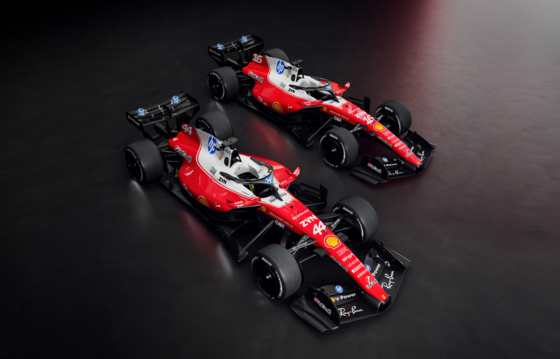
Ferrari has pulled the covers off the Ferrari SF-26 Formula 1 car, and the message from Maranello is clear: this is not an evolution—it’s a reset. Built for the sport’s sweeping 2026 regulations, the SF-26 represents what Ferrari calls a “complete rethink of the car’s architecture,” blending new-era technology with a deliberate nod to its past.
Unveiled ahead of the 2026 season, the SF-26 draws inspiration from a special-edition Ferrari raced at the 2025 Italian Grand Prix at Monza, itself a tribute to Niki Lauda’s title-winning Ferrari 312T from 1975. The symbolism matters. Ferrari is entering a regulatory unknown, and it’s doing so by anchoring innovation to history.
Below, we break down what makes the SF-26 different, why Ferrari had little choice but to start from scratch, and what this car signals for Formula 1’s next chapter.
What Is the Ferrari SF-26 Formula 1 Car?
The Ferrari SF-26 Formula 1 car is Scuderia Ferrari’s challenger for the 2026 F1 season, designed under one of the most comprehensive rule overhauls the sport has seen in decades.
The 2026 regulations reshape:
- Power unit architecture
- Energy recovery systems
- Aerodynamics
- Minimum weight and packaging
For Ferrari, that meant abandoning legacy design assumptions and rebuilding the car around a new technical framework rather than tweaking the previous generation.
Why Did Ferrari Have to Rethink the Entire Car Architecture?
A New Rulebook, Not a Revision
Unlike incremental regulation changes, the 2026 rules alter how power, energy, and aerodynamics interact. Ferrari Technical Director (Chassis) Loïc Serra described the process as adapting to “a completely new regulatory framework.”
That framework forced early, high-stakes decisions in areas teams normally refine later:
- Weight distribution
- Cooling layouts
- Battery placement
- Suspension geometry
Ferrari spent an unusually long time in the concept phase to ensure the SF-26 could evolve throughout the season rather than hitting a development ceiling by midyear.
What Are the Key Technical Specifications of the SF-26?
Chassis, Suspension, and Dimensions
At its core, the SF-26 uses a carbon-fibre honeycomb chassis with integrated halo protection, in line with modern safety standards.
Key hardware includes:
- Push-rod suspension at both the front and rear
- Eight-speed gearbox
- 18-inch wheels (now standard across F1)
- Minimum weight of 770 kg, including the driver
Push-rod suspension at both ends signals Ferrari’s focus on aerodynamic efficiency and predictable mechanical behavior—crucial under the new aero rules.
The Power Unit: Small Engine, Big Numbers
The SF-26 is powered by a turbocharged V6, but don’t let the familiar layout fool you.
Highlights include:
- Turbocharger speeds of up to 150,000 rpm
- Increased reliance on electrical power
- Simplified—but more demanding—hybrid integration
The emphasis has shifted from raw combustion output to how efficiently energy is harvested, stored, and deployed over a lap.
How Does the SF-26’s Energy Recovery System Work?
ERS: The Real Performance Battleground
The SF-26’s Energy Recovery System (ERS) is central to its performance profile.
Key components:
- High-output MGU-K motor
- Lithium-ion battery operating at up to 1,000 volts
The higher voltage allows more efficient energy transfer, but it also creates challenges around cooling, safety, and packaging—one reason Ferrari reworked the entire car layout.
Under 2026 rules, drivers will rely more heavily on electric deployment, especially on straights. Managing when and how that energy is released could define race outcomes.
What Design Cues Set the SF-26 Apart?
Aerodynamic and Visual Evolution
While exact aero details remain closely guarded, several visible elements stand out:
- A serrated edge along the top of the engine cover
- Tighter bodywork packaging
- Cleaner airflow paths toward the rear
The serrated engine cover is likely aimed at controlling airflow separation—small gains that add up under tightly regulated aero surfaces.
Ferrari’s design also echoes the Monza 2025 tribute livery, connecting the SF-26 visually and philosophically to the 312T era, when innovation and simplicity coexisted.
How Was the SF-26 Developed?
A Concept-First Approach
According to Loïc Serra, Ferrari invested heavily upfront to “capture as much as possible of this new regulatory and technical context.”
That meant:
- Extensive simulation work
- Early compromises to enable later upgrades
- Designing around future development paths, not just launch performance
In modern Formula 1, the fastest car in March is rarely the fastest in October. Ferrari is betting the SF-26 can grow.
When and Where Will Ferrari Test the SF-26?
Pre-Season Testing Schedule
Ferrari’s on-track preparation begins in Europe before shifting to the Middle East:
- Barcelona: January 26–30, 2026
- Bahrain: Additional pre-season testing
- Season opener: Australian Grand Prix, March 6–8, 2026
Testing mileage is limited, making early reliability critical. Any ERS or cooling issues discovered late could derail the opening races.
Why the SF-26 Matters Beyond Ferrari
A Bellwether for the 2026 Era
Ferrari’s SF-26 isn’t just about one team. It offers clues about where Formula 1 is heading:
- Greater electrical dependency
- More integrated design thinking
- Less room for mid-season reinvention
If Ferrari gets the architecture right, it sets a benchmark others will chase. If not, the cost of correction will be steep.
TL;DR
- The Ferrari SF-26 Formula 1 car is a ground-up redesign for 2026 regulations
- Features a new chassis, ERS, and power unit integration
- Turbo spins up to 150,000 rpm; battery operates at 1,000 volts
- Designed for long-term development flexibility
- Pre-season testing starts in Barcelona in January 2026