
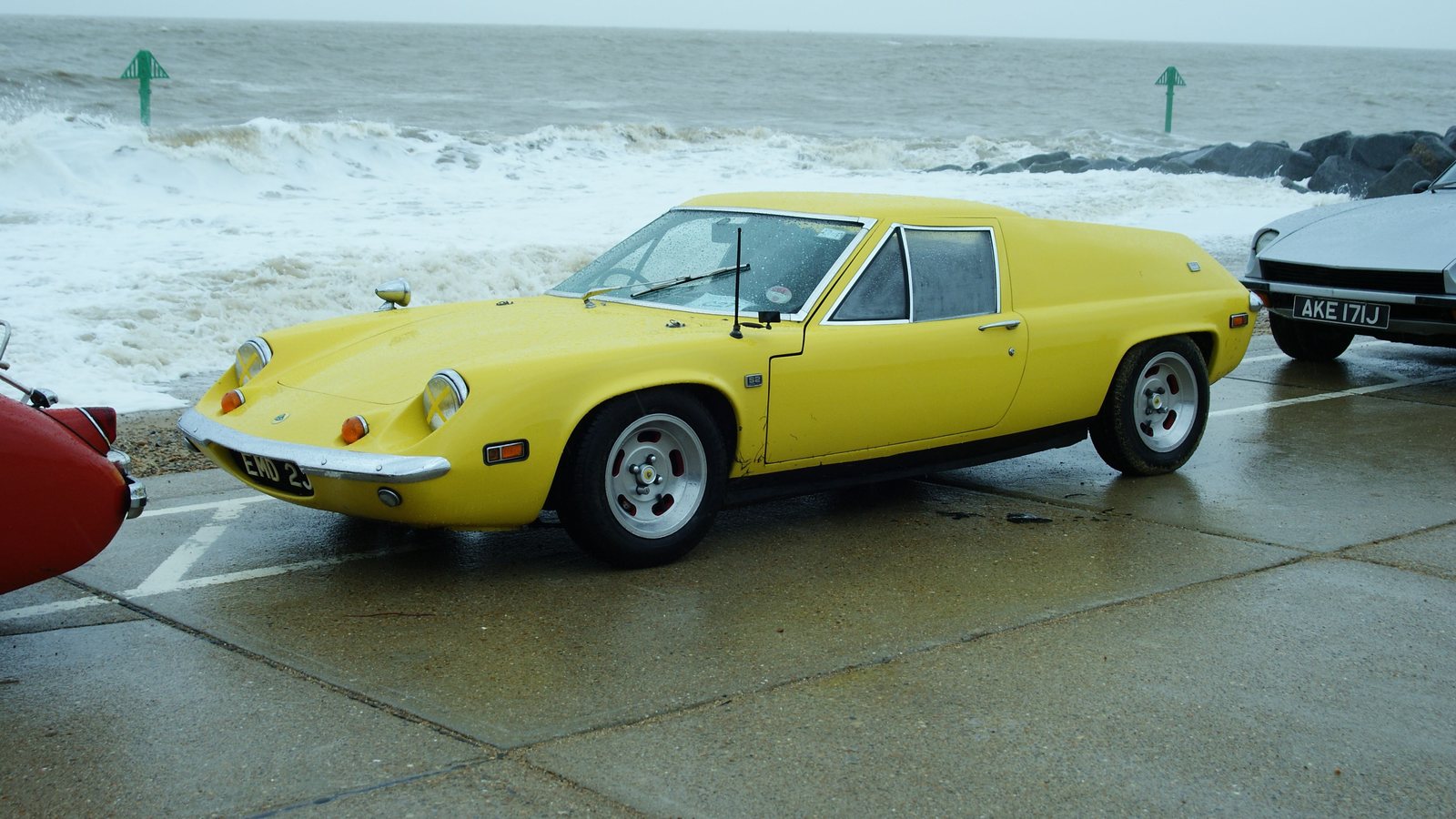

A Lincolnshire man has bought back the yellow 1972 Lotus Europa he sold during his divorce in 1991, after recognising it in an eBay listing 35 years later. David Reynolds, from Swineshead, paid £16,080 (about $21,500) for a car he had sold for £4,000, the BBC reported on October 21.
He had restored the car himself, and he spotted it by details only he would know. He told the BBC he “had a job to sleep” the night he found it, British slang for barely sleeping.
Black coachlines and a joiner’s radio surround gave it away
Reynolds told the BBC he had seen other yellow Europas over the years, and they “brought back memories.” The one listed in September stood out because of black coachlines, the thin painted stripes along the body. Those weren’t an original Lotus feature.
The car was for sale in Sheffield. More photos of the interior showed what he called “a little piece of wood around the radio which the local joiner made.” He wasn’t certain until he watched video of the car being driven. The number plate in the footage matched the one he had sold.
The car had changed hands since 1991. WION reported that it had two other owners in that time, and Reynolds said they all looked after it. “I was chuffed to bits to just see it in the state that it is,” he told the BBC.
A nut-and-bolt restoration, then a divorce
Reynolds, 69, is a motor mechanic, according to WION, and bought the Europa second-hand for £750. He told the BBC he spent two years restoring it, between 1979 and 1981, including a full repaint of the bodywork.
He went on to own a black Europa and a Series 3 Lotus Elan. The yellow car still mattered more, he said, “because I’d done that from nut and bolt.”
Then came the divorce. “I got divorced and to keep the house, I had to find some money from somewhere,” he told the BBC. Selling it “knocked the wind out of [his] sails,” he said, “but needs must.” The Daily Mail also covered the reunion.
Four times the price, but not four times the money
The headline numbers make the buyback sound steep: £4,000 in 1991, £16,080 in 2026, a ratio of just over four. Reynolds isn’t bothered. WION quotes him comparing it to groceries: “your shopping bill, prices keep going up.”
He has a point, and the official figures show how much of the jump is simply inflation. On the UK’s consumer prices index, published by the Office for National Statistics, the 1991 average was 60.1 and the September 2026 reading was 144.1.
That makes his £4,000 worth about £9,600 in today’s money. In real terms, the price rose about 70%. That’s a modest climb for a car that has become a collector’s item.
For American readers, £16,080 is about $21,550 at the European Central Bank’s October 21 rate of $1.34 to the pound.
What he got for the money is provenance he can personally vouch for. That is what collectors pay for, whether the object is a sports car or an Apple-1 computer that Bonhams valued at up to $800,000.
Why the Europa still turns heads
Lotus built the original Europa from 1966 to 1975 and made 9,230 of them, according to the car’s Wikipedia history. It was a low two-seat coupe with a fibreglass body on a steel backbone chassis. The engine sat behind the driver, the layout that had taken over Grand Prix racing by the end of the 1950s.
The BBC described it as the first mass-produced car designed with a mid-mounted engine. That overstates it. France’s Matra Djet put a mid-engined road car on sale in 1962, four years earlier. Lotus’s goal was different: a mid-engine sports car built in volume at a reasonable price, which few makers had tried.
Early cars used a tuned Renault engine. The later Twin Cam and Special models used the Lotus-Ford twin-cam engine, and Lotus sold federalised versions in the US.
Restored a second time, for special days
Reynolds has started restoring the Europa again, WION reported. He plans to drive it only on special days and holidays, the kind of occasional use that classic-car owners in the US have been fighting to protect in Minnesota.
After 35 years and several owners, he sounded relieved more than anything. “Half of me thought, I must have made a reasonable job of it in the first place,” he told the BBC.