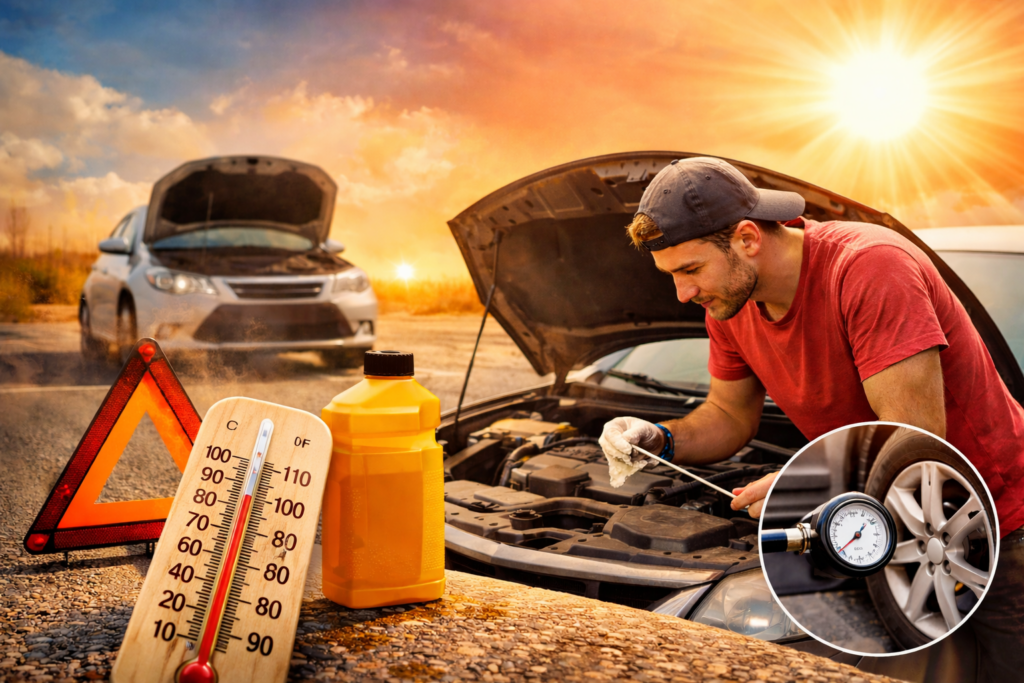
Summer heat can be tough on vehicles. High temperatures place additional stress on engines, batteries, tires, and even the interior of a car. Without proper seasonal care, vehicles are more likely to face overheating, reduced performance, or unexpected breakdowns.
A simple summer car maintenance routine can help prevent most heat-related problems. Checking coolant levels, monitoring tire pressure, servicing the air conditioning system, and protecting the vehicle’s interior from direct sunlight can significantly improve both safety and comfort during the hottest months.
Why summer heat affects your car more than you think
When temperatures rise, several components inside a vehicle operate under greater stress.
Heat can cause:
- engine temperatures to rise faster
- battery fluid to evaporate
- tire pressure to increase
- engine oil to break down more quickly
- interior plastics and upholstery to deteriorate
In regions where summer temperatures regularly exceed 35–40°C (95–104°F), these effects become even more noticeable. Regular maintenance reduces the risk of mechanical failure and helps the vehicle run efficiently.
Keep the engine cool with proper coolant levels
One of the most important aspects of summer car care is maintaining the engine’s cooling system.
The cooling system circulates coolant through the engine to absorb excess heat. Without sufficient coolant, the engine can overheat quickly and cause serious damage.
Drivers should check coolant levels regularly using the reservoir tank when the engine is completely cool.
Recommended steps include:
- ensuring the coolant level sits between the minimum and maximum marks
- maintaining the correct coolant mixture, typically a 50:50 blend of coolant and distilled water
- inspecting hoses and radiator caps for leaks or cracks
Low coolant is one of the most common causes of summer breakdowns.
Signs your car may be overheating
Drivers should pay attention to warning signs such as
- The temperature gauge is moving into the red zone
- Steam coming from the hood
- A burning smell from the engine area
- Reduced engine performance
If any of these occur, the vehicle should be stopped immediately and the engine allowed to cool before inspection.
Check engine oil and other essential fluids
High temperatures can cause engine oil to thin and degrade faster than usual.
Engine oil lubricates internal components and prevents friction damage, making regular checks especially important during summer.
Drivers should:
- Check oil levels using the dipstick at least once a month
- Top up oil if levels fall below the recommended mark
- Follow the manufacturer’s recommended schedule for oil changes
Other important fluids to inspect include:
- brake fluid
- transmission fluid
- power steering fluid
- windshield washer fluid
Each of these fluids contributes to the vehicle’s safety and performance.
Monitor tire pressure during hot weather
Heat causes the air inside tires to expand. This can increase tire pressure and raise the risk of uneven wear or tire blowouts during long drives.
Experts recommend checking tire pressure at least once a month during the summer.
Important tips include:
- Measure pressure when the tires are cold
- Follow the recommended pressure listed on the driver-side door frame
- Inspect tires for cracks, bulges, or worn tread
Proper tire pressure improves both safety and fuel efficiency.
Summer heat can shorten battery life
Many drivers associate battery problems with winter, but extreme heat can also shorten battery lifespan.
High temperatures accelerate chemical reactions inside the battery, which may cause internal fluids to evaporate and corrosion to develop.
To maintain battery health:
- Inspect battery terminals for corrosion
- Clean buildup when necessary
- Ensure connections are tight and secure
- Test batteries older than three years at a service center
If the battery struggles to start the engine during hot weather, it may be nearing the end of its life.
Maintain the car’s air conditioning system
A well-functioning air conditioning system is essential during summer driving.
Weak cooling or poor airflow may indicate issues such as:
- low refrigerant levels
- a clogged cabin air filter
- compressor problems
Drivers can improve cooling performance by replacing the cabin air filter regularly and servicing the air conditioning system before peak summer temperatures.
Using recirculation mode can also help maintain cooler air inside the cabin during extremely hot weather.
Protect your car’s interior and exterior from sun damage
Prolonged exposure to direct sunlight can damage a vehicle’s paint and interior materials.
Over time, ultraviolet rays can cause:
- fading paint
- cracked dashboards
- worn upholstery
- extremely high cabin temperatures
Simple preventive measures can help protect the vehicle.
Drivers can:
- Park in shaded areas whenever possible
- Use windshield sunshades
- Wash the car regularly
- Apply wax to protect the paint
These steps help preserve both the appearance and long-term value of the vehicle.
Keep an emergency kit in the car during summer trips
Long drives in hot weather can increase the chances of mechanical issues.
Keeping a small emergency kit in the vehicle can help drivers deal with unexpected situations.
Useful items include:
- bottled drinking water
- a first-aid kit
- jumper cables
- a flashlight
- a portable phone charger
- basic tools
These items can be particularly helpful during highway travel or in remote areas.
Small habits that make a big difference
Summer car maintenance does not require complex mechanical work. A few simple habits can help ensure the vehicle remains reliable during extreme heat.
Drivers should aim to:
- Check fluids regularly
- Inspect tire pressure monthly
- Service the cooling system before peak summer
- Protect the vehicle from direct sunlight
These precautions can extend the lifespan of major vehicle components while making summer driving safer and more comfortable.
TL;DR
- Summer heat places extra stress on engines, batteries, tires, and air conditioning systems.
- Regular checks of coolant, engine oil, and other fluids help prevent overheating.
- Tire pressure should be monitored because heat causes air inside tires to expand.
- Battery life can decline faster in high temperatures.
- Parking in shade, using sunshades, and washing the car help protect both the interior and exterior.