• Independence Day
  • About BreezyScroll
  • Privacy & Policy
  • Contact Us
Friday, September 4, 2026
BreezyScroll
  • Home
  • Breezy Stories
  • Technology
  • Gaming
  • Entertainment
  • Lifestyle
  • World
  • Money
  • Sports
  • Breezy Explainer
  • Rakshabandhan
No Result
View All Result
  • Home
  • Breezy Stories
  • Technology
  • Gaming
  • Entertainment
  • Lifestyle
  • World
  • Money
  • Sports
  • Breezy Explainer
  • Rakshabandhan
No Result
View All Result
BreezyScroll
No Result
View All Result

Home  /  Breezy Explainer  /  EAFR, RAM, RUN vs CUTOFF: What These Technical Terms in the Air India Crash Report Mean

EAFR, RAM, RUN vs CUTOFF: What These Technical Terms in the Air India Crash Report Mean

by Siddhi Vinayak Misra
July 13, 2025
in Breezy Explainer, India, World
Reading Time: 5 mins read
Decoding the Air India Crash Report: Key Terms Like EAFR, RAM, and CUTOFF Explained

EAFR, RAM, RUN vs CUTOFF: What These Technical Terms in the Air India Crash Report Mean

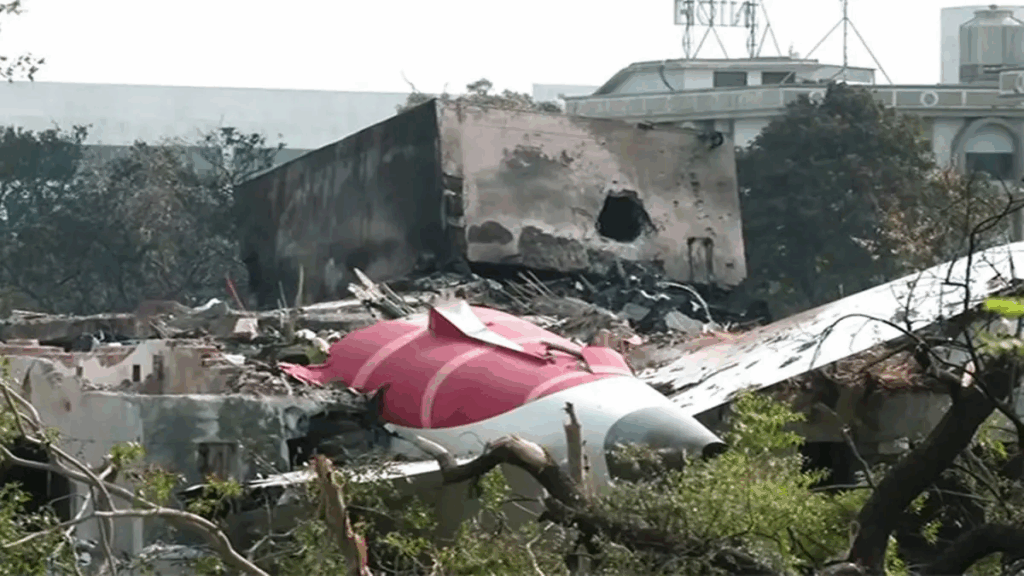
The Aircraft Accident Investigation Bureau (AAIB) released its preliminary report on the tragic Air India crash in Ahmedabad, which claimed 260 lives. The document is laden with aviation jargon, terms like EAFR, RAM, RUN vs. CUTOFF, and V-speeds that may be unfamiliar to the general public. Here’s a breakdown of what they mean and why they matter in understanding the crash.

What Are the Critical Systems Mentioned in the Report?

1. EAFR (Enhanced Airborne Flight Recorder)

Often referred to as the “black box,” the EAFR combines two crucial functions:

  • Flight Data Recorder (FDR): Logs aircraft performance metrics (speed, altitude, engine status).
  • Cockpit Voice Recorder (CVR): Captures pilot communications and cockpit sounds.

The report confirms the aircraft had two EAFRs, which are vital for reconstructing the sequence of events before a crash. If the EAFRs are recovered intact, they can reveal whether engine failure, pilot error, or a system malfunction caused the disaster.

2. RAM Air Turbine (RAT)

A small, wind-driven emergency power unit that deploys when both engines fail. It provides:

  • Backup electrical power for essential instruments.
  • Hydraulic pressure to maintain flight control.

If the RAT is deployed, it suggests a complete dual-engine failure, a rare and catastrophic scenario.

RUN vs CUTOFF: A Critical One-Second Shift

The report notes that both engines switched from “RUN” to “CUTOFF” within one second during takeoff.

  • RUN: Normal operational mode where engines receive fuel and generate thrust.
  • CUTOFF: Fuel supply is severed, shutting down the engine.

Why it matters:

  • Was this an automatic safety response (e.g., due to a sensor malfunction)?
  • Or did the pilots manually cut off fuel, possibly due to an emergency?

Expert Insight: Marco Chan, a former pilot and aviation lecturer, suggests a faulty engine chip could have triggered an erroneous CUTOFF signal. General Electric (the engine manufacturer) had previously issued a service bulletin warning of potential signal loss if maintenance wasn’t performed.

V-Speeds: The Takeoff Thresholds That Couldn’t Be Met

The report references three critical takeoff speeds:

ADVERTISEMENT
TermSpeed (knots)Meaning
V1153Decision speed—beyond this point, takeoff must continue even if an issue arises.
Vr155Rotation speed—when pilots lift the nose for ascent.
V2162Safe climb speed—ensures the aircraft can clear obstacles.

If the engines failed before V1, the pilots might have attempted to abort takeoff. If failure occurred after V1, they were committed to flying despite losing power.

Was It Pilot Error or a Technical Failure?

The report does not assign blame yet, but two theories emerge:

  1. Chip Malfunction:
  • A defective sensor may have falsely signaled an engine problem, triggering an automatic fuel cutoff.
  • GE’s service bulletin warned of this risk if maintenance was delayed.
  1. Pilot Response:
  • Did the crew misinterpret warnings and manually shut off fuel?
  • Or was the failure so sudden that recovery was impossible?

Key Takeaways for Aviation Safety

  • EAFRs are indispensable for crash investigations.
  • RAT deployment indicates total power loss—a worst-case scenario.
  • RUN-to-CUTOFF shifts are extremely rare and demand scrutiny.
  • V-speeds dictate takeoff safety—missing them can be catastrophic.

The Air India crash report highlights terms like EAFR (black box), RAT (emergency power), RUN vs CUTOFF (engine shutdown), and V-speeds (takeoff thresholds). Investigators are probing whether a faulty engine chip caused an unintended fuel cutoff, leading to the tragedy.


Tags: Air India CrashEAFRRAMRUN vs CUTOFF
ShareTweetShareSend

Recent Articles

New Quantum Evidence Is Reopening The Debate Over Penrose’s Theory Of Consciousness

New Quantum Evidence Is Reopening The Debate Over Penrose’s Theory Of Consciousness

September 4, 2026
USS Abraham Lincoln Sailors Choose Shopping and Sightseeing in Thailand After 286 Days At Sea

USS Abraham Lincoln Sailors Choose Shopping and Sightseeing in Thailand After 286 Days At Sea

September 4, 2026
iphone 18

Watch: Influencer Claims to Reveal Apple’s First Foldable iPhone 18 Ultra

September 3, 2026
Husband Secretly Records Wife’s Affair With Robot Vacuum Camera, Wins Divorce Case Then Lands In Jail

Husband Secretly Records Wife’s Affair With Robot Vacuum Camera, Wins Divorce Case Then Lands In Jail

September 3, 2026
BreezyScroll Logo

BreezyScroll is a global content platform that provides a unique experience of enhancing the knowledge quotient for its audience by providing the latest news and updates from various categories such as politics, sports, entertainment, technology, and more.
The platform aims to provide a concise and easy-to-read format for its users. BreezyScroll covers news stories from around the world, majorly the United States. The platform was launched in 2021 and has become one of the fastest-growing content companies in the US.

Follow Us

Browse by Category

  • Africa
  • Alaska
  • Animals
  • Asia
  • Athletics
  • Australia
  • Auto
  • Basketball
  • Bollywood
  • Brand
  • Breezy Explainer
  • Breezy Feature
  • Breezy Soul
  • Business
  • Canada
  • Chess
  • China
  • Cricket
  • DIY
  • Education
  • Entertainment
  • Environment
  • EPL
  • Europe
  • Exclusive Interview
  • Exclusive Review
  • Football
  • Gaming
  • Health
  • Hollywood
  • India
  • International
  • K Pop
  • Law
  • Lifestyle
  • Middle East
  • Money
  • NFL
  • North America
  • OTT
  • Paris Olympics
  • Pets
  • Russia
  • Science
  • South America
  • Space
  • Sports
  • Startup
  • Technology
  • Tennis
  • Tennis
  • The Achievers
  • The US
  • Travel
  • UK
  • UK
  • Uncategorized
  • World
  • WWE

Trending Topics

Afghanistan AI Apple Australia Biden California Canada ChatGPT China Climate Change Donald Trump Elon Musk Featured Florida Google IPL Iran Japan Jeff Bezos Joe Biden Mars Meta Moon NASA NBA Netflix New York North Korea Ohio OpenAI Putin Russia Russia-Ukraine crisis South Korea SpaceX Taliban Tesla Texas TikTok Trump Twitter UFO UK Ukraine Virat Kohli

No Result
View All Result
  • About BreezyScroll
  • Breezy Stories
  • Contact Us
  • Privacy Policy
  • We Believe in You: Showcase Your Potential to the World
  • World News – Latest News Today | BreezyScroll

© 2024 · BreezyScroll.com

No Result
View All Result
  • Home
  • Breezy Stories
  • Technology
  • Gaming
  • Entertainment
  • Lifestyle
  • World
  • Money
  • Sports
  • Breezy Explainer
  • Rakshabandhan

© 2024 · BreezyScroll.com

Go to mobile version