
EAFR, RAM, RUN vs CUTOFF: What These Technical Terms in the Air India Crash Report Mean
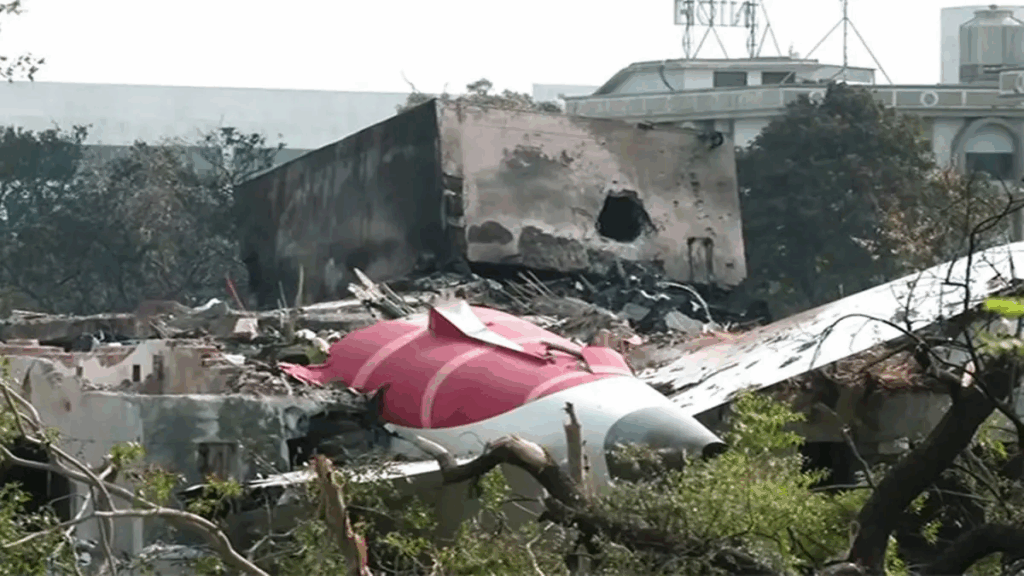
The Aircraft Accident Investigation Bureau (AAIB) released its preliminary report on the tragic Air India crash in Ahmedabad, which claimed 260 lives. The document is laden with aviation jargon, terms like EAFR, RAM, RUN vs. CUTOFF, and V-speeds that may be unfamiliar to the general public. Here’s a breakdown of what they mean and why they matter in understanding the crash.
What Are the Critical Systems Mentioned in the Report?
1. EAFR (Enhanced Airborne Flight Recorder)
Often referred to as the “black box,” the EAFR combines two crucial functions:
- Flight Data Recorder (FDR): Logs aircraft performance metrics (speed, altitude, engine status).
- Cockpit Voice Recorder (CVR): Captures pilot communications and cockpit sounds.
The report confirms the aircraft had two EAFRs, which are vital for reconstructing the sequence of events before a crash. If the EAFRs are recovered intact, they can reveal whether engine failure, pilot error, or a system malfunction caused the disaster.
2. RAM Air Turbine (RAT)
A small, wind-driven emergency power unit that deploys when both engines fail. It provides:
- Backup electrical power for essential instruments.
- Hydraulic pressure to maintain flight control.
If the RAT is deployed, it suggests a complete dual-engine failure, a rare and catastrophic scenario.
RUN vs CUTOFF: A Critical One-Second Shift
The report notes that both engines switched from “RUN” to “CUTOFF” within one second during takeoff.
- RUN: Normal operational mode where engines receive fuel and generate thrust.
- CUTOFF: Fuel supply is severed, shutting down the engine.
Why it matters:
- Was this an automatic safety response (e.g., due to a sensor malfunction)?
- Or did the pilots manually cut off fuel, possibly due to an emergency?
Expert Insight: Marco Chan, a former pilot and aviation lecturer, suggests a faulty engine chip could have triggered an erroneous CUTOFF signal. General Electric (the engine manufacturer) had previously issued a service bulletin warning of potential signal loss if maintenance wasn’t performed.
V-Speeds: The Takeoff Thresholds That Couldn’t Be Met
The report references three critical takeoff speeds:
| Term | Speed (knots) | Meaning |
|---|---|---|
| V1 | 153 | Decision speed—beyond this point, takeoff must continue even if an issue arises. |
| Vr | 155 | Rotation speed—when pilots lift the nose for ascent. |
| V2 | 162 | Safe climb speed—ensures the aircraft can clear obstacles. |
If the engines failed before V1, the pilots might have attempted to abort takeoff. If failure occurred after V1, they were committed to flying despite losing power.
Was It Pilot Error or a Technical Failure?
The report does not assign blame yet, but two theories emerge:
- Chip Malfunction:
- A defective sensor may have falsely signaled an engine problem, triggering an automatic fuel cutoff.
- GE’s service bulletin warned of this risk if maintenance was delayed.
- Pilot Response:
- Did the crew misinterpret warnings and manually shut off fuel?
- Or was the failure so sudden that recovery was impossible?
Key Takeaways for Aviation Safety
- EAFRs are indispensable for crash investigations.
- RAT deployment indicates total power loss—a worst-case scenario.
- RUN-to-CUTOFF shifts are extremely rare and demand scrutiny.
- V-speeds dictate takeoff safety—missing them can be catastrophic.
The Air India crash report highlights terms like EAFR (black box), RAT (emergency power), RUN vs CUTOFF (engine shutdown), and V-speeds (takeoff thresholds). Investigators are probing whether a faulty engine chip caused an unintended fuel cutoff, leading to the tragedy.