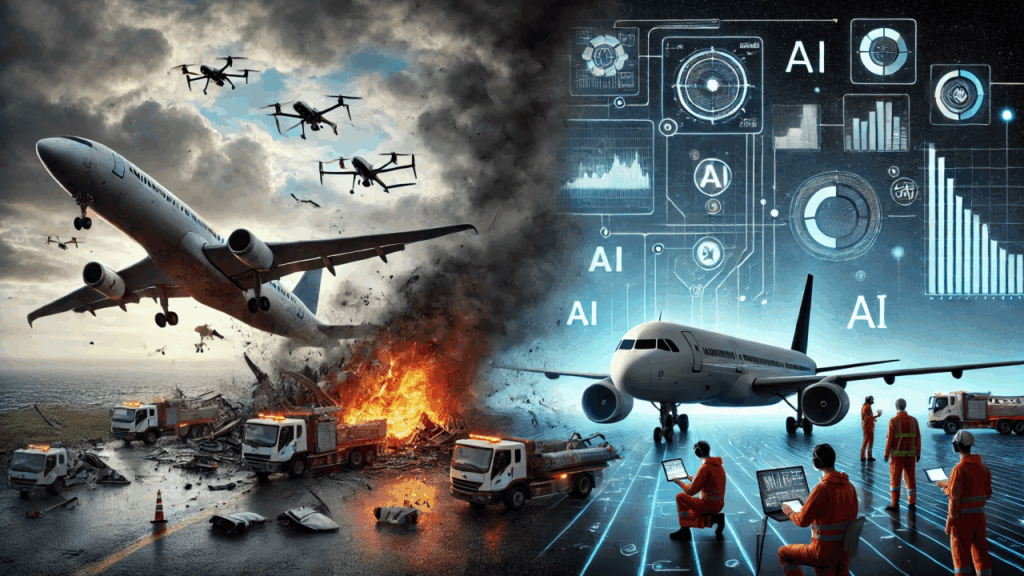
The New Frontier in Aviation Safety
The tragic crash of Air India Flight AI171 in Ahmedabad has reignited global debate about airline safety and the urgent need for better accident prevention. As investigators sift through data and wreckage, the aviation industry is turning to artificial intelligence (AI) as a transformative tool for predicting, preventing, and managing risks that lead to disasters.
But can AI really prevent air crashes? Here’s an in-depth look at how AI is already reshaping aviation safety, what’s possible in the near future, and how these advances could help avert tragedies like the recent Air India crash.
The Promise of AI in Aviation Safety
AI is rapidly becoming a cornerstone of aviation safety. In 2025, airlines and regulators worldwide are leveraging AI for everything from real-time risk analysis to predictive maintenance and smarter communication systems. The core promise: AI can process and interpret vast amounts of data faster and more accurately than any human team, providing early warnings and actionable insights before small problems escalate into disasters.
Key Areas Where AI is Making a Difference
- Predictive Maintenance: AI analyzes sensor data from aircraft systems to forecast mechanical failures before they occur, reducing the risk of in-flight breakdowns.
- Flight Operations: AI-powered copilots and decision-support systems help pilots manage complex situations, reducing human error.
- Air Traffic Management: AI improves communication and coordination between pilots and air traffic controllers, cutting down on misunderstandings and near-misses.
- Safety Management Systems: AI automates compliance, incident reporting, and risk assessment, making it easier for airlines to spot patterns and intervene proactively.
How AI Could Have Helped Prevent the Air India Ahmedabad Crash
1. Predictive Maintenance and Real-Time Monitoring
One of the most promising applications of AI is predictive maintenance. Modern aircraft like the Boeing 787 Dreamliner generate terabytes of sensor data on every flight. AI models can analyze this data in real time to detect anomalies in engines, hydraulic systems, slats, flaps, and avionics—often before a human technician would notice a problem.
In the context of the Ahmedabad crash:
If a critical component such as a slat, flap, or engine sensor had begun to fail, AI could have flagged the issue during pre-flight checks or even in-flight, prompting immediate action. Airlines using AI-driven predictive maintenance have reported up to 30% fewer in-flight failures compared to traditional maintenance schedules.
2. AI Copilots and Decision Support
Human error remains a leading cause of aviation accidents. AI copilots—such as MIT’s Air-Guardian system—utilize deep learning and eye-tracking to comprehend a pilot’s attention and intentions, providing real-time suggestions or even taking corrective action if a pilot misses a critical warning. These systems are trained on vast datasets of incident reports and flight data, learning to recognize subtle signs of trouble.
In a scenario like AI171:
If the pilots were distracted or overloaded during the critical moments after takeoff, an AI copilot could have detected abnormal flight parameters (such as loss of lift or incorrect flap settings) and issued urgent alerts or corrective inputs, potentially averting disaster.
3. Enhanced Communication and ATC Integration
Miscommunication between pilots and air traffic control (ATC) can be fatal, especially in high-stress situations. AI-driven communication systems use natural language processing (NLP) to transcribe, interpret, and clarify ATC instructions in real time, reducing the risk of misunderstandings due to accents, noise, or language barriers.
For the Ahmedabad crash:
If there were any unclear or missed communications during the emergency, AI could have flagged and clarified instructions, ensuring both pilots and controllers were on the same page.
4. Automated Safety Management and Incident Analysis
AI is revolutionizing Safety Management Systems (SMS) by automating the analysis of thousands of safety reports, maintenance logs, and incident narratives. AI can identify patterns, such as recurring technical issues, crew fatigue, or risky procedures, much faster than human analysts, allowing airlines to intervene before risks escalate.
Globally, airlines using AI-powered SMS have reported a 4x improvement in safety workflow optimization and faster compliance with regulatory requirements.
Global Case Studies: AI in Action
Predictive Analytics at Major Airlines
Delta Air Lines and Lufthansa have implemented AI-driven predictive maintenance, resulting in significant reductions in unscheduled maintenance events. Delta’s “Predictive Maintenance and Prognostics” program has cut maintenance-related delays by 10% since 2022.
MIT’s Air-Guardian: The AI Copilot
MIT CSAIL’s Air-Guardian system acts as a proactive copilot, using deep learning and eye-tracking to monitor pilot attention and flight data. In simulation trials, Air-Guardian reduced critical errors by 25% compared to flights without AI support.
FAA’s AI-Driven Safety Analysis System
The US Federal Aviation Administration (FAA) has deployed an AI-powered Safety Analysis System that processes real-time data from thousands of flights daily. This system has helped identify and mitigate risks ranging from mechanical faults to crew fatigue before they result in incidents.
Airbus Autonomous Taxiing
Airbus has introduced AI-powered autonomous taxiing systems, reducing the risk of ground collisions and runway incursions. These systems use sensor fusion and machine learning to navigate airports safely, even in low-visibility conditions.
How AI Models Are Trained to Prevent Tragedies
AI systems in aviation are trained using vast and diverse datasets, including:
- Flight Data Recorders (Black Boxes): Millions of hours of flight data, including both normal and abnormal events.
- Maintenance Logs: Detailed records of every repair, replacement, and anomaly.
- Incident and Accident Reports: Narratives and structured data from past accidents (such as Air France 447, Lion Air 610, Ethiopian 302, and now, Air India AI171).
- Simulator Data: Scenarios created in high-fidelity simulators to teach AI how to recognize and respond to rare emergencies.
Machine learning models—from deep neural networks to decision trees—analyze this data to find correlations and causal patterns that might be invisible to human analysts. For example, AI can detect subtle changes in engine vibration that predict a bearing failure, or patterns in pilot response times that signal fatigue.
Addressing the Challenges: Human-AI Collaboration and Regulation
While AI’s potential is enormous, experts stress that it must complement, not replace, human expertise. AI can process data and issue alerts, but pilots and controllers bring intuition, experience, and ethical judgment that machines lack.
Key challenges include:
- Transparency: AI systems must be explainable so pilots and regulators understand how decisions are made.
- Bias and Data Quality: AI is only as good as the data it’s trained on. Poor or biased data can lead to missed warnings or false alarms.
- Regulatory Oversight: Agencies like the FAA and EASA are developing new standards for certifying AI in safety-critical roles, ensuring rigorous testing and validation.
The Future: AI, IoT, and Proactive Safety Culture
The integration of AI with the Internet of Things (IoT) is creating a new era of connected, intelligent aircraft. Real-time data streams from engines, avionics, and even passenger devices can be analyzed instantly, allowing for immediate intervention if something goes wrong. The global aviation IoT market is projected to grow from $7.4 billion in 2022 to over $50 billion by 2031, driven largely by safety and operational efficiency.
A proactive safety culture—where airlines, manufacturers, and regulators collaborate and share data—will be key to maximizing AI’s benefits. AI-driven digital twins, scenario simulations, and real-time risk dashboards are already helping airlines move from reactive to predictive safety management.
Safer Skies Are Within Reach
The Air India crash in Ahmedabad is a sobering reminder of aviation’s inherent risks. But it’s also a catalyst for change. AI is not a silver bullet, but when combined with human expertise, rigorous oversight, and a culture of safety, it can dramatically reduce the likelihood of future disasters. From predictive maintenance and AI copilots to smarter communication and real-time risk analysis, the tools to prevent the next tragedy are already here—and getting better every day.
As the world mourns the victims of Flight AI171, the aviation industry must double down on innovation, collaboration, and vigilance. With AI as a partner, the goal of zero air crashes is closer than ever before.