
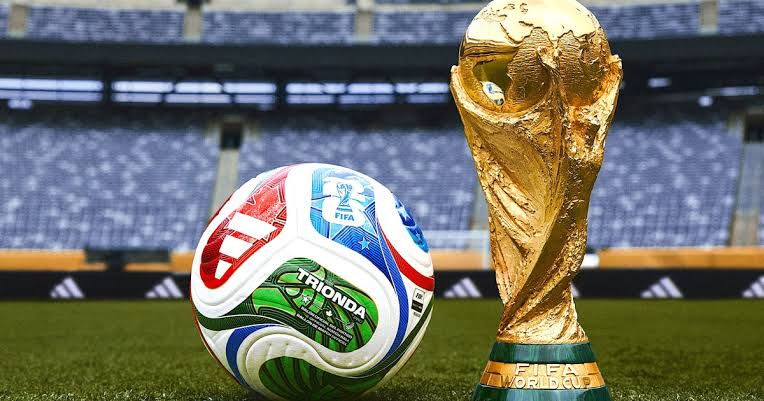
The FIFA 2026 World Cup has already produced a record-breaking number of goals, and one unexpected talking point has emerged alongside the attacking fireworks: the official match ball, the Adidas Trionda.
With more than 177 goals scored before the group stage has even concluded, fans and pundits have questioned whether the tournament’s official football is giving attackers an edge. Some former goalkeepers believe the ball reaches the net faster than expected, while recent aerodynamic research suggests its unique design behaves differently in flight.
So, is the Trionda really making it harder for goalkeepers, or is it simply another World Cup ball surrounded by debate?
Why is the FIFA 2026 Trionda ball attracting attention?
Every World Cup introduces a new official football, and almost every edition sparks debate among players.
The Trionda has become the latest center of attention because the tournament has already broken the previous World Cup scoring record before the knockout rounds have even begun.
Goalkeepers, television analysts, and football fans have noticed that several long-range strikes and dipping shots appear unusually difficult to judge.
While attacking tactics, defensive strategies, and expanded tournament formats all contribute to higher scoring, the ball itself has entered the conversation.
What makes the Trionda different?
Adidas redesigned the World Cup ball with a focus on consistency in flight.
A four-panel construction
Unlike many previous World Cup balls, the Trionda uses only four panels, the fewest ever featured in a FIFA World Cup ball.
Fewer panels mean fewer seams, creating a smoother surface that can influence airflow around the ball.
Deep seams for stability
Although the ball has fewer panels, Adidas intentionally made the seams deeper.
According to FIFA, these deeper seams help distribute aerodynamic drag more evenly, making the ball’s trajectory more stable throughout flight.
Textured surface
The Trionda also features:
- Embossed country-inspired graphics
- Debossed aerodynamic lines
- A textured outer coating for improved grip
These features are designed to help players maintain better control, particularly in wet or humid conditions.
What does the research say?
Researchers from Seoul Women’s University in South Korea and Japan’s University of Tsukuba recently examined how the Trionda behaves under controlled conditions.
Wind tunnel testing
Scientists tested the ball inside a wind tunnel to analyze its aerodynamic properties.
Their findings suggest that the arrangement of the panels and seams changes how air flows around the football.
The researchers observed what is known as a “drag crisis,” a phenomenon where aerodynamic drag suddenly decreases once the ball reaches certain speeds.
When drag drops unexpectedly, the football maintains more of its speed than goalkeepers might anticipate.
Why that matters
Goalkeepers rely heavily on visual cues to judge:
- Ball speed
- Flight path
- Spin
- Dip
- Curve
If the ball retains speed differently than expected, even a fraction of a second can determine whether a save is made.
Researchers believe this may explain why some shots appear to arrive more quickly than keepers predict.
Why are goalkeepers complaining?
Several former international goalkeepers have publicly discussed the Trionda.
Former England goalkeeper Joe Hart suggested that the football reaches goalkeepers faster than it appears to leave a striker’s foot.
After watching multiple goals throughout the tournament, Hart argued that too many similar situations had occurred for the ball not to be a contributing factor.
Former Denmark goalkeeper Kasper Schmeichel also pointed to the four-panel construction.
According to Schmeichel, reduced drag combined with varying weather conditions could slightly increase ball speed while changing the amount of spin generated during flight.
Neither goalkeeper suggested the ball is defective. Instead, both argued that its aerodynamic characteristics require keepers to adjust their timing and positioning.
Is the Trionda similar to the infamous Jabulani?
Any discussion about World Cup footballs inevitably brings up the Adidas Jabulani from the 2010 tournament in South Africa.
The Jabulani became notorious because players complained that it swerved unpredictably, especially during long-range shots.
Goalkeepers described it as one of the most difficult footballs ever used in elite competition.
The Trionda, however, appears to be different.
Instead of producing erratic movement, Adidas says it was engineered to deliver a more predictable trajectory while maintaining consistent flight across different playing conditions.
That distinction is important because unpredictability and increased speed are two different aerodynamic challenges.
Is the ball responsible for the record number of goals?
Probably not on its own.
Several factors have contributed to FIFA 2026’s high-scoring matches.
Expanded tournament
The larger World Cup format has created more matches involving teams with differing levels of quality, increasing the likelihood of high-scoring games.
Modern attacking football
Elite teams continue to emphasize:
- High pressing
- Quick transitions
- Wide attacking play
- Long-distance shooting
- Set-piece creativity
These tactical trends naturally generate more scoring opportunities.
Goalkeeper adaptation
Every new World Cup ball requires an adjustment period.
Keepers spend years training with domestic league balls before switching to an entirely different model for the biggest tournament in football.
Even subtle aerodynamic differences can affect positioning and reaction times until players become familiar with the equipment.
What does Adidas say?
Adidas rejects suggestions that the Trionda behaves unpredictably.
The company says the ball underwent more than 300 laboratory and on-field performance tests before receiving FIFA approval.
According to Adidas, the four-panel construction and deep seam design create:
- Better flight stability
- More consistent trajectories
- Improved grip
- Greater control in wet conditions
Rather than making the ball unpredictable, the manufacturer says the design improves consistency for players.
Will goalkeepers eventually adapt?
History suggests they will.
Every major tournament introduces a new football, and initial criticism is common.
From the Teamgeist in 2006 to the Jabulani in 2010 and subsequent World Cup balls, professional goalkeepers have typically required several matches before fully adjusting to new flight characteristics.
As the tournament progresses, coaching staffs are likely to analyze the Trionda’s behavior in greater detail, allowing goalkeepers to refine their positioning and timing.
The bottom line
The Adidas Trionda has quickly become one of FIFA 2026’s biggest talking points.
Scientific testing suggests its aerodynamic profile differs from previous World Cup footballs, while former international goalkeepers believe it reaches them faster than expected.
However, there is currently no definitive evidence that the ball alone is responsible for the tournament’s record-breaking goal tally.
The surge in scoring is likely the result of multiple factors, including tactical evolution, expanded competition, and the natural learning curve that accompanies every new World Cup ball.
As the knockout rounds begin, the debate over the Trionda is unlikely to disappear, especially if spectacular goals continue to dominate headlines.
TL;DR
- FIFA 2026 has already surpassed the previous World Cup goal-scoring record.
- The official match ball, Adidas Trionda, uses a four-panel design with deep seams.
- Researchers say the ball’s aerodynamics may reduce drag at certain speeds.
- Some former goalkeepers believe the ball travels faster than expected.
- Adidas maintains the Trionda was designed to improve flight stability and predictability.
- There is no conclusive evidence that the ball alone is responsible for the surge in goals.