

TL;DR: Two powerful earthquakes measuring 7.2 and 7.5 magnitude struck off Venezuela’s coast within 39 seconds of each other, creating a rare seismic event known as an earthquake “doublet.” The tremors were felt across Venezuela and several Caribbean territories, affecting an estimated 5.2 million people and triggering tsunami warnings throughout the region.
Two Major Earthquakes Shake Venezuela Within Seconds
A rare and powerful seismic event rattled northern South America and the Caribbean on Wednesday when two major earthquakes struck near Venezuela’s coast less than a minute apart.
According to the U.S. Geological Survey (USGS), the first earthquake, measuring magnitude 7.2, struck at 10:04 p.m. GMT. Its epicenter was located approximately 13 miles (21 kilometers) west of the coastal town of Morón in Venezuela.
Just 39 seconds later, a second and even stronger earthquake measuring magnitude 7.5 hit roughly 28 miles (45 kilometers) away.
The back-to-back quakes created a powerful sequence of shaking that was felt far beyond Venezuela’s borders, raising concerns about structural damage, tsunami risks, and the potential for aftershocks.
What Is an Earthquake Doublet?
The USGS classified the event as a “doublet” earthquake, a relatively uncommon phenomenon in which two large earthquakes occur in nearly the same location within a very short period.
Why doublets are unusual
Most major earthquakes involve a single mainshock followed by smaller aftershocks. In a doublet, however, two significant earthquakes occur so close together in time and space that they are often considered part of the same seismic sequence.
In this case:
- The magnitude 7.2 quake acted as a foreshock.
- The magnitude 7.5 quake followed just 39 seconds later.
- Both earthquakes occurred in the same general region offshore from Venezuela.
For residents, a doublet can feel especially intense because the ground barely has time to stop moving before another major rupture occurs.
How powerful were the earthquakes?
The difference between a magnitude 7.2 and 7.5 earthquake may appear small, but earthquake magnitudes are measured on a logarithmic scale.
That means a 7.5 earthquake releases significantly more energy than a 7.2 event. Combined, the two quakes produced an extraordinary amount of seismic energy in less than one minute.
Where Were the Tremors Felt?
The shaking spread across a vast area of northern South America and the Caribbean.
Reports indicated that approximately 5.2 million people experienced strong to violent shaking, making this one of the most widely felt seismic events in the region in recent years.
Areas that reported shaking
The earthquakes were felt in:
- Multiple Venezuelan states
- Aruba
- Curaçao
- Guyana
- Other nearby Caribbean areas
Residents in coastal communities reported prolonged shaking, while people hundreds of miles away also felt the effects.
The broad reach highlights how large offshore earthquakes can transmit seismic waves across significant distances, particularly through coastal and island regions.
What Damage Was Reported in Venezuela?
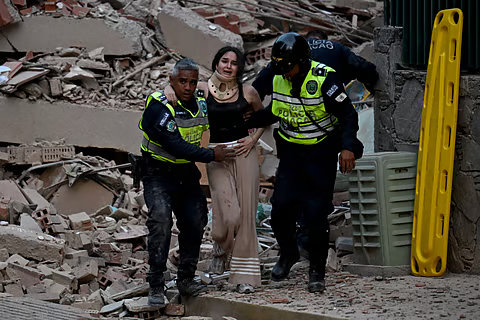
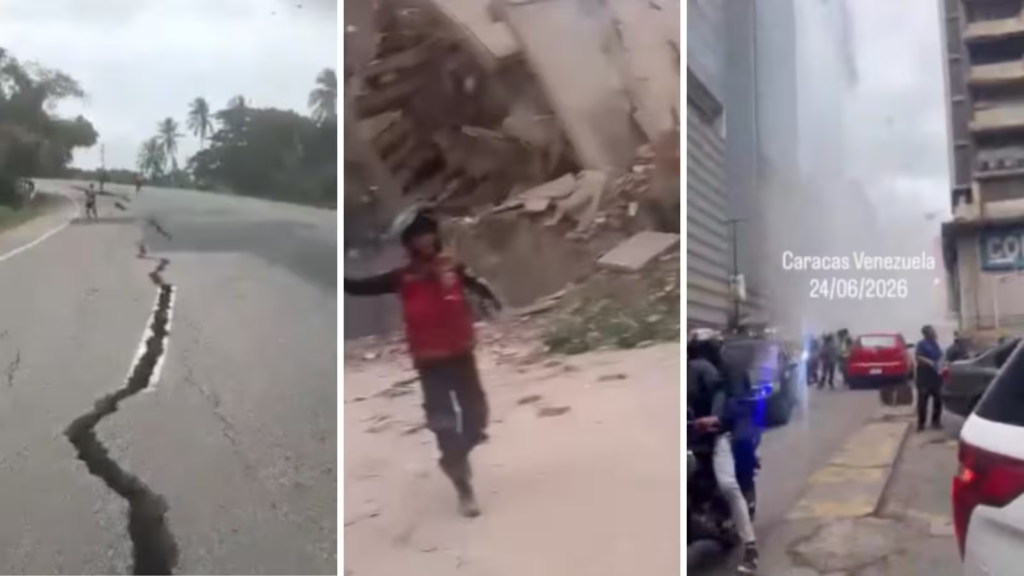
Early reports focused on structural damage in parts of Venezuela, including the capital city of Caracas.
While authorities continued assessing the full extent of the impact, images and videos circulating on social media showed damaged buildings and debris in affected areas.
Why structural assessments matter after major earthquakes
Following a major seismic event, engineers typically inspect:
- Residential buildings
- Hospitals
- Schools
- Bridges
- Utility infrastructure
- Transportation networks
Damage assessments often take days or even weeks to complete, especially when multiple regions are affected simultaneously.
Emergency officials also monitor for secondary hazards such as landslides, road failures, and infrastructure disruptions.
Why Were Tsunami Warnings Issued?
Because both earthquakes occurred near the coast and exceeded magnitude 7.0, tsunami monitoring agencies quickly evaluated the risk of dangerous sea-level changes.
How earthquakes trigger tsunamis
Tsunamis typically occur when a powerful undersea earthquake suddenly displaces large volumes of water.
Risk factors include:
- Magnitude of the earthquake
- Depth of the rupture
- Location relative to the coastline
- Movement of the seafloor
As a precaution, tsunami alerts and monitoring efforts were initiated for parts of the Caribbean region.
Even when a destructive tsunami does not ultimately materialize, authorities often issue warnings quickly because coastal populations may have limited time to evacuate.
What residents should do during tsunami alerts
Emergency agencies generally advise residents to:
- Move to higher ground if instructed.
- Stay away from beaches and harbors.
- Monitor official government alerts.
- Avoid returning to coastal areas until authorities declare them safe.
Why Venezuela Is Vulnerable to Earthquakes
Although Venezuela is not as frequently discussed as countries along the Pacific Ring of Fire, it sits near active tectonic boundaries capable of generating significant earthquakes.
The tectonic forces at work
The region is influenced by interactions between the Caribbean Plate and the South American Plate.
As these plates move relative to one another, stress builds along faults beneath the Earth’s surface. When that stress is released suddenly, earthquakes occur.
Large offshore earthquakes can be particularly concerning because they may impact multiple countries simultaneously through ground shaking and tsunami threats.
Could More Aftershocks Follow?
Seismologists generally expect aftershocks after earthquakes of this magnitude.
What experts watch for
Following major earthquakes, scientists monitor:
- Frequency of aftershocks
- Magnitude trends
- Fault movement patterns
- Potential stress transfer to nearby faults
Most aftershocks are smaller than the main event, but some can still be strong enough to cause additional damage, especially to structures already weakened by the initial shaking.
Residents in affected regions are often advised to remain prepared for continued seismic activity in the days and weeks following a major quake.
Why This Earthquake Event Matters
The Venezuela earthquake doublet stands out not only because of its strength but also because of its unusual timing.
Two earthquakes exceeding magnitude 7.0 occurring just 39 seconds apart is a rare geological event that demonstrates how quickly seismic hazards can escalate.
Beyond Venezuela, the tremors were felt across several countries and territories, underscoring the interconnected nature of earthquake risks in the Caribbean basin.
As authorities continue evaluating damage and monitoring aftershocks, the event serves as a reminder that major seismic activity can affect millions of people within moments—and that preparedness remains one of the most effective tools for reducing risk when the ground begins to shake.