
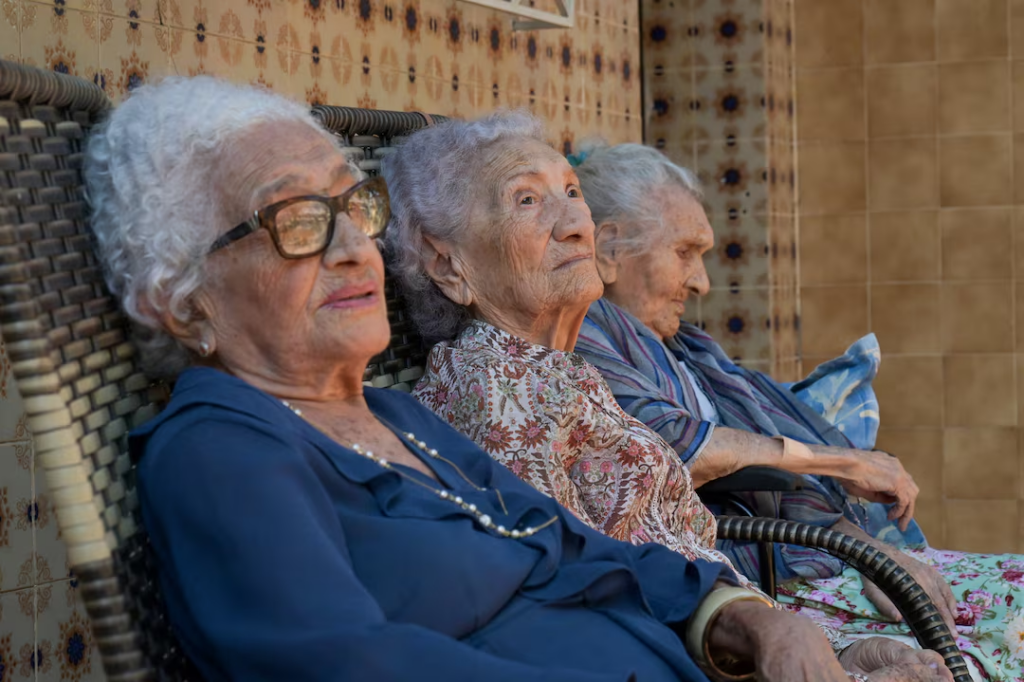
Living past 100 is rare. Having three sisters in the same family all surpassing the century mark is even rarer.
Now, researchers believe a trio of Brazilian sisters aged 103, 104, and 109 may provide valuable clues about one of humanity’s oldest questions: What helps people live longer, healthier lives?
The sisters recently earned recognition from Guinness World Records for having the highest combined age of three living siblings. Their remarkable longevity has also made them an important focus of scientific research aimed at understanding the biology of aging.
Who are the three sisters at the center of the study?
The women are:
- Levita de Deus Nunes, 109
- Zoraide de Deus Mota, 104
- Zulina de Deus Nunes, 103
Together, they represent an exceptionally rare example of familial longevity.
The sisters live in Rio de Janeiro and were identified through LongeviQuest, which verifies age records worldwide and collaborates with Guinness World Records.
Their combined ages have attracted attention not only from record keepers but also from scientists seeking to understand why some people remain healthy well into their second century of life.
Why are scientists so interested in these sisters?
Most aging research focuses on factors that contribute to disease and decline. Researchers studying the Brazilian sisters are approaching the question from the opposite direction.
Instead of asking why people become ill as they age, they are asking:
Why do some people avoid many age-related illnesses altogether?
Scientists believe families with multiple centenarians may carry genetic traits that help protect against:
- Heart disease
- Cognitive decline
- Muscle loss
- Chronic inflammation
- Other age-related conditions
Because all three sisters have reached extraordinary ages, researchers suspect inherited biological advantages may be involved.
What is the DNA Longevo Project?
The sisters are participating in the DNA Longevo Project, a major longevity study led by geneticist Mayana Zatz at the Human Genome Research Center of the University of São Paulo.
The project aims to identify genetic factors that may help people age more successfully.
Researchers compare the DNA of centenarians with people who develop serious age-related health problems earlier in life.
By doing so, they hope to identify what scientists call “protective genes.”
What are protective genes?
Protective genes are genetic variants that may reduce the risk of disease or slow biological aging.
Scientists believe these genes could help:
- Maintain cardiovascular health
- Preserve brain function
- Improve cellular repair mechanisms
- Reduce susceptibility to chronic illness
The larger the pool of centenarians available for study, the easier it becomes to identify meaningful genetic patterns.
Researchers hope to eventually study at least 500 people aged 100 or older.
Is longevity mostly genetic?
The answer is complicated.
Scientists increasingly believe genetics plays a significant role in exceptional longevity, especially when multiple family members reach very advanced ages.
However, genes do not tell the entire story.
The genetic factor
Experts say the sisters’ ages strongly suggest an inherited advantage.
When several close relatives live beyond 100, researchers see evidence that genetic traits may be helping protect health and resilience.
The lifestyle factor
At the same time, environmental influences remain important.
The sisters grew up in a different era, with lifestyles that many health experts associate with healthy aging today.
These included:
- Eating fresh, minimally processed foods
- Staying physically active
- Strong family connections
- Living within supportive communities
Researchers believe the interaction between genes and lifestyle may ultimately be the key.
What habits do the sisters credit for their long lives?
Interestingly, the sisters reject the idea that there is a secret formula.
Instead, they point to simple, everyday habits.
Fresh food and active living
Zulina recalled spending much of her childhood swimming and fishing in local rivers.
Food was largely fresh because refrigeration was uncommon.
Modern longevity research increasingly supports diets rich in minimally processed foods, fruits, vegetables, and natural ingredients.
Family and caregiving
The sisters also maintained strong family ties throughout their lives.
Researchers note that social connections are increasingly recognized as an important predictor of long-term health and well-being.
Studies have linked social isolation to higher risks of cardiovascular disease, dementia, and premature death.
What can the rest of us learn from this?
The Brazilian sisters do not provide a magic recipe for reaching 100.
However, their lives reinforce several lessons that consistently appear in longevity research:
Common traits linked to healthy aging
- Regular physical activity
- Strong social relationships
- Nutritious diets
- Lifelong mental engagement
- Access to supportive communities
- Avoidance of smoking and excessive alcohol use
While genetics may influence how long someone can live, lifestyle choices often influence how well they live during those years.
Why this research matters
As populations age worldwide, understanding healthy longevity has become a major scientific priority.
The goal is not simply to extend lifespan.
Researchers increasingly focus on extending healthspan: the number of years people remain physically active, independent, and mentally sharp.
If scientists can identify protective genetic factors in families like this one, future treatments could potentially help more people enjoy healthier lives for longer.
For now, the three Brazilian sisters offer researchers a rare natural experiment and a reminder that longevity may come from a combination of biology, lifestyle, and community rather than any single secret.
TL;DR
- Three Brazilian sisters aged 103, 104, and 109 are being studied for clues about longevity.
- Researchers believe their DNA may contain protective genetic traits linked to healthy aging.
- Scientists are examining why they have remained physically and mentally resilient past 100.
- The study is part of Brazil’s DNA Longevo Project, which investigates the genetics of exceptional longevity.
- Researchers say genetics, family support, diet, and active lifestyles may all play a role.