Political Crisis Sparks Nationwide Chaos
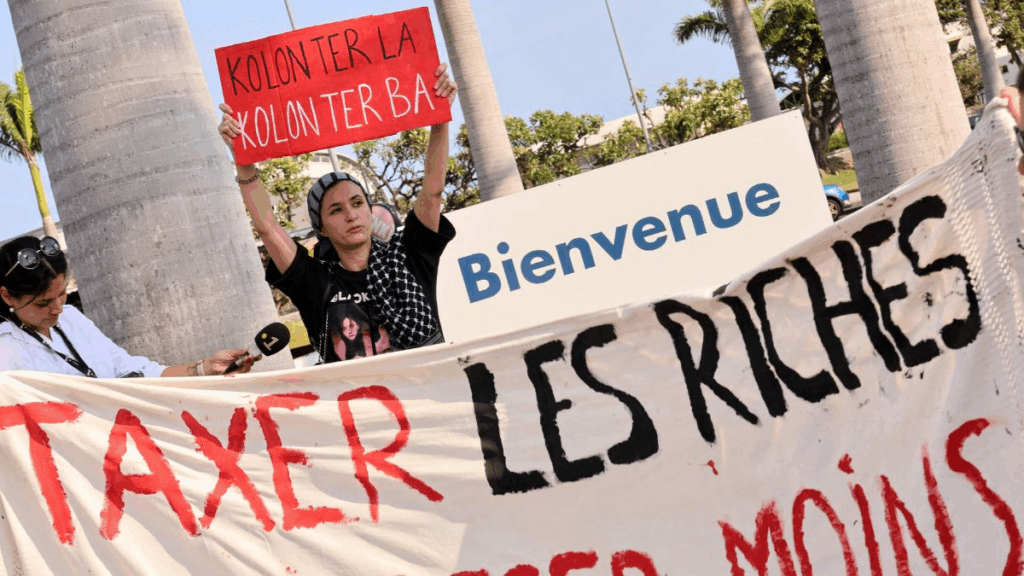
France is once again at a political breaking point. On Wednesday, police arrested around 200 demonstrators as tens of thousands took to the streets in the “Block Everything” protests. The unrest followed the dramatic ouster of Prime Minister François Bayrou, who was defeated in a no-confidence vote at the National Assembly earlier this week.
Bayrou had staked his position on a controversial debt-control plan, including pension freezes and cuts to public holidays, but lawmakers rejected it, making him the fourth prime minister to fall in just two years.
President Emmanuel Macron quickly appointed Sébastien Lecornu, his defense minister and close ally, as the country’s new head of government. The move makes Lecornu the fifth prime minister of Macron’s second term, underscoring the fragility of French politics.
Why Macron’s Pick Angered Both Left and Right
Macron instructed Lecornu to immediately consult with parliamentary forces to draft a national budget and secure agreements for upcoming reforms. But opposition leaders dismissed the appointment as proof that the president is unwilling to change course.
- Jean-Luc Mélenchon, leader of the far-left France Unbowed party, blasted the decision on social media: “Only the departure of Macron himself can put an end to this sad comedy of contempt for the Parliament, voters, and political decency.”
- Jordan Bardella, leader of the far-right National Rally, echoed the criticism: “Emmanuel Macron’s motto: you don’t change a losing team.”
- Union leaders also took aim at the president. “The ministers, it’s a problem, but it’s more Macron and his way of working, which means he has to go,” said Fred, a representative of the RATP transport union, in comments to Reuters.
By choosing another loyalist instead of a consensus-builder, Macron may have deepened frustrations among both voters and opposition lawmakers.
“Block Everything”: A Protest Movement Escalates
The “Block Everything” movement, born online and originally associated with right-wing activists, has since been adopted by left-wing and far-left groups. On Wednesday, it surged into the streets with a force reminiscent of the Yellow Vest protests of 2018–2019.
Demonstrators:
- Blocked highways and train lines.
- Set fire to a bus in Rennes.
- Clashed with heavily deployed police — more than 80,000 officers were mobilized nationwide.
Researchers note that the movement has spread quickly through social media channels, making it decentralized and unpredictable. Its demands are broad but unified around one theme: opposition to austerity and Macron’s style of governance.
“We’re on the fifth prime minister under Macron’s second term, and it has never changed anything,” said Daniel Bretones, a union member protesting in Marseille.
The Stakes for Sébastien Lecornu
Lecornu inherits an unenviable task. France’s budget deficit — the highest in Europe — has fueled investor concerns and sent borrowing costs soaring. Bayrou fell precisely because his proposed cuts angered both unions and lawmakers.
Now, Lecornu must present a draft 2026 budget to parliament by October 7. To succeed, he will need to unite parties with fundamentally opposing agendas:
- Socialists pushing for higher taxes on the wealthy.
- The far-right National Rally, which firmly rejects tax hikes.
Failure to bridge that divide could trigger yet another collapse of government and prolong France’s spiral of instability.
Why This Matters
France’s turmoil is not just political theater. The debt crisis poses a real economic threat, with high borrowing costs already straining public finances. At the same time, ongoing unrest risks damaging investor confidence, disrupting daily life, and weakening France’s global standing.
For Macron, whose presidency has been defined by crises, from Yellow Vests to pension reform battles, the “Block Everything” uprising marks another test of his resilience. For Lecornu, it’s a trial by fire that could either stabilize Macron’s government or accelerate its unraveling.