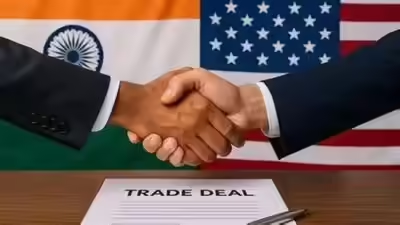
The temporary 10% tariff that has applied to most Indian goods entering the United States since February is set to expire on Friday, marking a pivotal moment in US-India trade relations. But while the tariff’s expiration removes one layer of uncertainty, it does not necessarily mean Indian exporters are in the clear.
Several developments are unfolding simultaneously. The Trump administration is weighing new tariffs through separate legal mechanisms, India and the US are still negotiating an interim trade agreement, and lawmakers in Washington are considering fresh penalties tied to India’s continued imports of Russian oil.
Together, these developments could reshape one of America’s largest trading relationships and affect billions of dollars in annual trade.
TL;DR
- The temporary 10% tariff on most Indian exports to the US expires on Friday.
- The duty was imposed under Section 122 of the Trade Act of 1974 and was always intended to be temporary.
- Two US investigations into Indian trade practices could lead to new tariffs under Section 301.
- India and the US are close to an interim trade agreement, but negotiations remain unfinished.
- Separately, proposed US legislation could impose tariffs of up to 100% on Indian goods because of India’s purchases of Russian oil.
- Key Indian exports such as smartphones and pharmaceuticals remain exempt from the temporary tariff.
Why Is the 10% US Tariff Expiring?
The 10% tariff was introduced under Section 122 of the Trade Act of 1974, which allows the US president to impose temporary import duties to address balance-of-payments concerns.
Unlike other trade laws used by Washington, Section 122 includes strict limits. It caps tariff levels and restricts how long they can remain in place, making the measure a short-term solution rather than a permanent trade policy.
The tariff applies not only to India but also to most US trading partners, meaning several countries are now awaiting Washington’s next move.
For Indian exporters, however, the situation is more complicated because multiple trade actions involving India are already underway.
What Tariffs Do Indian Goods Currently Face?
Most Indian exports currently pay the 10% temporary tariff in addition to the standard Most Favored Nation (MFN) tariff rates that apply to imports from nearly all US trading partners.
However, some industries already face significantly higher duties.
These include:
- Steel, aluminum and certain metal products: 50% tariff under Section 232 of the Trade Expansion Act of 1962
- Automobiles and auto parts: 25% tariff under Section 232
These industry-specific tariffs are unaffected by Friday’s expiration and will remain in place.
Which Indian Exports Are Exempt?
Not all Indian products have been subject to the additional 10% tariff.
Executive Order 14257, along with a White House clarification issued in April 2025, exempted several strategically important sectors.
These include:
- Smartphones
- Laptops
- Semiconductor devices
- Integrated circuits
- Data-processing equipment
- Pharmaceuticals
- Energy products
- Critical minerals
These exemptions are particularly significant because they account for a substantial share of India’s exports to the United States.
According to Indian trade data, smartphones generated approximately $10.9 billion in exports during the 2024-25 financial year, while pharmaceutical exports totaled roughly $9.8 billion. Together with other exempt categories, they represent nearly half of India’s merchandise exports to the US, which reached $86.51 billion during the same period.
Trump’s Proposed Pharmaceutical Tariffs Add New Uncertainty
President Donald Trump has also outlined a separate tariff plan targeting imported generic medicines.
Under the proposal announced Tuesday, generic drugs would continue entering the United States without tariffs for two years beginning August 1. After that transition period, tariffs would rise to 100% for one year before increasing to 200%.
Trump said the escalating tariffs are intended to encourage pharmaceutical manufacturers to shift production to the United States.
India is one of the world’s largest suppliers of generic medicines, making any future pharmaceutical tariffs particularly important for Indian exporters and the US healthcare industry alike.
What Happened to the Earlier US-India Trade Agreement?
India and the United States reached a framework agreement on February 7 that would have significantly changed the tariff landscape.
The proposed deal included:
- Reducing tariffs on Indian goods from 50% to 18%
- Removing the additional 25% penalty linked to India’s Russian oil imports
- Expanding India’s purchases of US goods
- Increasing market access for selected American exports, including some agricultural products
Indian Commerce Minister Piyush Goyal argued that the arrangement would have given Indian exporters a competitive advantage over rivals including China, Vietnam, Indonesia, Bangladesh and Sri Lanka.
However, the agreement quickly ran into legal trouble.
How Did the Supreme Court Change the Situation?
On February 20, the US Supreme Court struck down President Trump’s use of emergency economic powers to impose tariffs.
The ruling effectively removed the legal foundation supporting the proposed 18% tariff framework for India as well as similar tariff measures affecting several other countries.
The framework agreement anticipated the possibility of legal changes by including a provision allowing both countries to modify their commitments if tariff levels changed.
That clause has since become an important part of India’s negotiating position.
What Could Replace the Expiring Tariff?
The Trump administration is now relying on a different legal mechanism: Section 301 of the Trade Act of 1974.
Unlike Section 122, Section 301 allows the United States to impose tariffs after determining that a foreign country’s trade practices are unfair or discriminatory.
There is no statutory cap on tariff rates, and duties imposed under Section 301 do not automatically expire.
However, they require formal investigations before new tariffs can be introduced.
Why Is India Facing Two Separate US Investigations?
Washington has opened two Section 301 investigations involving India.
The first focuses on allegations involving forced labor in certain Indian products. In early June, US officials proposed an additional 12.5% tariff based on those findings.
India has rejected the allegations and disputed the conclusions of the investigation.
The second investigation examines whether India contributes to excess manufacturing capacity, although officials have not yet announced any proposed tariff rate.
These investigations create uncertainty because either could become the legal basis for replacing the expiring 10% tariff.
Why Does This Matter for India’s Competitiveness?
India’s position is influenced not only by its own tariff treatment but also by what happens to competing exporting nations.
Countries such as Pakistan, Sri Lanka and the Philippines currently face only the forced-labor investigation, while Vietnam, China and several other manufacturing competitors remain subject to different US trade measures.
If India’s tariffs ultimately end up lower than those imposed on competing exporters, Indian manufacturers could gain market share in the United States.
Conversely, if Washington imposes higher tariffs on India while competitors receive more favorable treatment, Indian exports could become less competitive across sectors ranging from textiles to engineering goods.
What About the Russian Oil Issue?
Trade negotiations are also complicated by India’s continued imports of discounted Russian crude oil.
A separate bill currently moving through the US Senate would authorize tariffs of up to 100% on imports from countries that continue purchasing Russian oil.
Although the legislation has not become law, it represents another potential source of trade friction between Washington and New Delhi.
If enacted, it would operate independently of the existing Section 122 and Section 301 tariff frameworks.
What Happens Next?
Friday’s expiration removes only one piece of a much larger trade puzzle.
Washington must still decide whether to replace the temporary tariff through ongoing Section 301 investigations, while negotiators continue working toward an interim trade agreement.
At the same time, congressional proposals tied to Russian oil purchases and possible future pharmaceutical tariffs could further reshape the trading relationship.
For businesses on both sides, the coming weeks may determine whether the world’s two largest democracies move toward deeper economic cooperation or enter another period of tariff-driven uncertainty.