
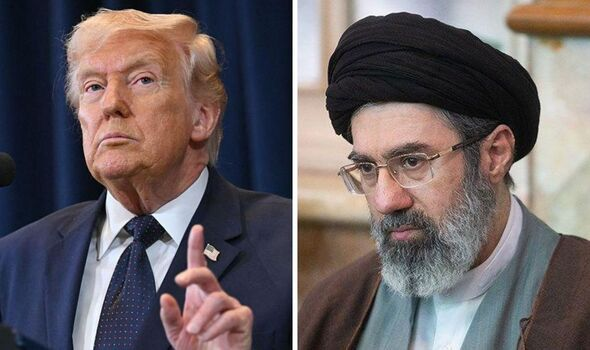
Iran has flatly rejected U.S. President Donald Trump’s claim on Truth Social that Washington and Tehran are engaged in “productive” talks, calling the statement a strategic move tied to energy markets rather than diplomacy.
The denial comes at a moment of heightened volatility in the Middle East, where military threats, oil prices, and geopolitical messaging are tightly intertwined.
What Did Iran Say About the Alleged Talks?
Iran’s foreign ministry dismissed Trump’s remarks as misleading and politically motivated.
“No Dialogue” Between Washington and Tehran
According to state-affiliated media reports:
- Iranian officials said there is no direct or indirect communication with the United States.
- The claim of talks was described as an attempt to lower global energy prices.
- Tehran framed the messaging as a tactic to buy time for potential military planning.
Other Iranian outlets echoed the same position, reinforcing a unified public stance: negotiations are not underway.
Messaging From State Media
Shortly after Trump’s announcement, Iranian state television aired a pointed message:
- “US president backs down following Iran’s firm warning.”
That framing suggests Tehran wants to project strength domestically and internationally—positioning itself as forcing a U.S. pause rather than responding to diplomacy.
In geopolitical conflicts, messaging is strategy. Public denials like this can signal both internal confidence and external deterrence.
What Did Trump Claim?
President Trump struck a notably different tone, describing recent interactions as constructive.
Key Points From Trump’s Statement
Trump said:
- The U.S. and Iran had “very good and productive conversations” over two days.
- Discussions were aimed at a “complete and total resolution” of hostilities.
- He ordered a five-day pause on military strikes targeting Iranian energy infrastructure.
The announcement was made on his Truth Social platform and framed as a diplomatic opening.
Immediate Market Reaction
Financial markets responded quickly:
- Oil prices dropped sharply, with Brent crude falling below $100 per barrel.
- U.S. stock markets rose, reflecting reduced near-term geopolitical risk.
Even unverified claims of diplomacy can move global markets—especially when energy supply is at stake.
Why Is the Strait of Hormuz So Critical?
At the center of the conflict is the Strait of Hormuz, one of the world’s most important energy chokepoints.
Global Importance
- Roughly 20% of the world’s oil supply passes through the strait.
- Any disruption can trigger global price spikes.
- It directly impacts economies far beyond the Middle East.
Iran’s Position
Iranian officials have warned:
- The strait may not return to pre-conflict conditions.
- Energy markets are likely to remain unstable.
- Tehran could escalate further if attacked.
Did the U.S. Back Down—or Shift Strategy?
Iranian media claims the U.S. paused strikes due to pressure and deterrence. But the reality may be more complex.
Competing Narratives
Iran’s version:
- The U.S. retreated after warnings of retaliation.
- Tehran’s threats created enough risk to halt escalation.
U.S. version:
- The pause reflects ongoing diplomatic engagement.
- Talks are progressing toward de-escalation.
What Analysts Might Infer
- The pause could be a tactical delay, not a strategic retreat.
- Both sides are trying to control the narrative while avoiding immediate escalation.
- Market reactions suggest investors are betting—at least temporarily—on de-escalation.
Conflicts today are fought not just with weapons, but with narratives that influence markets, allies, and public opinion.
How Did the Conflict Escalate?
The current crisis stems from a rapid escalation earlier this year.
Timeline of Key Events
- February 28, 2026: Coordinated U.S.-Israeli strikes hit Iranian targets.
- Senior Iranian leadership, including top military figures, were reportedly killed.
- Iran responded with threats targeting regional infrastructure.
- The U.S. issued a 48-hour ultimatum over the Strait of Hormuz.
The Ultimatum
Trump warned:
- If Iran did not reopen the strait, the U.S. would “obliterate” Iranian power plants.
Iran responded with counter-threats, including:
- Strikes on energy, IT, and desalination infrastructure.
- A warning to completely shut the Strait of Hormuz if attacked.
The escalation shows how quickly regional conflicts can threaten global supply chains—and why even temporary pauses matter.
Are There Backchannel Efforts to Reduce Tensions?
Despite public denials, there are hints of diplomatic activity behind the scenes.
Regional Mediation
Iran acknowledged:
- Neighboring countries have made “initiatives” to reduce tensions.
- Tehran insists responsibility lies with Washington, stating it did not start the conflict.
The Reality of Quiet Diplomacy
Even when publicly denied, indirect communication often occurs through:
- Third-party countries
- Intelligence channels
- Multilateral organizations
What Happens Next?
The situation remains highly fluid, with several possible scenarios.
Short-Term Outlook
- The five-day pause is a critical window.
- Markets will watch for signals of escalation or negotiation.
- Any disruption in the Strait of Hormuz could trigger immediate global economic impact.
Key Risks
- Miscalculation leading to direct military confrontation
- Expanded regional conflict involving other countries
- Sustained volatility in oil and financial markets
Potential Outcomes
- De-escalation: Talks (formal or informal) reduce tensions
- Stalemate: Ongoing threats without direct conflict
- Escalation: Military strikes resume after the pause
TL;DR
- Iran denies any talks with the U.S., calling Trump’s claims strategic messaging.
- Trump says “productive conversations” led to a temporary pause in strikes.
- Oil prices fell sharply after his announcement, showing market sensitivity.
- The Strait of Hormuz remains a critical flashpoint for global energy supply.
- Conflicting narratives highlight a deeper battle over perception and leverage.