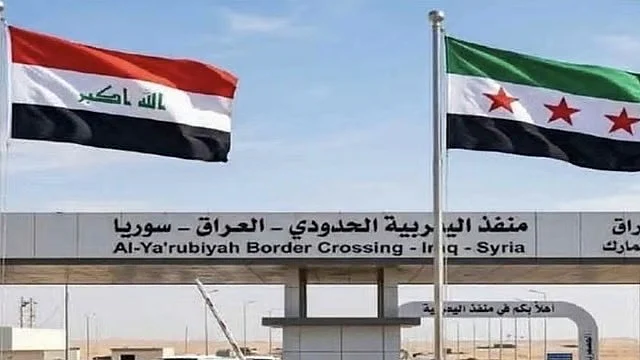
As tensions ripple across the Gulf, a new idea is being floated from an unlikely corridor. Iraq and Syria have reopened a long-shuttered border crossing and are pitching it as an alternative oil route to the strategically vital Strait of Hormuz.
The proposal arrives at a moment when global energy markets are on edge. With disruptions tied to the ongoing standoff involving Iran, the United States, and regional allies, even the hint of an alternative supply line is drawing attention. But can a land corridor really substitute one of the world’s most important oil arteries? The short answer: not easily. Iraqi Kurdish forces later retook it. It is being pitched as a route for trade and oil exports, reported AP.
What is the Iraq-Syria oil route being proposed?
At the center of this plan is the reopening of a key border crossing between Iraq and Syria.
The Rabia–Yarubiyah crossing
Known as Rabia on the Iraqi side and Yarubiyah in Syria, this crossing had been closed for over a decade due to conflict. It fell out of operation during the Syrian civil war and later came under the control of the Islamic State before being retaken.
Now reopened, officials are positioning it as
• A trade gateway between Iraq and Syria
• A potential overland oil transport route
• A geopolitical fallback amid maritime disruptions
Local leaders have described it as a “gateway” for oil exports, suggesting that crude could move by land rather than relying entirely on sea routes.
Why is the Strait of Hormuz so critical?
To understand the significance of this proposal, you have to grasp the scale of what it’s trying to replace.
A global energy chokepoint
The Strait of Hormuz connects the Persian Gulf to the Gulf of Oman and serves as the main exit route for oil producers in the region.
Key facts:
• Roughly 20–25 percent of the global oil supply passes through it daily
• It is one of the narrowest and most vulnerable shipping lanes
• Any disruption sends shockwaves through global energy markets
Current tensions
Recent military escalations and naval blockades have made the strait increasingly unpredictable. Iran has, at times, restricted passage to vessels from “friendly” nations, while warning others against entering.
This has led to:
• Delays and stranded vessels
• Rising insurance and shipping costs
• Heightened volatility in oil prices
Can an overland route replace maritime oil transport?
Here’s where the proposal runs into hard physics and economics.
Scale limitations
Oil tankers move massive volumes efficiently across oceans. Replicating that capacity on land is extremely difficult.
Overland transport options include:
• Pipelines (high capacity but expensive and time-consuming to build)
• Tanker trucks (flexible but limited in volume)
• Rail (moderate capacity but infrastructure-dependent)
The Iraq-Syria route, at least for now, relies heavily on road-based logistics, which cannot match maritime throughput.
Cost factors
Shipping oil by sea is significantly cheaper per barrel than moving it over land.
Overland transport introduces the following:
• Higher fuel and operational costs
• Infrastructure maintenance challenges
• Security risks along the route
Security concerns
Both Iraq and Syria have regions that remain politically and militarily sensitive. Ensuring the safety of oil shipments would require sustained coordination and protection.
In short, the route is viable as a supplement, not a replacement.
Why are Iraq and Syria promoting this route now?
Timing is everything, and this move is deeply tied to current geopolitical realities.
Diversification strategy
Countries dependent on a single export route face significant risk. By opening alternative corridors, Iraq can reduce its reliance on maritime chokepoints.
Economic incentives
Reopening the crossing boosts trade, creates local economic activity, and potentially generates transit revenue.
Political signaling
The move also sends a message: regional players are exploring ways to bypass traditional routes influenced by global powers.
How does this compare to other alternative routes?
The Iraq-Syria corridor is not the only workaround being discussed.
The NEOM trade route
The proposed NEOM corridor links Europe to Gulf markets via Egypt and Saudi Arabia, combining sea and land transport.
Key advantages:
• Faster transit times compared to traditional routes
• Reduced exposure to chokepoints like Hormuz
• Integrated infrastructure planning
However, like the Iraq-Syria route, it complements rather than replaces maritime shipping.
Existing pipeline networks
Some Gulf countries already use pipelines to bypass Hormuz, but these systems:
• Have limited capacity
• Require stable geopolitical conditions
• Takes years to expand
What does this mean for global oil markets?
The immediate impact is more psychological than structural.
Market sentiment
Even small alternatives can calm markets by signaling flexibility and resilience in supply chains.
Limited short-term effect
The Iraq-Syria route is unlikely to significantly alter global oil flows in the near term due to capacity constraints.
Long-term implications
If developed further, such routes could:
• Reduce dependence on chokepoints
• Encourage regional infrastructure investment
• Shift some geopolitical leverage away from maritime routes
The bigger picture: a world searching for energy flexibility
This development reflects a broader trend in global energy strategy.
Countries are increasingly trying to:
• Diversify supply routes
• Build redundancy into logistics networks
• Reduce vulnerability to geopolitical shocks
The Strait of Hormuz remains irreplaceable for now. But each alternative route, no matter how small, chips away at its dominance.
TL;DR
Iraq and Syria have reopened a border crossing to propose an overland oil route
The move comes amid disruptions in the Strait of Hormuz due to geopolitical tensions
Overland transport cannot match the scale or cost-efficiency of sea routes
The corridor is a backup option, not a replacement
It signals a broader push toward diversifying global energy supply chains