After meeting Vladimir Putin in Beijing, Kim Jong Un’s aides were filmed scrubbing his chairs, table, and drinking glass to prevent DNA collection. The incident highlights North Korea’s extreme security measures and coincides with deepening Russia–North Korea ties, including reports of 15,000 North Korean troops fighting in Ukraine.
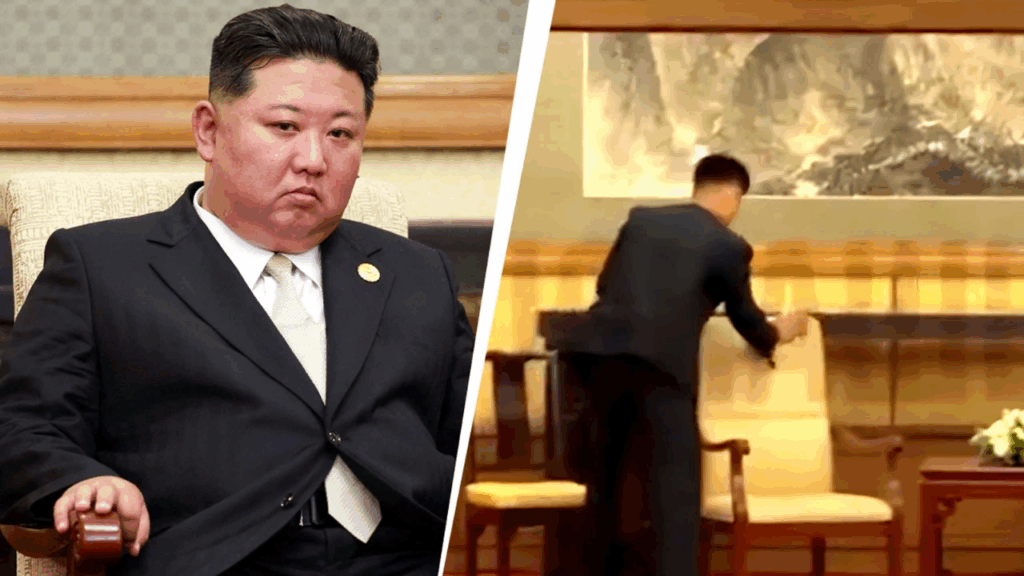
North Korean leader Kim Jong Un’s security team was caught on camera in Beijing meticulously scrubbing chairs, tables, and even removing his drinking glass moments after his meeting with Russian President Vladimir Putin. The scene, shared widely on Russian social media, offered a rare glimpse into the extraordinary precautions that surround one of the world’s most secretive leaders. Analysts say the motive is clear: to prevent any foreign intelligence service from collecting Kim’s DNA.
Why would Kim’s team erase DNA traces?
Extreme secrecy as state policy
North Korea has long treated the health of its supreme leader as a matter of national security. By cleaning surfaces and removing items Kim has touched, aides reduce the risk of foreign agencies obtaining biological material that could reveal details about his health, genetics, or potential vulnerabilities.
“This is classic counterintelligence protocol,” said one Asia security analyst. “For a regime like North Korea’s, Kim’s DNA isn’t just personal—it’s state property.”
Not the first time
South Korea’s intelligence service has previously reported that Kim’s entourage employs portable toilets, jamming devices, and anti-drone technology to shield him from surveillance and assassination threats while traveling. The DNA-scrubbing adds another layer to an already elaborate security bubble.
Beijing meeting: symbolism and alliances
The clean-up came after Kim’s high-profile sit-down with Putin on the sidelines of a massive military parade in Beijing’s Tiananmen Square, commemorating the 80th anniversary of Japan’s surrender in World War II.
It was Kim’s first major international appearance of this kind, placing him alongside two key allies: Putin and Chinese President Xi Jinping.
During the talks, Putin went out of his way to praise North Korean troops fighting in Ukraine, telling Kim:
“Your soldiers fought courageously and heroically. We will never forget the sacrifices that your armed forces and the families of your servicemen have suffered.”
Kim responded by pledging continued support:
“If there is anything I can do for you and the people of Russia… I will consider it as a fraternal duty.”
🚨⚡️UNUSUAL
Watch the keen attention and security precision of North Korean leader Kim Jong Un's guards. After Kim’s meeting with Putin, his accompanying team meticulously erased every trace of his presence.
South Korean officials estimate that 15,000 North Korean soldiers have been deployed to aid Russia’s war effort, particularly in Ukraine’s Kursk region. In addition, Pyongyang has supplied Moscow with missiles and artillery—a lifeline for Russia as Western sanctions squeeze its defense industry.
ADVERTISEMENT
In exchange, North Korea is believed to be receiving:
Food supplies to offset domestic shortages.
Financial aid to prop up its fragile economy.
Technical assistance, possibly in nuclear or satellite programs.
The partnership was formally cemented in June 2024, when Moscow and Pyongyang signed a mutual defense pact pledging assistance if either state faced “aggression.”
What this means for the region
The Beijing optics matter: Kim was placed on equal footing with Putin and Xi, highlighting his relevance despite North Korea’s isolation.
For Washington, Seoul, and Tokyo, the expanding Russia–North Korea axis raises urgent security questions:
Military supply chains: North Korean weapons could extend Russia’s war capacity in Ukraine.
Nuclear cooperation: Even limited technical exchanges could advance Pyongyang’s weapons programs.
Regional destabilization: Stronger ties may embolden Kim in Northeast Asia, complicating deterrence strategies.
The bottom line
Kim Jong Un’s team scrubbing away DNA traces might look eccentric, but it reflects how the regime treats even the smallest detail of his presence as a matter of survival.
At the same time, the optics in Beijing—flanked by Putin and Xi—show Kim positioning himself not just as a protected leader, but as a key player in an emerging bloc challenging the West.
The DNA paranoia and the growing Russia–North Korea alliance tell the same story: Pyongyang is determined to guard its secrets while expanding its influence.