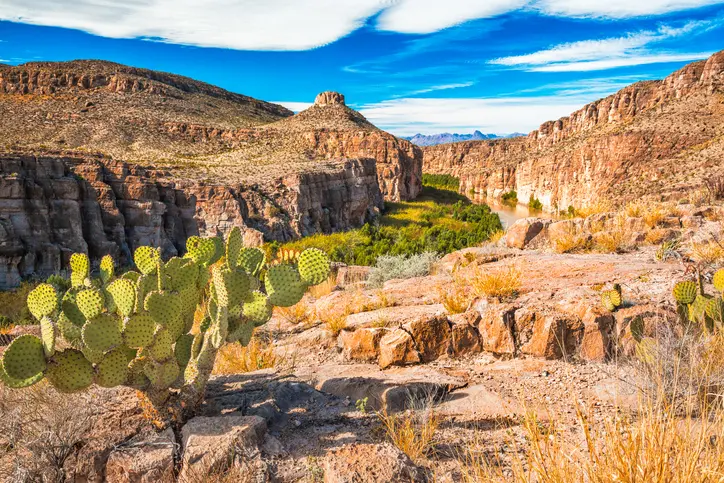
In the remote stretches of northern Mexico’s desert lies a place wrapped in mystery, myth, and marketing. Known as La Zona del Silencio, or the “Zone of Silence,” this region has earned a reputation as Mexico’s own Bermuda Triangle, a place where radio signals allegedly disappear and stories of UFOs and strange phenomena thrive.
But how much of this is real, and how much is legend?
Where is the Zone of Silence and why is it famous?
The Zone of Silence sits within the vast Chihuahuan Desert, near the intersection of the Mexican states of Durango, Chihuahua, and Coahuila.
Its reputation began to grow in the 1960s, when an oil exploration executive reportedly lost radio communication in the area and coined the term “Zone of Silence.”
Since then, the region has become a magnet for:
- Paranormal enthusiasts
- UFO hunters
- Curious tourists
Why is it called Mexico’s Bermuda Triangle?
The comparison to the Bermuda Triangle comes from a mix of unexplained claims and dramatic storytelling.
Reports of signal failure
Visitors and early reports claimed that:
- Radio and TV signals stop working
- Compasses spin unpredictably
- Communication devices fail without warning
These claims formed the core of the “silent zone” narrative.
Meteorite activity
The region has seen notable meteorite events, including the famous Allende meteorite fall, one of the most studied meteorites in history.
Frequent meteorite findings led to speculation that:
- The area has unusual magnetic properties
- Space-related phenomena are more common here
The 1970 rocket incident
One of the biggest boosts to the legend came when a US military rocket—an Athena test vehicle—went off course and crashed in the region.
The unusual deviation, combined with a secretive recovery operation, fueled theories involving:
- Magnetic anomalies
- “Energy vortices”
- Government cover-ups
Is there any scientific explanation?
The region does have some unique natural features—but they’re far less mysterious than the legends suggest.
Presence of magnetite
The desert contains deposits of magnetite, a naturally magnetic iron ore.
- Magnetite can influence magnetic readings in small, localized ways
- However, scientists say concentrations here are not strong enough to disrupt communications at scale
Harsh desert environment
The environment itself can explain many observations:
- Extreme heat affects equipment performance
- Remote terrain limits signal infrastructure
- Sparse population reduces network coverage
In other words, what feels like “signal loss” may simply be a lack of connectivity.
Do signals really disappear there?
According to researchers working in the region, no.
What scientists say
Teams operating within the Mapimí Biosphere Reserve report:
- Radios function normally
- GPS systems work without disruption
- No consistent electromagnetic anomalies
This directly contradicts the popular narrative.
Why the myth persists
When visitors don’t experience anything unusual, some locals reportedly tell them that:
- The “zone” shifts location
- The phenomenon is intermittent
This keeps the mystery alive—even when evidence doesn’t support it.
What about UFO sightings and paranormal claims?
The Zone of Silence has become fertile ground for speculation.
UFO and paranormal lore in the Zone of Silenc
Popular claims include:
- Sightings of unidentified flying objects
- Encounters with mysterious humanoid figures
- Strange lights in the sky
Some investigators and media personalities have amplified these accounts, adding to the region’s reputation.
The reality check
There is no verified scientific evidence linking the area to:
- Extraterrestrial activity
- Paranormal phenomena
Most sightings can be explained by:
- Atmospheric conditions
- Misidentified aircraft
- Optical illusions in desert environments
Was the mystery exaggerated for tourism?
Evidence suggests that the legend grew significantly in the 1970s.
The role of storytelling
Local figures and promoters are believed to have:
- Popularized the “silent zone” narrative
- Shared dramatic anecdotes with visitors
- Positioned the region as a paranormal hotspot
This transformed a remote desert into a niche tourist destination.
Tourism today
Even now, visitors travel to the area hoping to:
- Witness signal disruptions
- See UFOs or strange lights
- Experience something unexplained
In many cases, the experience is ordinary—but the story remains compelling.
Why people still believe in places like this
The appeal of the Zone of Silence isn’t just about science—it’s about psychology.
The power of mystery
Humans are naturally drawn to:
- Unexplained phenomena
- Remote and unfamiliar places
- Stories that challenge conventional understanding
The “Bermuda Triangle effect”
Once a location gains a reputation, confirmation bias kicks in:
- People interpret normal events as unusual
- Stories reinforce each other
- Myths become self-sustaining
The bigger picture: myth vs reality
The Zone of Silence sits at the intersection of fact and folklore.
What is real
- A remote desert region with unique geology
- Presence of magnetite and meteorite history
- Limited connectivity due to infrastructure
What is likely myth
- Complete signal blackouts
- Magnetic fields strong enough to disrupt navigation
- Verified extraterrestrial activity
TL;DR
- Mexico’s Zone of Silence is known for claims of signal loss and UFO activity
- The legend grew after meteorite events and a 1970 rocket crash
- Scientific studies find no evidence of major electromagnetic anomalies
- Signals and GPS work normally in the area
- Much of the mystery is driven by folklore and touris