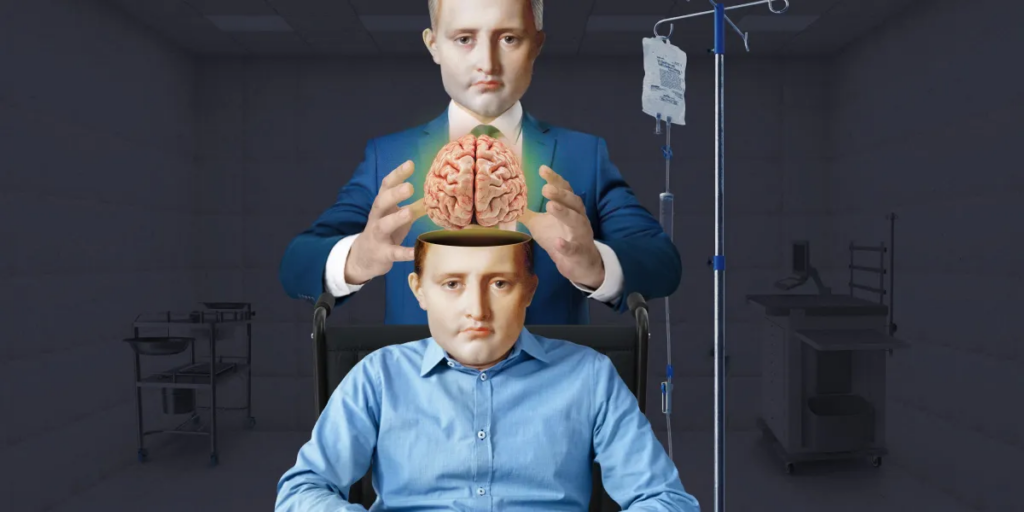
A Silicon Valley biotech startup that drew widespread attention for reportedly discussing “nonsentient humanoids” as a future source of transplant organs is now distancing itself from those claims. R3 Bio, a longevity-focused biotechnology company, says it is not developing headless or brainless human-like bodies for organ harvesting, despite comments made by company executives in interviews and podcasts that fuelled intense ethical debate. The controversy has become a case study in how speculative scientific ideas can quickly turn into viral headlines—and why clear communication matters when discussing emerging biotechnology.
Why did R3 Bio go viral?
The controversy began after comments made by R3 Bio co-founder and Chief Operating Officer Alice Gilman during an interview on the Skyline Drive podcast.
According to the podcast hosts, Gilman discussed a theoretical biological platform consisting of a human-like body without a functioning brain that could potentially grow replacement organs.
She reportedly described it as containing organs such as the heart and lungs while lacking consciousness, adding that such a platform would allow researchers to study interactions between organs.
Podcast host Mangesh Hattikudur later said Gilman referred to these hypothetical biological systems as “organ sacks,” a phrase that quickly spread across social media and technology news outlets.
The idea immediately sparked ethical concerns about whether biotechnology companies were exploring ways to grow human organs inside engineered human-like bodies.
What happened after the interview?
According to Skyline Drive and subsequent media reports, Gilman later requested that the podcast’s release be postponed.
The podcast team has said she later clarified that R3 Bio was not currently pursuing such research and characterized her earlier remarks as speculative discussion rather than descriptions of an active company program.
Reports also claim she asked that portions of the interview remain unpublished.
Those developments fueled speculation that the company had changed its position after public scrutiny.
What does R3 Bio now say?
R3 Bio has since publicly denied that it is developing “nonsentient humanoids” for organ harvesting.
According to statements cited by multiple publications, the company says:
- It has no ongoing research involving headless or brainless human bodies.
- It is not attempting to create human clones.
- It is not intentionally engineering humans with impaired brain function.
- Earlier discussions reflected theoretical ideas rather than active development.
The company’s website reportedly states that while large-scale human organ fabrication would be an exciting scientific achievement, there is currently no active program pursuing that objective.
Where did the idea come from?
Although the startup now says it is not pursuing the concept, the discussion did not emerge entirely from nowhere.
Reports have cited:
- Podcast interviews.
- Investor discussions.
- Public comments from company leadership.
- Earlier interviews discussing long-term regenerative medicine.
According to MIT Technology Review, co-founder John Schloendorn has also discussed futuristic concepts involving full-body replacement, where an individual’s brain or head could theoretically be transplanted onto a newly grown biological body.
Those discussions were presented as long-term scientific possibilities rather than technologies currently available.
Why are bioethicists concerned?
Even if the technology does not exist today, the discussion raises major ethical questions.
Among them are:
Defining consciousness
If an engineered biological body develops any degree of awareness, moral and legal questions become unavoidable.
Scientists still lack a universally accepted definition of consciousness.
Human dignity
Creating biological human bodies solely for spare organs challenges long-established ethical principles governing medical research and transplantation.
Regulatory oversight
Current laws in most countries were not written with synthetic biological humans or advanced tissue engineering in mind.
Future advances could require entirely new regulatory frameworks.
Public trust
Experts argue that speculative claims without sufficient context can undermine confidence in legitimate regenerative medicine research.
Is this technology scientifically possible today?
Not with current biotechnology.
While regenerative medicine has made significant advances—including lab-grown tissues, organoids, and experimental bioengineered organs—creating a complete human-like body capable of growing fully functional transplant organs remains far beyond present scientific capabilities.
Current research focuses on areas such as:
- Stem-cell-derived tissues.
- Bioprinting.
- Artificial organs.
- Xenotransplantation.
- Organoids for disease research.
Entire human biological platforms of the type discussed remain hypothetical.
Why the controversy matters
The R3 Bio episode illustrates the increasingly blurred line between scientific speculation, startup vision, and public perception.
Biotechnology companies often discuss ambitious long-term goals when attracting investors or describing future possibilities. However, when those ideas involve human biology, ethics, or consciousness, even hypothetical conversations can quickly become controversial.
The episode also highlights the importance of distinguishing between:
- Active scientific research.
- Long-term theoretical concepts.
- Public-facing marketing.
- Speculative discussions about future technology.
Key takeaways
- R3 Bio became the focus of controversy after reported discussions about growing organs inside “nonsentient” human-like biological bodies.
- Company executives later said those discussions were theoretical rather than descriptions of active research.
- R3 Bio now denies it is developing headless or brainless humanoids for organ harvesting.
- Reports indicate the company is not conducting ongoing work on full-scale human organ fabrication.
- The controversy has fueled broader debates over regenerative medicine, bioethics, and responsible communication in biotechnology.