
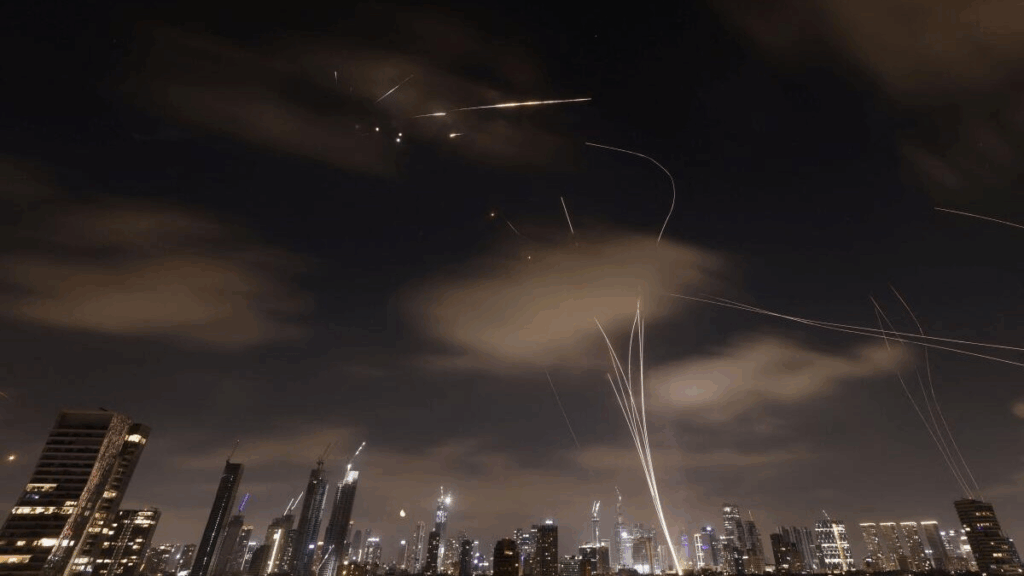
As tensions flare between Israel and Iran, fears of a third world war are growing louder. With Israel and the US targeting Iranian military and nuclear infrastructure, and Iran vowing to retaliate against both Israeli and American aggression, global anxiety is not unfounded.
In recent remarks aired on Iranian state television, Supreme Leader Ayatollah Ali Khamenei issued a stern warning: Iran will not accept peace “imposed by force” and will respond decisively if attacked by the United States. The statement followed U.S. President Donald Trump’s call for Iran to surrender, escalating an already volatile situation.
With the conflict in Gaza and now Iran’s direct involvement, the Middle East is becoming an increasingly unstable flashpoint. Add to that the fact that the world is already experiencing the highest number of conflicts since World War II, and it’s no wonder people are contemplating escape routes.
But if a global war does break out—especially one involving nuclear powers—where, exactly, would it be safe to go?
What makes a country “safe” during global conflict?
Safety in the event of a world war depends on several factors:
- Political neutrality: Nations that don’t take sides are less likely to be targeted.
- Geographic isolation: Remote locations reduce the risk of direct military strikes.
- Low strategic value: Countries with limited military, economic, or political leverage are less likely to become battlegrounds.
- Natural defenses: Mountainous terrain, island geography, and inhospitable climates can act as natural shields.
- Self-sufficiency: Nations with abundant natural resources and food supplies are more resilient during global disruptions.
What are the safest countries if World War III breaks out?
While no place on Earth can guarantee complete safety during a global conflict, several nations are widely regarded as potential refuges due to the criteria above.
1. Antarctica: Isolation is its advantage
- Why it’s safe: Antarctica’s extreme isolation and lack of military infrastructure make it an unlikely target.
- Strategic value: Almost none. It’s not a political entity, and its land is protected by an international treaty.
- Caveat: Harsh climate and logistical challenges make long-term survival difficult without substantial preparation.
2. Iceland: Peaceful and off the radar
- Ranked as the most peaceful country in the world by the Global Peace Index.
- No standing army and a long history of neutrality.
- Geographically distant from major conflict zones.
3. New Zealand: The perfect blend of peace and isolation
- Consistently ranks high on peace and stability indexes.
- Remote and surrounded by ocean, with rugged mountains for natural defense.
- Politically neutral and rarely involved in global military alliances.
4. Switzerland: Neutral and well-prepared
- Famous for its neutrality, even during World Wars.
- Extensive nuclear fallout shelter infrastructure—reportedly enough to accommodate its entire population.
- Mountainous terrain provides natural protection.
5. Tuvalu: Too small to matter
- A tiny island nation halfway between Hawaii and Australia.
- With just over 11,000 residents and minimal strategic interest, it’s unlikely to be targeted.
- Limited resources and infrastructure make it less viable for long-term survival but possibly safe in the short term.
6. Fiji: Remote and resource-rich
- Remote South Pacific location offers geographical protection.
- Politically stable with a growing economy and rich natural resources.
- Military presence is limited but not insignificant.
7. Argentina: Food-secure and out of the line of fire
- Far from current global hotspots.
- Self-sufficient in agriculture; can withstand famine even in nuclear scenarios.
- Has a tradition of avoiding large-scale military involvement.
8. Chile: Stable with a strategic edge
- 4,000 miles of coastline, offering numerous escape and supply routes.
- Strong infrastructure and diverse natural resources.
- Politically stable and geographically removed from global powers’ spheres of influence.
9. South Africa: Self-sufficiency and infrastructure
- Has not been involved in major global conflicts in recent history.
- Abundant resources and well-developed agriculture.
- Advanced infrastructure could support mass migration scenarios.
10. Greenland: Remote and neutral
- As a Danish territory, it benefits from Denmark’s peaceful foreign policy.
- Geographically isolated with low population density.
- Unlikely to hold strategic interest for military powers.
11. Indonesia: Committed to neutrality
- Its non-aligned foreign policy traces back to the founding President Sukarno.
- Today’s government continues to emphasize neutrality in international affairs.
- Indonesia’s size and resource base make it more viable than smaller Pacific nations.
Why people are talking about “safe countries” now
The recent escalation involving Israel and Iran isn’t happening in a vacuum. Armed conflicts are active in Ukraine, Sudan, Myanmar, and dozens of other locations. According to the Uppsala Conflict Data Program, global conflicts reached a post-WWII high in 2023—and have only grown since.
This isn’t just about fear; it’s about preparedness. With a media environment saturated in worst-case scenarios and governments slow to assure citizens, individuals are taking risk assessment into their own hands.