
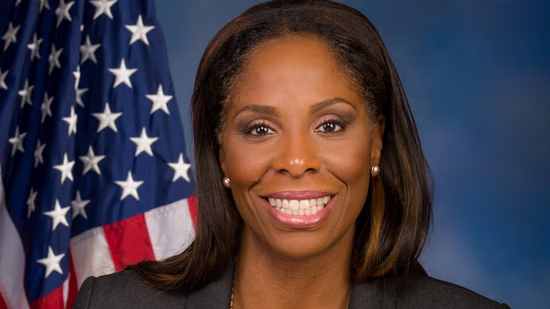
A failed GOP censure attempt against Rep. Stacey Plaskett has reignited scrutiny over her past interactions with Jeffrey Epstein. The effort comes just as the House unanimously voted to release long-hidden Epstein files. Here’s a clear breakdown of who Plaskett is, what the emails show, and why the politics around this matter are heating up again.
Who Is Stacey Plaskett?
Rep. Stacey Plaskett is the non-voting delegate representing the U.S. Virgin Islands, the territory Epstein used as a base for years—most infamously on his private island, Little St. James.
Because of her role, Plaskett interacted professionally with Epstein’s presence in the Virgin Islands long before his 2019 arrest became global news. Her district includes:
- Little St. James, the island Epstein owned.
- Local agencies and businesses that dealt with his operations.
- Constituents who were directly affected by Epstein’s activities.
Her position placed her closer to the Epstein ecosystem than most members of Congress, though not necessarily by choice.
Why Did Republicans Try to Censure Her?
The Trigger: Newly Released Emails
The GOP-led House Freedom Caucus attempted to censure Plaskett based on emails and messages from 2019 that appear to show:
- Epstein texting Plaskett during a congressional hearing.
- Plaskett is responding in real time while questioning witnesses.
These emails were released by the House Oversight Committee, and according to The Washington Post, the timestamps and content aligned with what was happening in the room that day.
The censure resolution failed—213 to 214—but the narrow margin shows how politically charged the issue is.
What Plaskett’s Office Says
Plaskett’s spokesperson did not deny the exchange took place. Instead, they offered this explanation:
- As a member questioning witnesses, Plaskett received a flood of messages from staff, constituents, and the public.
- Epstein’s texts were “part of that mix.”
- She was responding to “partisan vitriol,” not coordinating with Epstein.
- As a former prosecutor, she “welcomes information that helps her get at the truth.”
This defense frames the texts as unsolicited and irrelevant to her work.
The GOP’s Argument
Republicans say the messages raise deeper concerns:
- The emails appear to show multiple back-and-forth exchanges, not just stray texts.
- Some unverified messages suggest Plaskett visited Epstein’s residence seeking campaign donations.
- They argue this amounts to a conflict of interest during the hearing.
None of these implications has been proven in the official record.
What’s in the Emails?
Based on what the Oversight Committee released, the messages include:
- Real-time commentary from Epstein as Plaskett questioned witnesses.
- Responses from Plaskett that track with the flow of the hearing.
- Additional exchanges whose context is still unclear.
Important: The House has not confirmed the authenticity or full scope of each message. Portions remain unverified, especially claims about campaign donations or visits to Epstein’s residence.
Why Did This Resurface Now?
1. The House Just Voted Unanimously to Release the Epstein Files
Hours before the censure vote, the House approved a resolution forcing the full release of long-withheld Epstein records. That timing matters.
With the pending release of:
- flight logs
- emails
- donation records
- witness testimonies
…lawmakers are trying to get ahead of whatever might emerge next.
Plaskett, given her role representing Epstein’s home territory, is understandably near the center of that scrutiny.
2. The Politics of Association
Even tenuous links to Epstein attract national attention and political weaponization. Republicans frame Plaskett’s messages as evidence of questionable judgment. Democrats see the censure attempt as a bad-faith distraction.
Both sides are preparing for the fallout once the documents go public.
3. The Vote Was Close—And Could Return
Republicans say they will reintroduce the censure vote later this week. A shift of even one vote could produce a different outcome.
What Happens Next?
Expect three major developments:
1. Fresh rounds of political messaging
As more documents surface, both parties will use the Epstein files to:
- undermine opponents
- defend their own leadership
- shape public perception ahead of 2026
2. Increased scrutiny on Plaskett
She may need to clarify:
- the nature of her exchanges with Epstein
- whether she visited his residence
- her campaign fundraising history in 2019
If any emails or logs contradict her office’s statements, pressure will intensify.
3. Broader fallout across Washington
These records may implicate public figures well outside Congress. Expect:
- renewed media investigations
- attempts to contextualize old relationships
- calls for further hearings and subpoenas
Why This Story Matters
The controversy isn’t only about one congresswoman. It cuts into:
- Transparency: How much did public officials know about Epstein, and when?
- Accountability: Are lawmakers applying consistent standards across party lines?
- Public trust: The Epstein case has long fueled doubts about elite networks, secrecy, and political protection.
With the House forcing the release of Epstein files, this may be the most revealing moment yet.