

Quick Summary
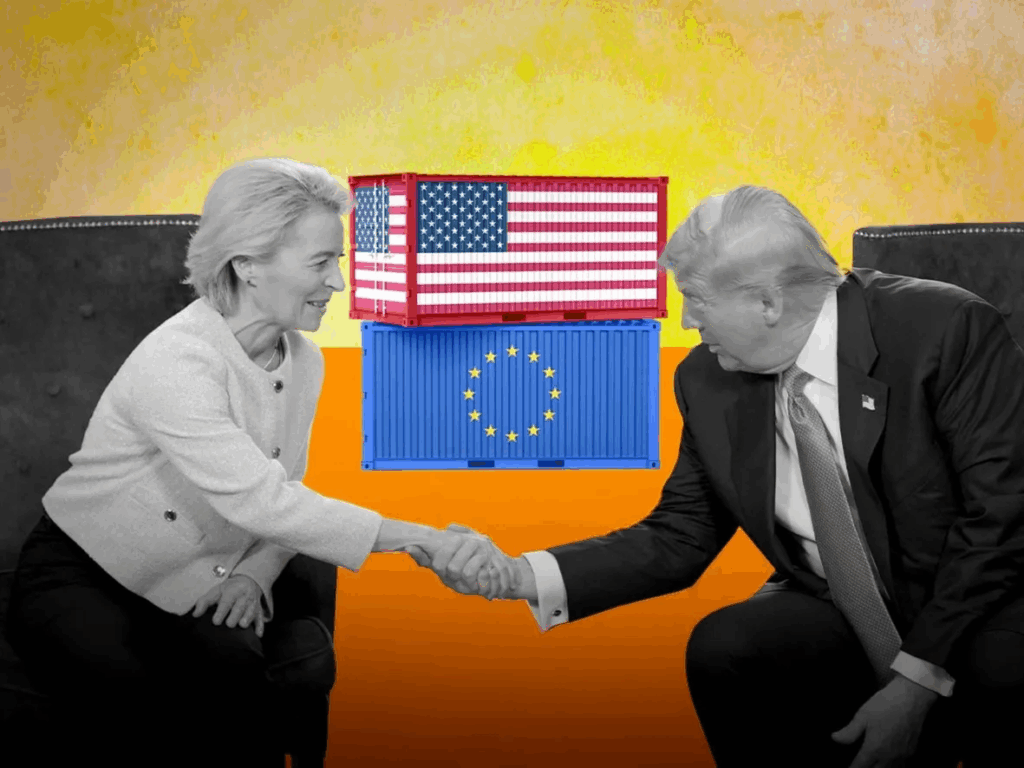
A US–EU trade deal announced July 27, 2025, sets a 15% tariff on most European goods entering America, lower than Trump’s threatened 30% but much higher than historic levels. Some “strategic” goods get zero tariffs. For everyday consumers, expect price hikes on imports like wine, cars, and electronics, while U.S. energy prices may ease. Critically, the deal remains incomplete, with pharmaceuticals, steel, and agriculture still in flux.
What’s in the US–EU trade deal, and why was it needed?
- The U.S. will impose a 15% tariff on most European imports, down from the threatened 30% or even 50% rate. That includes autos, chips, wine, and more.
- In return, the EU pledges to buy $750 billion in U.S. energy and invest $600 billion in U.S. industries.
- Certain “strategic” sectors—aircraft parts, chemicals, semiconductor gear, and some agricultural commodities- benefit from zero-for-zero tariff treatment
What does this mean for everyday consumers?
Which prices will go up?
- European imports: A default 15% surcharge likely gets passed to consumers in items like wine, cheese, luxury goods, and EU-made electronics.
- European-made autos: existing duties (including 2.5% base plus Trump’s prior 25% car tariff) roll into the blanket 15%, pushing sticker prices up, especially for brands like Mercedes or VW imported from Europe.
Which prices may go down or stabilize?
- U.S.-made energy: increased EU demand may ease domestic gas and oil prices—but analysts call the $250B/year volume unrealistic, so the impact may be muted.
- Some industrial supplies: tariff-free access on aircraft parts, critical chemicals, and select agricultural products may help temper costs in certain sectors.
Who stands to win or lose?
Winners:
- U.S. energy producers get potential export boost from Europe’s commitments—but feasibility is questioned by experts.
- Strategic U.S. exporters in chemicals, aerospace, and semiconductor equipment may expand access thanks to zero tariffs.
- Investors welcomed clarity: markets rallied after the deal averted a broader trade war.
Losers:
- Reluctant European exporters, especially in autos, wine, and pharmaceuticals, now face costs that undermine their U.S. competitiveness.
- American consumers buying European goods risk price increases across several product categories.
- Steel and aluminum users: The 50% U.S. tariff on these remains untouched, leaving input-heavy industries exposed.
How will common families feel it?
- Wine and spirits lovers: costs from European bottles may rise due to tariffs.
- Auto buyers: European-brand cars from abroad become more expensive; domestically made U.S. options may comparatively feel cheaper.
- Tech gadget shoppers: imported semiconductors or associated devices still face the 15% levy unless exempted, raising retail prices.
- Energy bills: might trend downward if exports and production dynamics shift, but uncertainty around volume makes that effect modest.
- Manufactured goods: Some U.S.-made tools or aerospace gear may stay stable thanks to tariff-free rules; others may face secondary cost ripple effects.
Why does this deal matter, and what’s still missing?
Big-picture stakes
- The deal halts an impending tariff escalation, shielding at least a portion of U.S.–EU trade from chaotic disruptions.
- But the asymmetric structure, with U.S. tariffs imposed widely and European exemptions more limited, has drawn criticism from EU leaders who feel badly squeezed.
What remains unresolved:
- Steel and aluminum tariffs remain at 50%—still not part of the new framework.
- Pharmaceuticals and farm produce: negotiating status and clarity is still pending.
- Precise investment commitments: timelines or specific sectors for the $600B EU investment are unspecified, raising questions about enforcement and realism.
In a nutshell
This U.S.–EU trade deal offers short-term stability—but with a price tag. Consumers may see costlier wine, cars, and electronics, while ground-level benefits like cheaper energy or exempt industrial goods remain tentative. Until unresolved sectors like pharmaceuticals and farm imports get finalized, both consumers and businesses should brace for uneven impact across different goods.


