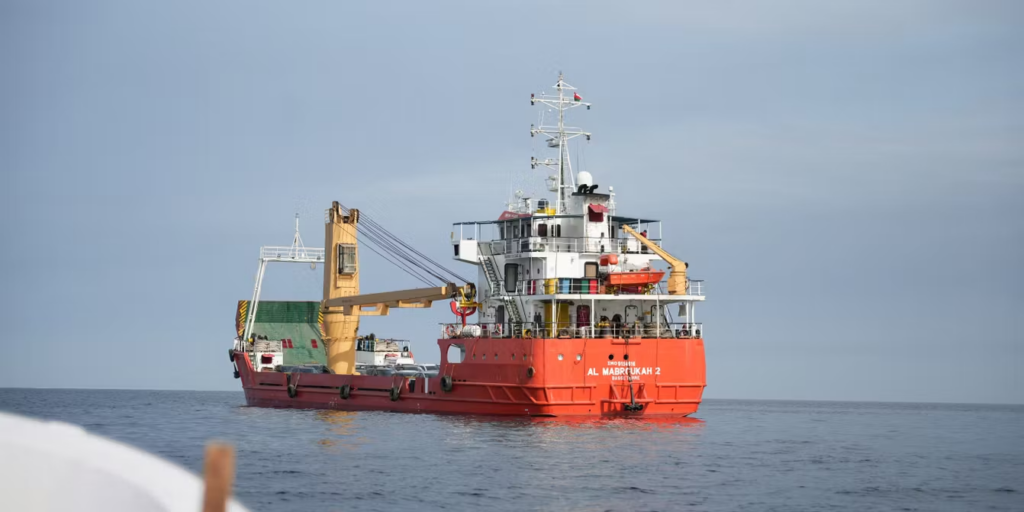
The United States’ naval blockade in the Strait of Hormuz marks one of the most aggressive economic and military pressure tactics deployed against Iran in recent years. By restricting vessels linked to Iranian ports, Washington is not just tightening sanctions—it’s directly targeting the lifeline of Iran’s economy: oil exports.
Early estimates suggest the blockade could cost Iran as much as $435 million per day, including roughly $276 million in lost exports, primarily crude oil and petrochemicals. But beyond the numbers, the move raises deeper questions about enforcement, global oil markets, and how Tehran might respond.
What Is the US Naval Blockade in the Strait of Hormuz?
The US naval blockade in the Strait of Hormuz is a military operation designed to restrict maritime traffic tied to Iranian ports. Unlike a full maritime shutdown, the policy is narrowly targeted:
- Ships originating from or heading to Iranian ports are restricted
- Vessels transiting the Strait for non-Iranian destinations are allowed to pass
- Enforcement is described as “impartial” across all nations
This distinction is crucial. The Strait of Hormuz handles roughly 20% of global oil shipments, and a complete closure would disrupt global energy markets overnight. Instead, the US appears to be applying a calibrated squeeze—maximising pressure on Iran while avoiding a global supply shock.
How Is the US Enforcing the Hormuz Blockade?
A Significant Naval Presence
The operation is backed by at least 15 US warships, signaling both capability and intent. Among them:
- USS Tripoli (LHA-7) – an amphibious assault ship
- F-35B Lightning II stealth fighters
- MV-22 Osprey tiltrotor aircraft
This combination gives the US a flexible strike and surveillance capability, allowing it to monitor and intercept vessels in real time.
Centralized Command
The operation is overseen by US Central Command, which confirmed the blockade began at 1400 GMT. The command structure ensures:
- Coordinated maritime patrols
- Rapid response to violations
- Continuous monitoring of shipping routes
Strategic Goal
The goal isn’t just enforcement—it’s deterrence. A visible military presence reduces the likelihood of evasion attempts while signaling consequences for non-compliance.
Why Target Iran’s Oil Exports?
Oil as Economic Backbone
Iran’s economy is heavily dependent on oil exports. According to estimates:
- Iran exports approximately 1.5 million barrels per day
- At around $87 per barrel, that translates to massive daily revenue
- Nearly 90% of exports flow through Kharg Island
Disrupting this flow effectively chokes off the country’s primary income stream.
Compounding Factors
- Kharg Island, Iran’s main export terminal, was reportedly bombed recently
- Alternative infrastructure is limited or underdeveloped
- Insurance and shipping risks increase under blockade conditions
In short, the blockade doesn’t just reduce exports—it raises the cost and complexity of any remaining trade.
How Much Is Iran Losing—and Can It Offset the Damage?
Immediate Financial Impact
Analysts estimate:
- $435 million daily economic loss
- $276 million from lost oil and petrochemical exports
These figures assume full enforcement and minimal evasion—conditions that may not hold over time.
Buffer: Oil Already at Sea
Iran reportedly has 154 million barrels of oil stored in tankers outside the blockade zone. This floating inventory could:
- Provide short-term revenue continuity
- Delay the full economic impact
- Offer leverage in negotiations
However, this is a temporary cushion—not a long-term solution.
Can Iran Work Around the Blockade?
Alternative Routes: The Jask Terminal
Iran may attempt to reroute exports through the Jask terminal, located outside the Strait of Hormuz. But this option has limitations:
- Lower export capacity compared to Kharg Island
- Infrastructure constraints
- Increased logistical complexity
Other Workarounds
Iran could also explore:
- Ship-to-ship transfers to obscure origin
- Use of shadow fleets or reflagged vessels
- Trading through third-party intermediaries
Each workaround comes with risks, including higher costs and potential interception.
What Does This Mean for Global Oil Prices?
Short-Term Stability, Long-Term Uncertainty
So far, global oil markets may remain relatively stable due to:
- Iran’s floating oil reserves
- Continued flow from other Gulf producers
- Exemptions for non-Iranian shipping
But the situation is fragile.
Potential Price Triggers
Oil prices could rise sharply if:
- The blockade expands or tightens
- Iran retaliates by disrupting shipping
- Other regional producers are drawn into the conflict
Even the perception of risk in the Strait of Hormuz can drive speculative price spikes.
How Might Iran Respond?
Military Options
Iran has historically threatened to:
- Disrupt traffic in the Strait of Hormuz
- Target US or allied naval assets
- Use proxy forces in the region
Any of these actions could escalate the situation quickly.
Economic and Diplomatic Moves
Iran may also:
- Strengthen ties with countries willing to bypass sanctions
- Push for international condemnation of the blockade
- Use energy leverage in negotiations
The Escalation Risk
The blockade increases the risk of miscalculation. A single incident—such as a vessel interception gone wrong—could trigger broader conflict.
Why This Matters Beyond Iran
A Test of Economic Warfare
The blockade represents a shift from traditional sanctions to direct maritime enforcement. If successful, it could:
- Set a precedent for future conflicts
- Redefine how economic pressure is applied globally
Impact on Global Trade
The Strait of Hormuz isn’t just about oil—it’s a critical artery for global commerce. Any disruption affects:
- Energy markets
- Shipping insurance rates
- Supply chain stability
TL;DR
- The US has imposed a targeted naval blockade on Iranian-linked shipping in the Strait of Hormuz
- Iran could lose up to $435 million per day, primarily from oil exports
- Enforcement involves 15 warships, including advanced aircraft carriers and stealth jets
- Iran has short-term buffers but limited long-term alternatives
- Global oil markets remain stable—for now—but risks are rising