
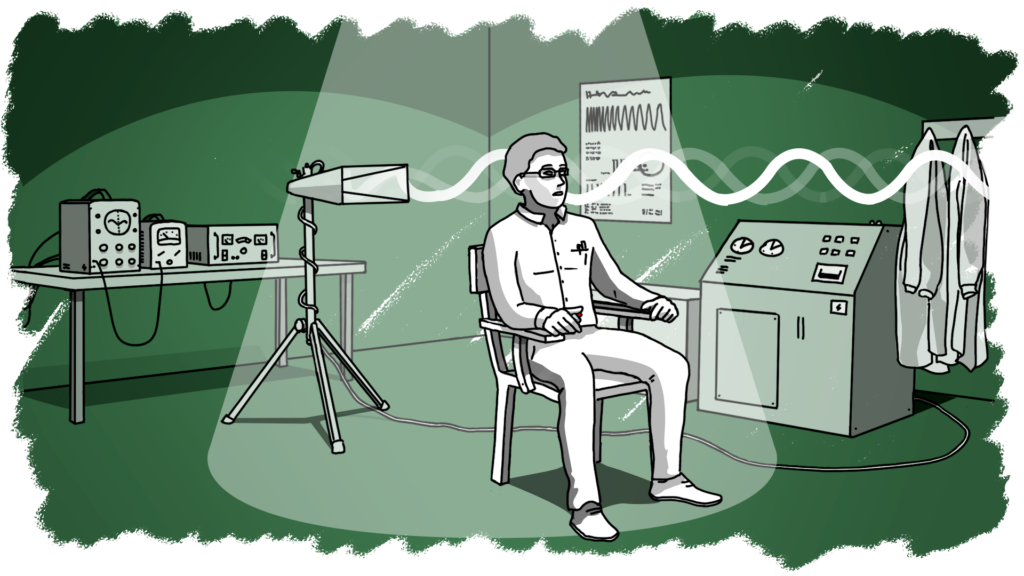
In the days following the January 3 operation in Caracas that led to the capture and extradition of Venezuelan President Nicolás Maduro and his wife, Cilia Flores, a striking claim began circulating in parts of the media: that US forces used a “sonic weapon” or “directed-energy weapon” to incapacitate defenders at the presidential residence.
The allegation quickly gained traction online, fueled by partisan media coverage and vague eyewitness accounts. It also revived memories of Havana syndrome, the still-controversial health incidents reported by US diplomats over the past decade.
So what’s actually behind the sonic weapon claims in Venezuela? How credible are they? And why does Havana syndrome keep resurfacing whenever these stories appear? Here’s what you need to know.
Where Did the Sonic Weapon Claims in Venezuela Come From?
An anonymous account, amplified fast
The idea that a sonic weapon was used in Venezuela traces back to a report by the New York Post, which cited an anonymous guard allegedly present at the Caracas compound during the operation.
According to this unverified eyewitness, defenders of Maduro experienced sudden and severe physical symptoms as the firefight began, including
- Intense headaches
- Nosebleeds
- Vomiting blood
- Temporary paralysis
The guard claimed these effects were triggered by an “intense sound wave” deployed by US forces, leading to what he described as “mass incapacitation” among Venezuelan soldiers and possibly Cuban personnel stationed there.
There is no independent confirmation of this account. No names, medical records, audio evidence, or official after-action reports have been made public.
Why Did the Story Gain So Much Attention?
Political amplification mattered
The claim might have remained fringe if not for how it was shared. The New York Post report was reposted on X by White House Press Secretary Karoline Leavitt, without additional commentary.
For supporters of President Donald Trump—who reportedly ordered and monitored the operation—this was read by some as a tacit endorsement, even though no explicit confirmation was given. Pro-Trump media outlets, including Fox News, followed up with coverage framing the alleged weapon as either:
- A mysterious advanced technology, or
- A deliberate show of US military superiority
Social media did the rest. Speculation filled the gaps left by the lack of hard evidence.
Is There Any Official Confirmation of a Sonic Weapon?
Short answer: no
As of now, there is no official confirmation from the US government, the Department of Defense, or any allied intelligence agency that a sonic or directed-energy weapon was used during the Caracas operation.
No photographic evidence, no leaked documents, and no corroborated eyewitness accounts have surfaced to support the claim.
US officials have also not acknowledged deploying any new or experimental weapon system in Venezuela. Without that, the story remains speculative.
What Are Sonic Weapons and Directed-Energy Weapons, Anyway?
Real technology, limited use
Directed-energy weapons are not science fiction. Militaries around the world research and deploy systems that use concentrated energy—such as lasers or microwaves—for specific purposes.
Examples include:
- Active Denial Systems (ADS): Crowd-control tools that emit millimeter-wave radiation, causing an intense heating sensation on the skin
- High-powered lasers: Used to disable drones or sensors
What these systems generally do not do is cause immediate nosebleeds, internal bleeding, or mass paralysis in the way described in the Venezuela reports.
Most known systems have well-documented, limited effects and are used in controlled contexts—not covert raids in dense urban settings.
Why Are People Linking This to Havana Syndrome?
A familiar narrative resurfaces
The sonic weapon claims quickly revived discussion around Havana syndrome, officially known as Anomalous Health Incidents (AHIs).
Since 2016, US and allied diplomats—primarily in Havana, but later in other countries—have reported symptoms such as:
- Headaches
- Dizziness
- Cognitive difficulties
- Ear pain or pressure
Early theories speculated about sonic or microwave weapons used by foreign adversaries. The mystery, combined with Cold War overtones, made Havana syndrome a recurring headline.
The Venezuela story tapped into that same uncertainty and fear.
Do the Reported Venezuela Symptoms Match Havana Syndrome?
Not really
Medical experts and intelligence analysts have long noted that Havana syndrome symptoms were
- Often subtle
- Inconsistent
- Reported over time, not instantaneously
By contrast, the Venezuela claims involve immediate, dramatic effects—bleeding, paralysis, and mass collapse, that do not align with known or alleged mechanisms linked to Havana syndrome.
US intelligence agencies have repeatedly assessed that it is “very unlikely” that most Havana syndrome cases were caused by a foreign adversary or a directed-energy weapon.
This makes the leap from Havana to Caracas medically and scientifically shaky.
What Did the Havana Syndrome Lawyer Say?
A clear rejection of the claim
Mark Zaid, a national security lawyer who represents alleged Havana syndrome victims, publicly addressed the viral Venezuela story—and dismissed it.
Zaid acknowledged that the US has, in the past, captured and studied devices potentially linked to AHIs. But he stressed two key points:
- These devices are not connected to the Venezuela operation
- Claims linking the Caracas raid to Havana syndrome-style weapons are baseless
His comments undercut one of the main reasons the story gained traction: the idea that Venezuela was proof of a long-suspected US capability.
Could This Be Psychological Warfare Instead of a Weapon?
Critics see a messaging strategy
Some analysts argue that the sonic weapon narrative may function less as reporting and more as psychological signaling.
The idea of an invisible, advanced US weapon that can incapacitate enemies without warning serves multiple purposes:
- Intimidating adversaries
- Reinforcing perceptions of technological dominance
- Energizing domestic political bases
In that sense, the story’s impact may matter more than its accuracy.
Why This Story Matters Beyond Venezuela
Misinformation thrives in gray zones
The sonic weapon claims highlight how modern conflicts play out not just on the ground, but online. Anonymous sources, partisan amplification, and historical anxieties—like Havana syndrome, can combine into narratives that feel plausible even when evidence is thin.
For readers, the key takeaway isn’t whether such weapons exist. It’s how easily unverified claims can harden into “common knowledge” without proof.
TL;DR
- Claims that the US used a sonic weapon in Venezuela stem from an anonymous, unverified eyewitness account
- No official confirmation or evidence supports the story
- Symptoms described do not match known directed-energy weapons or Havana syndrome cases
- A lawyer representing Havana syndrome victims has called the claim baseless
- The narrative may function more as political or psychological signaling than factual reporting
What to Watch Next
If new evidence emerges, such as medical reports, official statements, or credible investigative journalism, it will likely come from:
- Pentagon briefings
- Congressional oversight hearings
- Major investigative outlets with defense and intelligence expertise
Until then, the sonic weapon claims in Venezuela remain a case study in how speculation spreads faster than facts.